Optimizing Thermal Management with a Pharmaceutical Plate Heat Exchanger
In pharmaceutical manufacturing, precise temperature control is critical for product quality and process efficiency. A pharmaceutical plate heat exchanger delivers reliable, hygienic thermal management for heating, cooling, and sterilization duties. This guide explores how SHPHE’s gasketed and welded plate heat exchangers meet the stringent demands of clean-in-place (CIP) and steam-in-place (SIP) processes, with real parameter ranges and selection tips for process engineers and procurement managers.
Pharmaceutical processes—from buffer preparation to fermentation cooling—require heat exchangers that prevent cross-contamination and withstand aggressive cleaning cycles. A pharmaceutical plate heat exchanger offers a compact footprint, high thermal efficiency, and full drainability, making it a preferred choice for cleanrooms and aseptic zones. Unlike shell-and-tube units, plate designs allow easy access for inspection and replacement, reducing downtime during batch changeovers.
SHPHE, a Shanghai-based manufacturer founded in 2005, has supplied plate heat exchangers to over 20 countries, with ISO9001 and ASME U certifications. Their product range includes gasketed plate heat exchangers, TP welded plate heat exchangers, and HT-Bloc welded units, all suitable for pharmaceutical duty. The company offers free thermal design and selection services, helping engineers match equipment to specific flow rates, temperatures, and media.
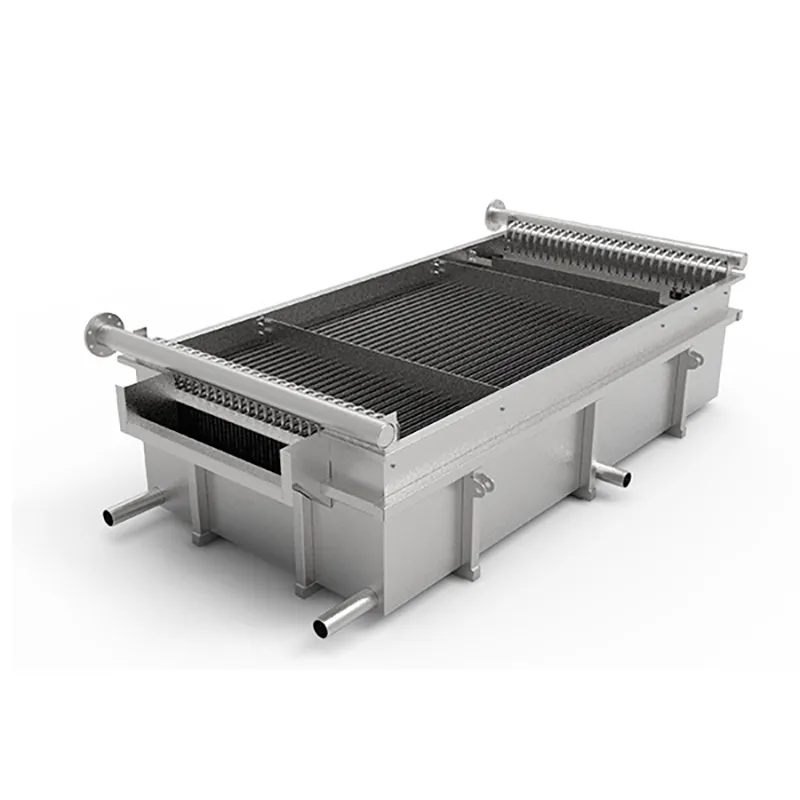
What Makes a Plate Heat Exchanger Suitable for Pharma Applications?
A pharmaceutical plate heat exchanger must meet several regulatory and operational criteria. First, all wetted surfaces should be made of stainless steel 316L or higher, with a surface finish of Ra ≤ 0.5 µm to prevent bacterial adhesion. Second, the design must allow complete drainage to avoid stagnant zones where microorganisms can grow. Third, the unit should withstand CIP temperatures up to 95°C and SIP steam at 130°C for 30-minute cycles.
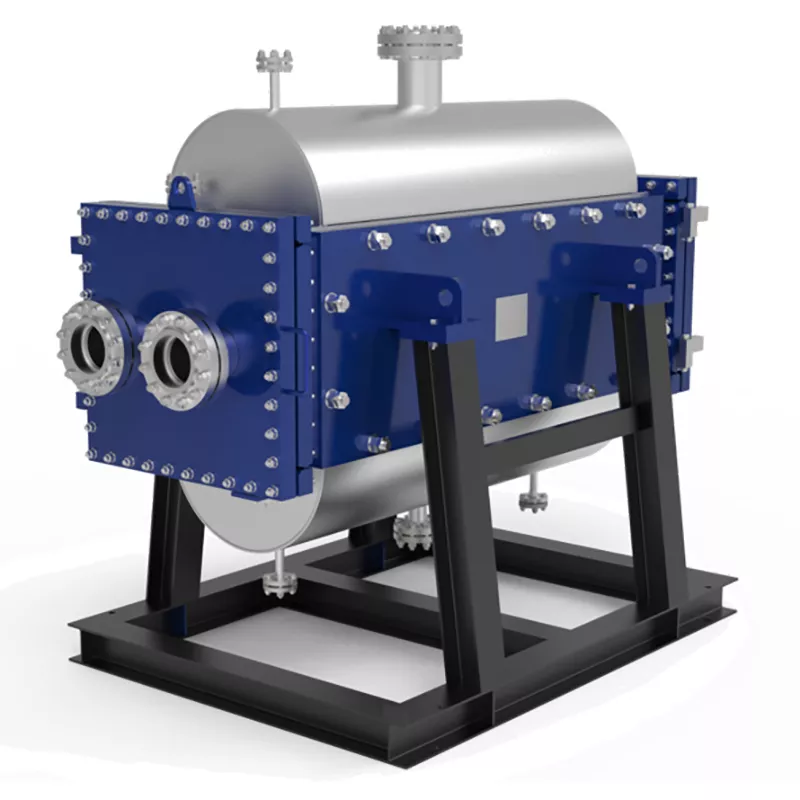
SHPHE’s gasketed plate heat exchangers use EPDM or FKM gaskets that comply with FDA and USP Class VI standards. For higher pressure or temperature requirements, their TP welded plate heat exchangers eliminate gaskets entirely, offering a fully welded channel that is ideal for aggressive solvents or high-purity water loops. The HT-Bloc welded design is particularly suited for steam heating duties up to 250°C and 30 bar.
How Does a Pharmaceutical Plate Heat Exchanger Work in a CIP/SIP Loop?
In a typical pharmaceutical setup, the plate heat exchanger is integrated into a closed loop with a CIP skid. During cleaning, the CIP solution flows through the heat exchanger at 1.5–3 m/s to create turbulent shear that removes residues. The unit’s narrow plate gaps (typically 2.5–4.5 mm) enhance turbulence, improving cleaning efficiency without increasing chemical usage.
For SIP, saturated steam at 121–134°C is introduced into the product channel. The heat exchanger must be designed with proper condensate drainage and venting to avoid steam traps. SHPHE’s wide gap welded plate heat exchangers offer larger channel gaps (up to 8 mm) for viscous or particulate-laden streams, while still maintaining full drainability. Engineers often pair these units with a custom-engineered pillow plate for heating or cooling storage vessels.
Key Parameter Ranges for Pharma Plate Heat Exchangers
The following table summarizes common design parameters for pharmaceutical plate heat exchangers. These ranges are industry-generic and should be verified with SHPHE’s selection software for your specific process.
| Parameter |
Typical Range |
| Design pressure |
10–30 bar (gasketed); up to 40 bar (welded) |
| Design temperature |
-20°C to 180°C (gasketed); up to 250°C (welded) |
| Plate gap |
2.5–4.5 mm (standard); 5–8 mm (wide gap) |
| Flow rate per unit |
1–500 m³/h |
| Heat transfer coefficient |
3,000–7,000 W/m²·K (water-to-water) |
| Surface finish |
Ra ≤ 0.5 µm (electropolished optional) |
Applications of Pharmaceutical Plate Heat Exchangers
Pharmaceutical plate heat exchangers are used across multiple unit operations. Common applications include:
- Water for Injection (WFI) cooling: Reducing WFI temperature from 80°C to 25°C before storage, using a gasketed unit with 316L plates.
- Fermentation jacket heating/cooling: TP welded units handle the thermal cycling of bioreactor jackets without gasket failure.
- Solvent recovery: Wide gap welded plate heat exchangers process organic solvents with suspended solids, compatible with wide gap welded plate heat exchangers.
- Clean steam generation: HT-Bloc units preheat feedwater using waste heat, improving energy efficiency.
Why Choose SHPHE for Your Pharma Heat Exchanger Needs?
SHPHE has delivered plate heat exchangers to pharmaceutical facilities in Europe, Southeast Asia, and the Americas since 2005. Their ISO9001 and ASME U certifications ensure consistent quality, and their free thermal design service helps you select the right model without upfront engineering costs. The company’s product lines include:
- Gasketed plate heat exchangers: Suitable for low-pressure, low-temperature duties with easy plate access.
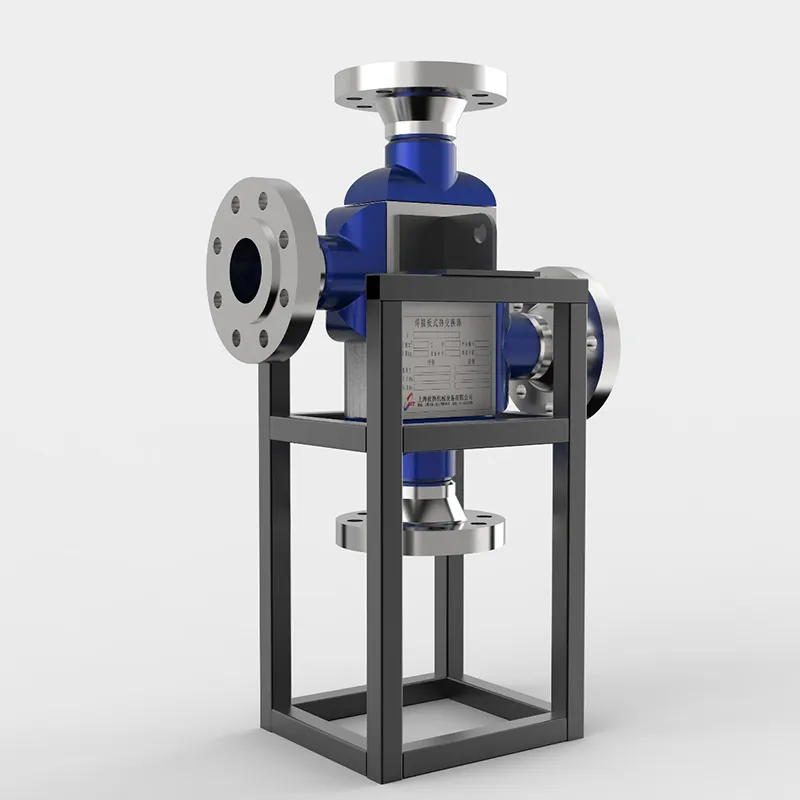
- TP welded plate heat exchangers: Fully welded channels for high-purity and high-temperature applications.
- HT-Bloc welded plate heat exchangers: Compact design for steam heating up to 250°C.
- Wide gap welded plate heat exchangers: For viscous or fibrous fluids.
- Printed circuit heat exchangers (PCHE): For high-pressure gas cooling in specialized pharma processes.
- Plate air preheaters: For energy recovery in HVAC systems serving cleanrooms.
- Pillow plates: For vessel heating/cooling jackets.
SHPHE’s engineers can also provide an alternative to Compabloc or Alfa Laval welded block designs, offering competitive lead times and on-site support.
Frequently Asked Questions About Pharmaceutical Plate Heat Exchangers
Can a gasketed plate heat exchanger be used for sterile processes?
Yes, but only if the gaskets are FDA-compliant and the unit is designed for full drainage. For sterile loops, SHPHE recommends TP welded units to eliminate gasket crevices where bacteria can hide. Gasketed units are better suited for non-sterile utility duties like cooling tower water.
What is the typical pressure drop across a pharmaceutical plate heat exchanger?
Pressure drop depends on flow velocity and plate geometry. For water-to-water duties, a well-designed unit will have a pressure drop of 0.5–2 bar per side. SHPHE’s selection software optimizes the balance between heat transfer and pumping cost.
How do I clean a plate heat exchanger after a batch?
Use a CIP cycle with 1–2% NaOH at 70–85°C for 30 minutes, followed by a water rinse and then 0.5–1% nitric acid at 60–70°C for 20 minutes. Always flush with WFI after acid passivation. SHPHE provides cleaning protocols with each unit.
What is the difference between a TP welded and an HT-Bloc welded heat exchanger?
TP welded units use laser-welded plate pairs for each channel, allowing easy addition or removal of plates. HT-Bloc units are fully welded block designs with no gaskets, suitable for higher pressures and temperatures. Both are compatible with CIP/SIP.
Can I use a pharmaceutical plate heat exchanger for viscous fermentation broth?
Yes, but you need a wide gap design with 5–8 mm plate spacing to prevent clogging. SHPHE’s wide gap welded plate heat exchangers handle viscosities up to 10,000 cP and can process broths with up to 5% solids.
How do I select the right material for my pharma heat exchanger?
For WFI and clean steam, use 316L stainless steel with electropolished surfaces. For aggressive solvents or chloride-containing streams, consider Hastelloy C-276 or titanium. SHPHE’s free thermal design service includes material recommendations based on your media composition.
Request a Quote for Your Pharmaceutical Plate Heat Exchanger
To ensure the optimal pharmaceutical plate heat exchanger for your process, provide the following details to SHPHE’s engineering team: flow rate (m³/h), inlet and outlet temperatures (°C), operating pressure (bar), media composition (including viscosity and solids content), and utility type (steam, chilled water, glycol, etc.). SHPHE offers free thermal design and selection within 48 hours, helping you compare gasketed, TP welded, and HT-Bloc options. Contact them today to start your project with a reliable partner that has served the pharmaceutical industry since 2005.

 English EN





User Comments
Service Experience Sharing from Real Customers
Mike
Process EngineerWe swapped out our old gasketed units for this plate heat exchanger six months ago, and the difference in thermal efficiency is night and day. Clean-in-place cycles are much faster too, which saves us almost an hour per batch. No leaks, no fouling issues so far. Solid build quality.
Sophie
Quality Assurance SupervisorI was a bit skeptical about the pressure drop claims in the datasheet, but after running our validation protocols, the numbers actually hold up. The stainless finish is easy to sanitize, and the gasket material passes our extractable tests. Only reason I'm not giving 5 stars is that the initial installation manual could be clearer.
Liam
Maintenance TechnicianBeen working with these exchangers for over a year now in a sterile fill area. They're compact, easy to disassemble for inspection, and we haven't had a single cross-contamination scare. The titanium plates hold up well even with aggressive cleaning agents. My crew actually likes servicing these — that's rare.
Emma
Senior Formulation ScientistWe needed a heat exchanger that could handle viscous intermediates without hot spots that degrade our API. This unit delivered consistent outlet temps even at low flow rates. The plate geometry seems well optimized for laminar transition zones. One minor gripe: the frame bolts need a torque wrench every re-assembly, but that's standard for this class.