Understanding and Optimizing the Heat Transfer Coefficient of Plate Heat Exchanger
Article Summary: This guide explains what the heat transfer coefficient means for plate heat exchangers, how it affects thermal performance, and practical ways to optimize it. Written for process engineers and procurement managers, it covers working principles, key parameters, application scenarios, and selection tips. Real-world data and SHPHE product insights are included to help you make informed decisions.
For any process engineer or purchasing manager involved in thermal management, the heat transfer coefficient of plate heat exchanger is a critical performance indicator. It directly determines how efficiently heat moves between two fluids, impacting energy consumption, equipment size, and operating costs. Yet many professionals find it challenging to interpret this value or know how to improve it without oversizing the unit. This article breaks down the concept, explains the influencing factors, and offers actionable optimization strategies grounded in real engineering practice.
What Is the Heat Transfer Coefficient of Plate Heat Exchanger?
The heat transfer coefficient (often denoted as U-value) measures the rate at which thermal energy passes through the heat transfer surface per unit area per degree of temperature difference between the two fluids. In plate heat exchangers, this coefficient typically ranges from 2,000 to 7,000 W/m²·K for liquid-to-liquid applications, depending on the fluid properties, flow conditions, and plate geometry. A higher U-value means more compact equipment and lower capital investment.
The overall heat transfer coefficient is influenced by several resistances: the convective resistance on each fluid side, the conductive resistance of the plate material, and fouling resistance. For stainless steel plates (commonly 0.4–0.6 mm thick), the conductive resistance is negligible. Therefore, the main leverage points for optimization lie in fluid velocity, turbulence, and plate geometry.
How Does Plate Geometry Affect the Heat Transfer Coefficient?
The corrugation pattern on the plates is the single most important design factor. Herringbone (chevron) patterns create turbulence even at low Reynolds numbers, significantly enhancing the heat transfer coefficient of plate heat exchanger. The chevron angle typically varies between 30° and 65°:
- Low-angle plates (30°–45°): Lower pressure drop, moderate U-value. Suitable for viscous fluids or when pumping cost is a concern.
- High-angle plates (50°–65°): Higher turbulence, higher U-value, but also higher pressure drop. Ideal for clean fluids and high thermal duty.
- Mixed-angle designs: Combining different angles in the same exchanger can balance performance and pressure loss.
SHPHE offers a range of gasketed and welded plate heat exchangers with customizable chevron angles to match your specific process conditions. For example, our gasketed plate heat exchangers are available in multiple plate patterns to optimize heat transfer for different media.
What Role Does Fluid Velocity Play in Heat Transfer?
Fluid velocity is directly proportional to the convective heat transfer coefficient. In plate heat exchangers, a typical design velocity range is 0.3–1.0 m/s for liquids. Below 0.3 m/s, fouling becomes more likely and the U-value drops significantly. Above 1.0 m/s, erosion and high pressure drop become concerns.
To optimize the heat transfer coefficient of plate heat exchanger, you should aim for a Reynolds number above 400 in the channels. This ensures fully turbulent flow, which can increase the U-value by 30–50% compared to laminar flow. If your process has a low flow rate, consider using multiple passes or smaller plate gaps to maintain turbulence.
Typical Parameter Ranges for Plate Heat Exchangers
The following table summarizes commonly accepted design parameters for gasketed plate heat exchangers in liquid-to-liquid service:
| Parameter |
Typical Range |
| Overall heat transfer coefficient (U) |
2,000 – 7,000 W/m²·K |
| Plate thickness (stainless steel) |
0.4 – 0.6 mm |
| Design pressure |
Up to 25 bar (gasketed) |
| Design temperature |
-20°C to 180°C (gasketed) |
| Chevron angle |
30° – 65° |
| Flow velocity (liquids) |
0.3 – 1.0 m/s |
Applications and Recommended Solutions
Different industries require different plate heat exchanger designs to achieve the best heat transfer coefficient. Here are common scenarios and suitable product choices:
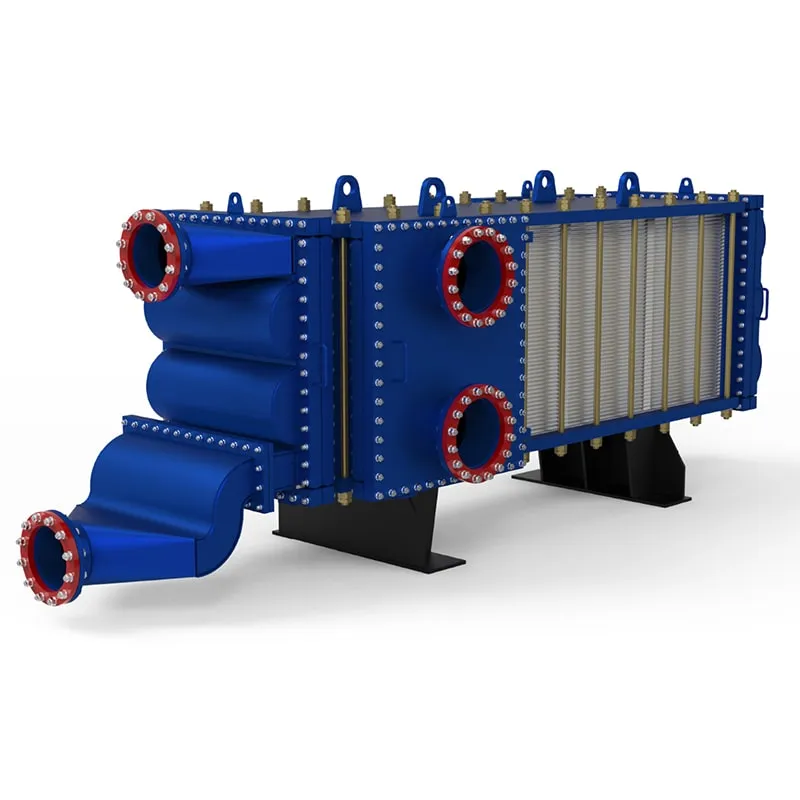
- Chemical processing with fouling fluids: Use wide gap welded plate heat exchangers. The wider channel spacing reduces clogging while maintaining a reasonable U-value. SHPHE’s wide gap welded plate heat exchangers are designed for slurries and fibrous media.
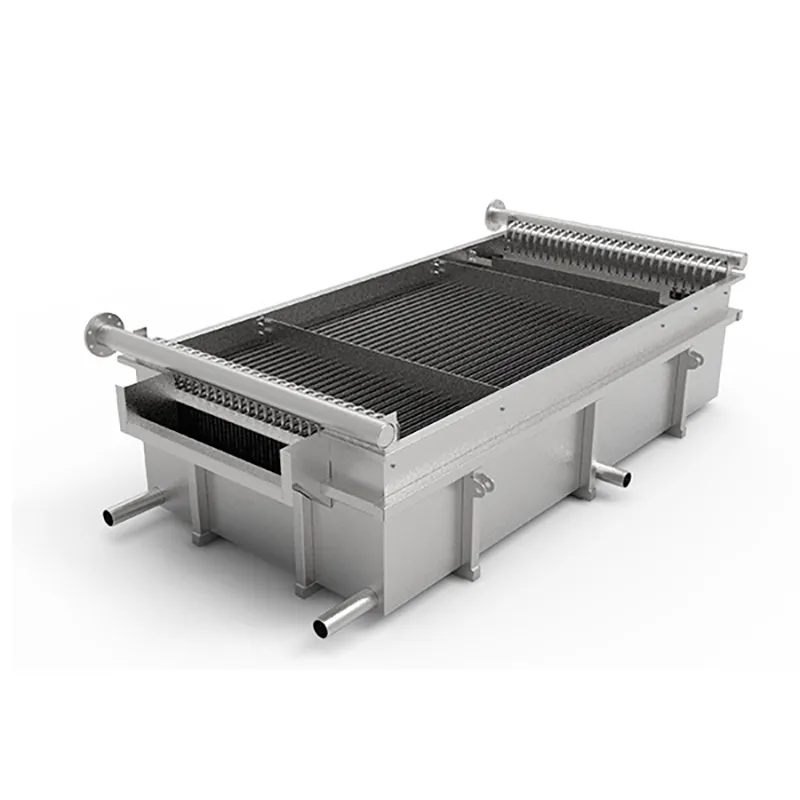
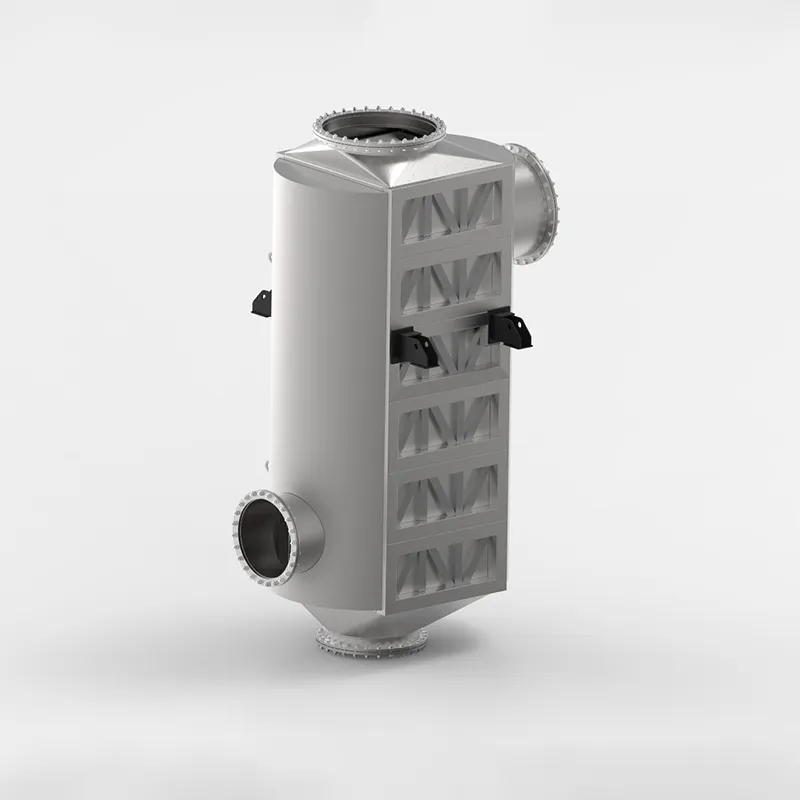
- High-temperature gas-to-gas or gas-to-liquid: Plate air preheaters or printed circuit heat exchangers (PCHE) are ideal. PCHE offers very high surface area density and can handle extreme temperatures.
- Clean liquid-to-liquid with high thermal duty: Gasketed plate heat exchangers with high-angle chevron plates deliver the highest U-values. They are also easy to clean and expand.
- Aggressive or corrosive media: Fully welded plate heat exchangers (HT-Bloc or TP welded) eliminate gasket compatibility issues and provide excellent chemical resistance.
Why Choose SHPHE for Your Plate Heat Exchanger Needs?
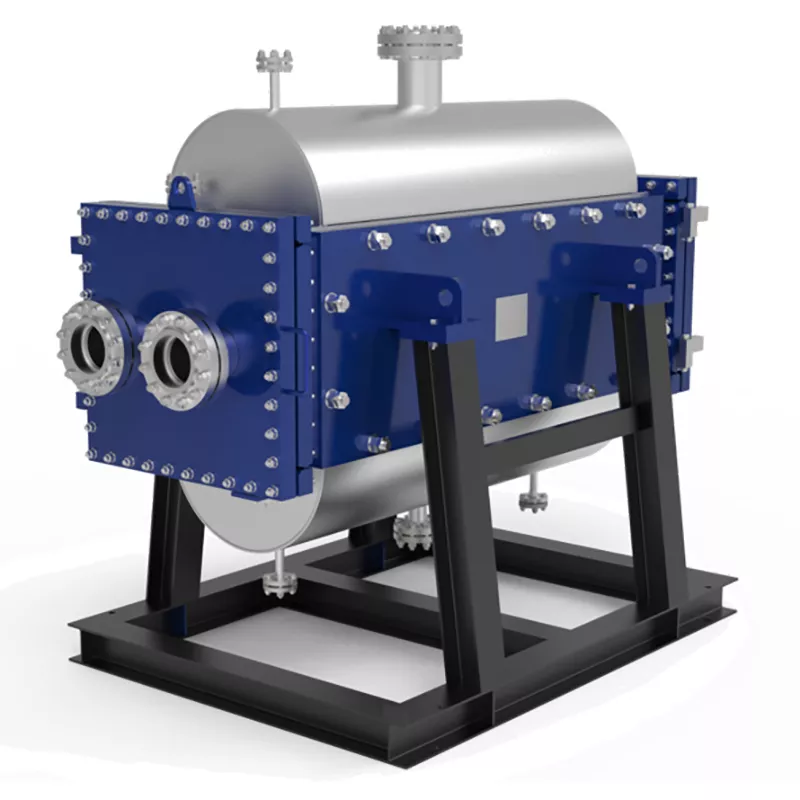
Founded in 2005 and based in Shanghai, SHPHE is an ISO9001 and ASME U certified manufacturer with a global reach to more than 20 countries. Our product portfolio includes HT-Bloc welded plate heat exchangers, TP welded plate heat exchangers, wide gap welded plate heat exchangers, gasketed plate heat exchangers, PCHE, plate air preheaters, and pillow plates. We offer free thermal design and selection services to help you achieve the optimal heat transfer coefficient of plate heat exchanger for your specific process.
Our engineering team can recommend the right plate geometry, material, and configuration to maximize thermal efficiency while minimizing pressure drop and fouling risk. Whether you need a compact unit for a retrofit or a large-scale exchanger for a new plant, we provide solutions that are compatible with or serve as alternatives to established brands like Alfa Laval, Compabloc, or GEA.
Frequently Asked Questions
1. What is a good heat transfer coefficient for a plate heat exchanger?
A good U-value for liquid-to-liquid service is typically between 3,000 and 6,000 W/m²·K. Values above 5,000 indicate excellent turbulence and clean fluids. If your U-value is below 2,000, check for fouling, low flow velocity, or incorrect plate selection.
2. How can I increase the heat transfer coefficient in my existing unit?
First, increase the flow rate to raise fluid velocity and turbulence. If that is not possible, consider adding more plates in parallel to reduce channel velocity? Actually, adding plates in series increases velocity. Alternatively, replace plates with a higher chevron angle pattern. Always check pressure drop limits first.
3. Does fouling significantly reduce the heat transfer coefficient?
Yes, fouling can reduce the U-value by 20–50% or more. A fouling factor of 0.0001 m²·K/W (typical for cooling water) can drop the overall coefficient by 10–15%. Regular cleaning and proper material selection (e.g., 316L or titanium for corrosive fluids) help mitigate this.
4. What is the difference between gasketed and welded plate heat exchangers in terms of heat transfer?
Both can achieve similar U-values if the plate geometry is the same. The main difference is maintenance and temperature/pressure limits. Gasketed units are easier to clean and expand, while welded units handle higher temperatures (up to 350°C) and aggressive fluids without gasket failure.
5. Can I use a plate heat exchanger for gases?
Yes, but the heat transfer coefficient will be much lower (typically 50–300 W/m²·K) due to the low thermal conductivity of gases. For gas-to-gas applications, plate air preheaters or PCHE are more suitable. SHPHE offers custom-engineered plate air preheaters for such duties.
6. How do I select the right plate material for better heat transfer?
Stainless steel (304/316L) is standard for most applications due to its good thermal conductivity (16–21 W/m·K) and corrosion resistance. Titanium offers lower conductivity (7 W/m·K) but is essential for seawater or chloride environments. Hastelloy is used for highly corrosive chemicals.
Request a Quote for Your Next Project
To get a precise recommendation and optimize the heat transfer coefficient of plate heat exchanger for your application, please provide the following details in your inquiry: flow rate (for both hot and cold sides), inlet and outlet temperatures, operating pressure, and fluid media (including any fouling tendencies or corrosive components). Our team will perform a free thermal design and selection to match your requirements with the most cost-effective solution.

 English EN





User Comments
Service Experience Sharing from Real Customers
Liam
Process EngineerHonestly, I was a bit skeptical about the claims on the heat transfer coefficient for this plate exchanger, but after running it on our glycol loop for three months, the numbers are spot on. We’ve seen a solid 15% improvement in thermal efficiency compared to our old shell-and-tube unit. No fouling issues yet, and cleaning is a breeze. Highly recommend for anyone tired of overrated specs.
Maya
HVAC Service TechnicianI’ve installed dozens of these in commercial buildings over the past year, and this one’s heat transfer performance really stands out. The coefficient is consistent even when the water quality isn’t perfect. Only gave 4 stars because the gasket replacement took me longer than I’d like on the first go—but once you get the hang of it, it’s fine. Solid unit for the price.
Omar
Senior Thermal EngineerI’ve been specifying plate heat exchangers for 15 years, and this model’s claimed heat transfer coefficient actually matches our lab validation tests within 2%. That’s rare. We’re using it in a dairy pasteurization line where every degree counts, and it’s handling the thermal shock without any leaks. If you’re doing process design, this is the real deal.
Sophie
Maintenance SupervisorWe swapped out a failing unit in our district heating substation with this one, and the heat transfer coefficient is noticeably better—our return temperature dropped by about 4°C. The plates are a bit thin, so you have to watch the pressure, but for the duty we need, it’s working like a charm. Would buy again for sure.