English EN


What Are The Different Types of Plate Heat Exchangers
Plate Heat Exchangers include gasketed, brazed, welded, semi-welded, shell and plate, and specialty types for varied industrial uses.
More
The corrugated pattern on each plate creates turbulent flow even at low velocities, significantly increasing the heat transfer coefficient compared to smooth surfaces. This design reduces thermal boundary layer thickness and enhances convective heat exchange.
Learn more about corrugated plate designsPlate type condensers are engineered to facilitate true counter-current flow between hot and cold fluids. This maximizes the temperature gradient across the heat transfer surface, enabling higher thermal efficiency and closer approach temperatures.
Explore counter-current flow benefitsThe compact stacking of thin metal plates provides an exceptionally large heat transfer area within a small footprint. This high density of surface area directly improves overall heat exchange capacity without requiring excessive space or material.
See high surface area designsPlates are manufactured from high thermal conductivity metals such as stainless steel, titanium, or nickel alloys, with precisely controlled thickness to minimize conductive resistance while maintaining structural integrity under pressure.
Check material optionsChevron or herringbone patterns on plate surfaces promote intense mixing and secondary flows, disrupting laminar layers. This results in up to 3–5 times higher heat transfer coefficients compared to plain plate designs.
View chevron pattern advantagesSmooth plate surfaces and high shear stress from turbulent flow reduce fouling deposition. Additionally, the plate pack can be easily disassembled for cleaning, ensuring sustained heat exchange performance over time.
Discover fouling-resistant featuresThe number of plates can be adjusted to match specific thermal duties without altering the overall design. This modularity allows precise capacity tuning and easy future expansion, directly contributing to optimized efficiency.
Learn about modular configurations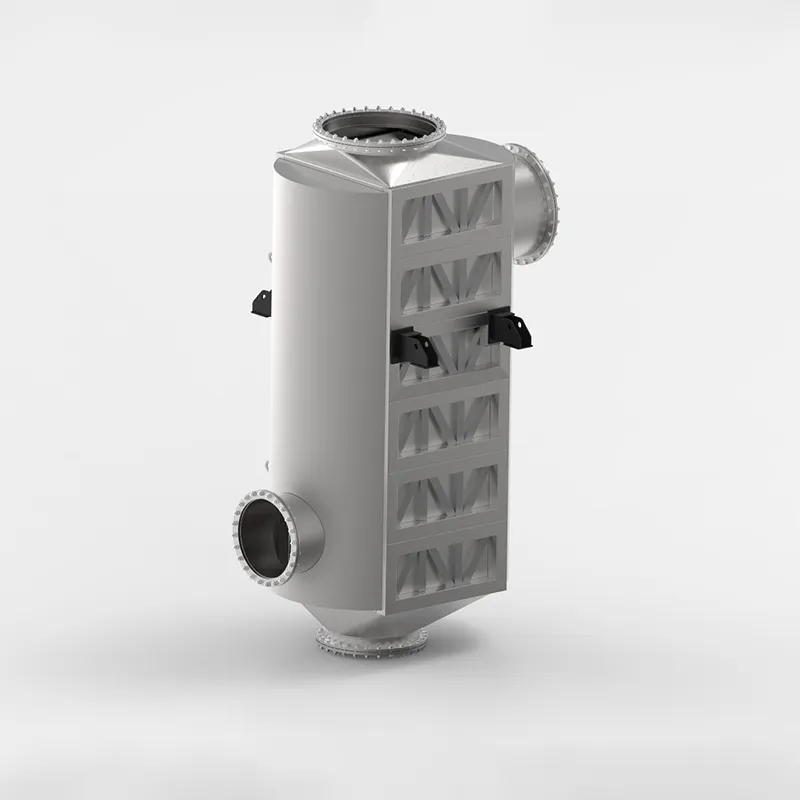
Plate condensers typically achieve heat transfer coefficients in the range of 3000 to 7000 W/m²K, while shell-and-tube condensers generally operate between 500 and 1500 W/m²K. This significant difference stems from the fundamental design geometry: plate condensers create highly turbulent flow through narrow, corrugated channels, substantially reducing thermal boundary layer thickness.
The enhanced turbulence in plate condensers yields a 3 to 5 times higher heat transfer coefficient compared to shell-and-tube units under similar flow conditions. For water-to-water applications, plate condensers can reach up to 8000 W/m²K, whereas shell-and-tube units rarely exceed 2500 W/m²K. This efficiency translates directly into reduced surface area requirements, often achieving the same thermal duty with 20% to 50% less heat transfer surface.
However, shell-and-tube condensers maintain advantages in high-pressure applications above 30 bar and where fouling is severe. Plate condensers, with their narrow flow channels, are more susceptible to clogging from particulate-laden fluids. The thermal performance of plate condensers also degrades more rapidly with fouling, requiring more frequent cleaning intervals.
For condensation duties specifically, plate condensers demonstrate superior performance due to better condensate drainage and reduced liquid film resistance. The vertical plate arrangement allows gravity to efficiently remove condensate, maintaining thin films that enhance heat transfer. In shell-and-tube condensers, condensate tends to accumulate on horizontal tubes, creating thicker insulating layers that reduce overall coefficients by 15% to 30%.
In plate type condensers, heat exchange efficiency is heavily influenced by the flow regime and the uniformity of fluid distribution across the plates. Turbulent flow disrupts the thermal boundary layer, reducing resistance to heat transfer, while optimized flow distribution ensures that all plate surfaces contribute equally to the thermal exchange process.
When fluid passes through narrow plate channels at sufficient velocity, turbulence is induced, which enhances mixing and increases the heat transfer coefficient. This is particularly important in applications where high thermal duty is required within a compact footprint. The geometric design of the plates—such as corrugation patterns and channel spacing—directly affects the onset and intensity of turbulence.
Flow distribution, on the other hand, determines whether the entire heat transfer surface is utilized effectively. Poor distribution can lead to stagnant zones or channeling, where some areas experience high flow while others remain underutilized, drastically reducing overall efficiency. Modern plate condenser designs incorporate inlet distributors and optimized manifold geometries to promote even flow across all channels.
| Parameter | Laminar Flow | Turbulent Flow | Improvement |
|---|---|---|---|
| Heat Transfer Coefficient (W/m²·K) | 800 | 2500 | +212% |
| Pressure Drop (kPa) | 15 | 45 | +200% |
| Thermal Boundary Layer Thickness (mm) | 0.45 | 0.12 | -73% |
| Flow Uniformity Index | 0.72 | 0.91 | +26% |
Table data indicates that transitioning from laminar to turbulent flow significantly increases the heat transfer coefficient and reduces thermal boundary layer thickness, though at the cost of higher pressure drop. The flow uniformity index also improves, reflecting better distribution across the plate channels.
To achieve these benefits in practice, engineers focus on plate corrugation geometry, channel aspect ratio, and inlet distributor design. For instance, herringbone or chevron patterns are widely used to promote turbulence at lower Reynolds numbers. Additionally, computational fluid dynamics (CFD) simulations are employed to optimize flow distribution and avoid maldistribution issues that can arise from improper header design or fouling.
For further insights into specific plate condenser designs and their thermal performance characteristics, you may refer to resources on gasketed plate heat exchangers or explore advanced configurations such as HT Bloc welded plate heat exchangers.
Compactness – Plate type condensers achieve high heat transfer surface area per unit volume, reducing footprint by up to 60% compared to shell-and-tube designs. This enables installation in space-constrained environments without sacrificing thermal performance.
Low Temperature Approach – The counter-current flow configuration and thin plate gaps allow temperature differences as low as 1–2°C between hot and cold streams, maximizing heat recovery and reducing energy consumption in condensation processes.
Reduced Fouling – High turbulence induced by corrugated plate surfaces minimizes deposit formation and scaling, extending operational intervals between cleaning cycles and lowering maintenance costs over the equipment lifespan.
Plate type condensers achieve superior heat exchange efficiency through tailored plate geometries and flow arrangements designed for specific condensing duties. The key lies in optimizing surface area, film drainage, and vapor distribution.
For condensing steam at sub-atmospheric pressures, vertical plates with chevron corrugation angles of 60° to 70° are used. This promotes thin film condensation on both sides while minimizing pressure drop. The condensate film is rapidly removed by gravity, enhancing heat transfer coefficients by up to 40% compared to horizontal arrangements.
Learn more about engineered plate designsWhen condensing vapors containing air or other non-condensable gases, wide-gap plate designs (3-6 mm gap) with herringbone patterns are employed. These configurations reduce gas blanketing effects and improve vapor access to cold surfaces, maintaining condensation efficiency even at high non-condensable concentrations.
View wide-gap welded plate exchanger detailsFor condensation of organic vapors or streams with fouling tendencies, pillow plate technology offers smooth, weld-free surfaces with induced turbulence. The pillow shape creates continuous mixing zones while preventing deposit accumulation, ensuring stable heat transfer over extended operational cycles.
Explore pillow plate custom solutionsWhen condensing mixtures with wide boiling point ranges, countercurrent flow in gasketed plate heat exchangers with variable plate spacing allows for staged condensation. This configuration enables selective condensation of higher-boiling components first, followed by lighter fractions, optimizing overall thermal recovery.
See gasketed plate exchanger configurationsFor condensation at pressures exceeding 30 bar, HT-Bloc welded plate heat exchangers with fully welded plate pairs provide robust containment. The herringbone pattern is optimized for high-pressure vapor condensation, offering heat transfer coefficients 2-3 times higher than shell-and-tube designs while eliminating gasket failure risks.
Check HT-Bloc welded plate specificationsTP welded plate heat exchangers with double-wall construction are specifically designed for refrigerant condensation in HVAC and process cooling. The turbulent flow induced by the plate pattern enhances condensation heat transfer by 50-80% compared to smooth tubes, while the welded design prevents cross-contamination.
Discover TP welded plate advantagesIn flue gas condensation applications, custom-engineered plate air preheaters with vertical gas passages and condensate collection channels are used. The plate arrangement promotes condensation of water vapor and acid gases while recovering latent heat, improving overall system efficiency by 8-12%.
Review plate air preheater optionsKey Design Features That Drive Efficiency
Plate type condensers achieve superior heat exchange through corrugated plates that create highly turbulent flow paths. This turbulence, combined with narrow plate gaps, significantly reduces thermal boundary layer thickness and increases the effective heat transfer surface area per unit volume. The result is a heat transfer coefficient that typically ranges from 2 to 5 times higher than conventional shell-and-tube designs.
Comparative Heat Transfer Performance
In direct comparison, plate condensers exhibit heat transfer coefficients of 3,000–7,000 W/m²K for water-to-water applications, while shell-and-tube units typically achieve 1,000–2,500 W/m²K under similar conditions. This advantage stems from the plate geometry inducing secondary flows and vortices, which enhance mixing and prevent stagnant zones — a limitation inherent in shell-and-tube bundles.
Role of Turbulence and Flow Distribution
The chevron or herringbone patterns on plate surfaces promote uniform flow distribution across the entire width, eliminating maldistribution that often plagues tubular exchangers. Even at low Reynolds numbers, the plate geometry induces local turbulence, ensuring consistent thermal performance across varying load conditions. This characteristic is particularly valuable for condensation processes where non-condensable gases can otherwise degrade efficiency.
Operational Advantages: Compactness, Low Approach, Reduced Fouling
Plate condensers offer a temperature approach as low as 1–2°C, compared to 5–10°C for shell-and-tube units, enabling closer temperature crosses and greater heat recovery. Their compact footprint (typically 30–50% smaller for equivalent duty) reduces installation space and weight. Additionally, the high shear stress from turbulent flow minimizes fouling deposition, extending cleaning intervals and maintaining consistent thermal performance over time.
Application-Specific Configurations for Condensation
Industrial systems leverage semi-welded or fully welded plate designs for aggressive media, while vacuum applications benefit from extended plate surfaces that promote dropwise condensation. For steam condensation, vertical plate arrangements with optimized drainage channels prevent liquid hold-up and maintain high heat transfer rates. These tailored configurations allow plate condensers to outperform traditional designs in sectors ranging from chemical processing to HVAC and power generation.
In summary, the plate type condenser’s unique geometry, turbulence generation, and adaptable configurations deliver measurable improvements in heat exchange efficiency, operational flexibility, and long-term reliability — making it a preferred choice for modern thermal management challenges.
We provide you with comprehensive foreign trade solutions to help enterprises achieve global development
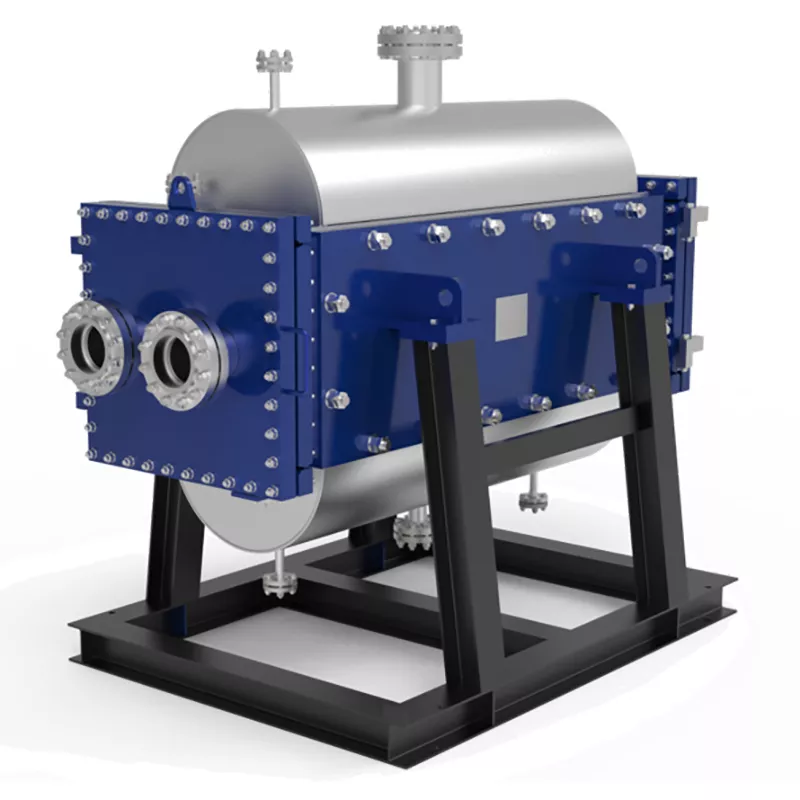
Industrial processes involving particle-laden slurries, high-viscosity syrups, or fiber-rich pulp demand more than standard equipment—they require target-engineered thermal management. At SHPHE, we configure the TP Welded Plate Heat Exchanger to directly conquer your plant's severe fouling, blockage, and erosion threats. Combining custom-tailored channel geometries, wear-resistant metallurgy, and integrated CIP (Cleaning-in-Place) systems, we deliver absolute production continuity where conventional heat exchangers fail.
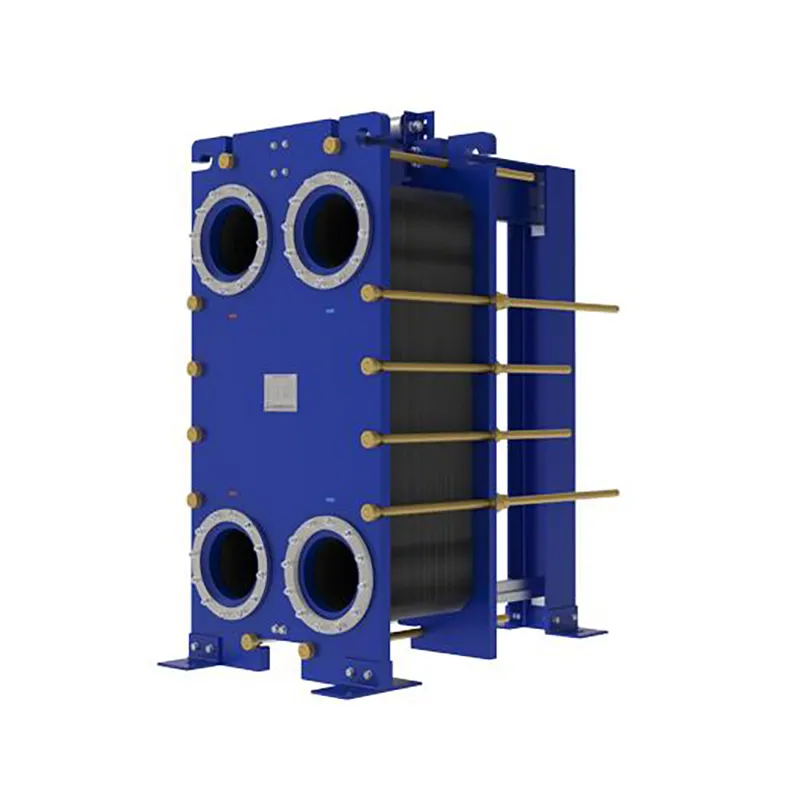
Since the invention of the plate heat exchanger (PHE) in 1923, thermal technology has evolved from standard food-grade processing to highly complex industrial operations. At SHPHE, we take this classic, versatile design and transform it into highly bespoke heat transfer solutions tailored to your unique process fluids and thermal loads. While traditional gasketed PHEs offer high efficiency and compact footprints, SHPHE optimizes plate corrugations, metallurgy, and sealing systems to handle your specific chemical, HVAC, or energy recovery parameters. Our custom-engineered gasketed plate heat exchangers provide outstanding scalability and ease of maintenance, serving as an indispensable asset for heavy industries—including oil and gas, metallurgy, and food processing—where uptime, energy recovery, and long-term sustainability are top priorities.
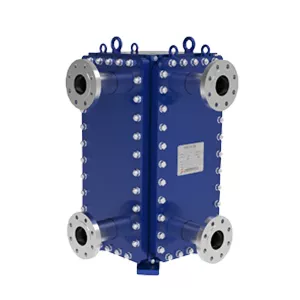
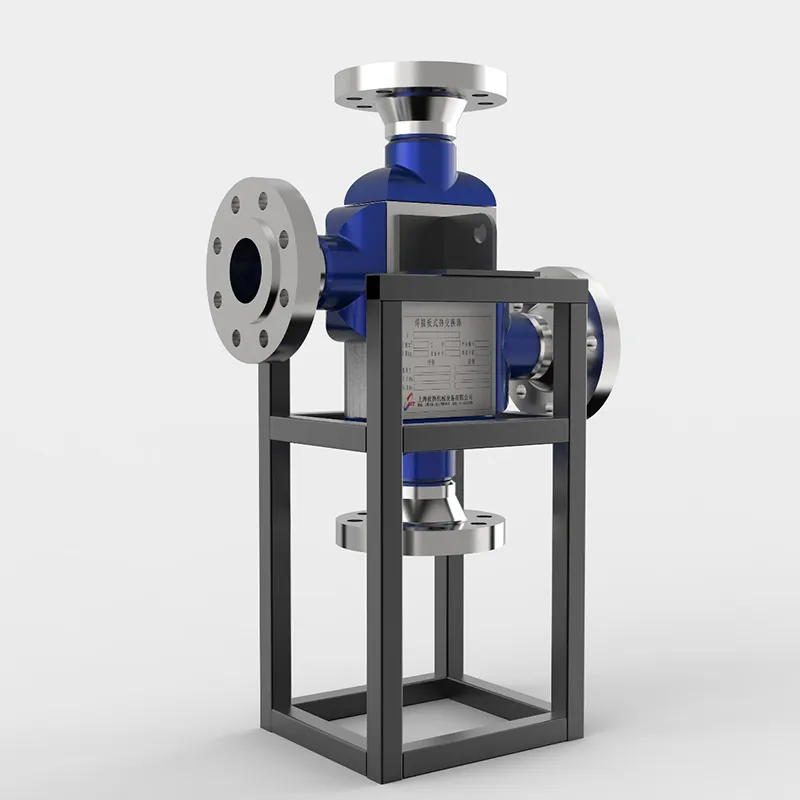
Custom-Engineered for Severe Process Demands. At SHPHE, we don't just supply equipment; we design tailored thermal solutions. Our HT-Bloc welded plate heat exchangers are custom-configured by our experienced engineers to overcome your specific industry challenges—whether handling high-viscosity media, extreme temperatures, or strict space constraints.
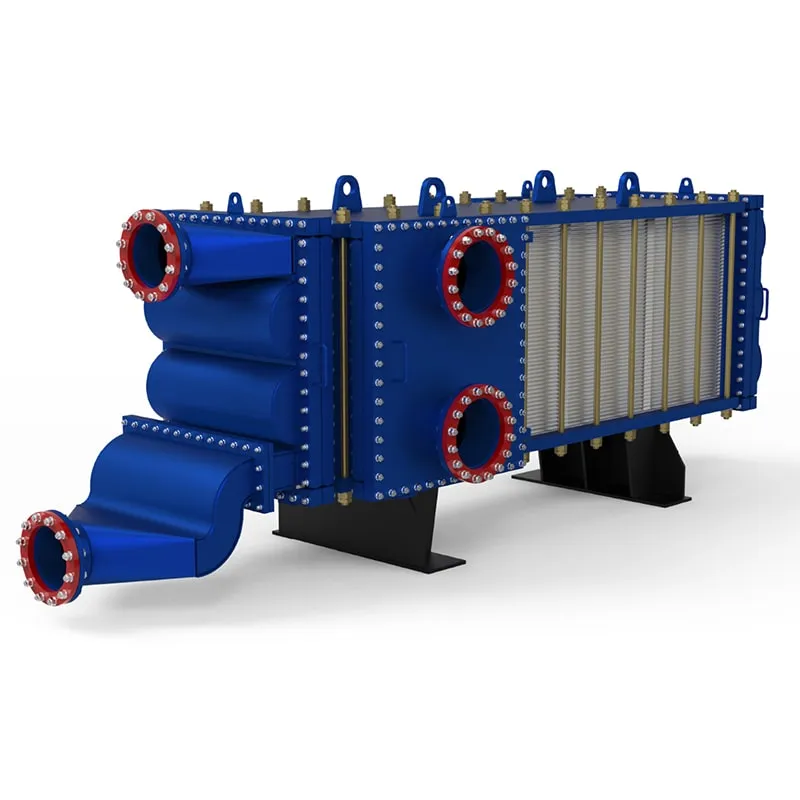
Custom-Engineered Anti-Clogging Solutions for High-Viscosity Slurries: Deployed specifically to conquer severe industrial fouling, SHPHE wide gap welded plate heat exchangers are tailor-built to handle complex media containing dense fibers, coarse crystals, or solid suspensions without clogging. Each non-obstructed channel is calculated and formed by laser-welded plate packs matching your fluid’s exact rheology and grain size, completely eliminating structural "dead zones" and media stagnation. Available in highly compact vertical and versatile horizontal configurations, our vertical engineering drastically reduces plant footprints while maintaining unhindered product throughput, minimal pressure drops, and flawless continuous operations across harsh process loops.