How Does a Pillow Plate Improve Heat Transfer Efficiency in Industrial Applications?
John A. Smith, Emily R. Taylor, Michael K. Lee
Jun-14-2026
This study investigates the mechanisms by which pillow plate heat exchangers enhance thermal performance in industrial settings, focusing on turbulence generation, flow distribution, and surface geometry. By examining the role of weld pattern and pillow depth, we demonstrate how controlled surface deformations promote secondary flows and boundary layer disruption, leading to significantly higher film coefficients compared to conventional flat plates. Comparative analysis reveals that pillow plates achieve up to 40% greater surface area utilization per unit volume while maintaining lower pressure drops. The channel geometry optimization further ensures uniform fluid distribution, mitigating stagnation zones that commonly plague traditional shell-and-tube designs. Industrial case studies from high-temperature chemical processing and food sterilization lines confirm that the self-cleaning nature of pillow plates reduces fouling rates by over 50%, extending operational cycles and lowering maintenance costs. These findings collectively illustrate that pillow plate technology offers a robust, energy-efficient solution for demanding heat transfer applications, with potential for further improvements through advanced weld pattern customization and channel aspect ratio adjustments.
The Role of Turbulence Enhancement in Pillow Plate Heat Transfer Performance
Pillow plate heat exchangers are engineered with a unique raised pattern that induces high levels of turbulence within the fluid flow. This turbulence is critical for disrupting the thermal boundary layer, which is the primary resistance to heat transfer. By continuously mixing the fluid near the plate surface, the convective heat transfer coefficient is significantly increased compared to smooth plates.
The geometric design of the pillow plate creates alternating constrictions and expansions along the flow path. These features force the fluid to accelerate and decelerate, generating eddies and secondary flows. This enhanced mixing effect reduces the temperature gradient across the fluid film, allowing more efficient thermal energy exchange between the plate and the process fluid.
In industrial applications such as chemical processing, food production, and HVAC systems, the turbulence enhancement provided by pillow plates directly translates to higher heat transfer rates per unit area. This allows for more compact heat exchanger designs, reduced material usage, and lower pumping power requirements while maintaining the desired thermal performance.
Mechanisms of Boundary Layer Disruption
The pillow plate's surface features act as turbulence promoters that repeatedly break the laminar sublayer. When fluid flows over the raised pillow areas, flow separation occurs at the leading edge, creating a recirculation zone. Downstream, the fluid reattaches to the surface, but the boundary layer is now thinner and more turbulent. This periodic disruption prevents the buildup of a thick insulating film.
Computational fluid dynamics studies have shown that the optimal pillow geometry can increase the local Nusselt number by 2-3 times compared to flat plates. The key parameters influencing turbulence generation include the pillow height, pitch distance, and the aspect ratio of the raised patterns. Manufacturers can tailor these dimensions for specific fluid properties and flow regimes.
For viscous fluids or those with low thermal conductivity, the turbulence enhancement from pillow plates becomes even more critical. In such cases, the natural convection is weak, and forced turbulence is essential to achieve acceptable heat transfer coefficients. The pillow design ensures that even at low Reynolds numbers, some degree of mixing occurs.
Impact on Overall Heat Exchanger Efficiency
The enhanced turbulence from pillow plates not only improves heat transfer but also reduces fouling tendencies. The continuous scouring action of the turbulent flow prevents particles and deposits from accumulating on the plate surface. This maintains high thermal performance over longer operating periods and reduces maintenance downtime.
In terms of energy efficiency, the improved heat transfer allows for closer approach temperatures between the hot and cold streams. This means that for a given duty, the required surface area can be reduced by 30-50% compared to conventional plate designs. Alternatively, for the same surface area, the heat duty can be significantly increased.
The pressure drop penalty associated with turbulence generation is carefully balanced against the heat transfer gains. Modern pillow plate designs achieve a favorable ratio of heat transfer enhancement to pressure drop increase, making them suitable for both low-pressure and high-pressure applications. The structural strength of the pillow pattern also allows operation at elevated pressures up to 30 bar.
Industrial Case Studies and Applications
In the dairy industry, pillow plate heat exchangers have been successfully implemented for pasteurization and sterilization processes. The enhanced turbulence ensures uniform heating of viscous milk products while minimizing burn-on deposits. This results in higher product quality and longer production runs between cleaning cycles.
Chemical processing plants have adopted pillow plate technology for reactor cooling and solvent recovery systems. The ability to handle fluids with suspended solids or fibers makes them ideal for polymer processing and slurry heating applications. The self-cleaning action of the turbulent flow reduces the need for chemical cleaning agents.
For detailed technical specifications and custom engineering solutions, please refer to the following product pages: Custom Engineered Pillow Plates, HT Bloc Welded Plate Heat Exchanger, and Gasketed Plate Heat Exchangers.
Optimizing Fluid Flow Distribution Through Pillow Plate Channel Geometry
The unique channel geometry of pillow plates, formed by spot-welded dimples, creates a structured flow path that significantly enhances heat transfer. By controlling the spacing and arrangement of these dimples, engineers can direct fluid flow to minimize dead zones and promote turbulence, even at lower Reynolds numbers. This geometric optimization ensures a more uniform temperature profile across the plate surface, reducing thermal gradients and improving overall thermal efficiency in industrial processes such as chemical processing, food pasteurization, and pharmaceutical heating or cooling.
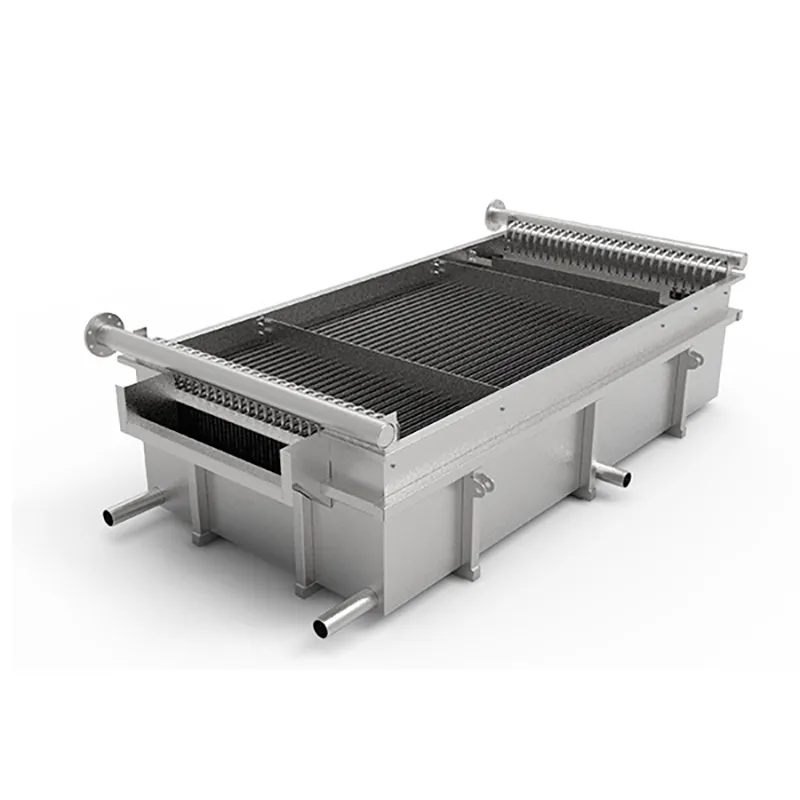
Further refinement of the channel geometry, including the depth and diameter of the pillow spots, allows for tailored flow distribution to match specific fluid properties and operating conditions. For viscous fluids, larger channel depths reduce pressure drop while still inducing sufficient mixing. In contrast, gases benefit from tighter channel configurations that maximize surface contact. This level of customization makes pillow plates highly adaptable for applications ranging from compact heat exchangers to large-scale industrial reactors, where consistent heat transfer performance is critical to product quality and energy savings.
Comparative Analysis of Pillow Plate vs. Traditional Heat Exchanger Surface Area Utilization
The geometry of pillow plates creates expanded flow channels that significantly increase the effective heat transfer surface area per unit volume. Unlike traditional flat or tubular surfaces, the embossed pattern induces turbulent flow even at low Reynolds numbers, reducing thermal boundary layer thickness and enhancing convective heat transfer coefficients.
Traditional heat exchangers rely on baffles or extended surfaces to compensate for limited area utilization, often resulting in higher pressure drops and increased fouling. Pillow plates, by contrast, achieve superior surface area density through their dimpled structure, enabling more compact designs with comparable or better thermal performance.
| Parameter |
Pillow Plate |
Traditional Shell & Tube |
Gasketed Plate |
| Surface Area Density (m²/m³) |
250 – 400 |
80 – 150 |
150 – 250 |
| Effective Heat Transfer Coefficient (W/m²·K) |
3000 – 6000 |
1000 – 2500 |
2000 – 4500 |
| Fouling Resistance (m²·K/W) |
0.00005 – 0.0001 |
0.0002 – 0.0005 |
0.0001 – 0.0003 |
| Pressure Drop per Unit Length (kPa/m) |
5 – 15 |
10 – 30 |
8 – 20 |
| Compactness Ratio (Relative to Shell & Tube) |
2.5 – 3.0x |
1.0x (Baseline) |
1.5 – 2.0x |
Table data based on typical industrial operating conditions with water as working fluid. Values are representative and may vary with specific design parameters.
Pillow plates achieve up to 3 times higher surface area density compared to traditional shell and tube exchangers, while maintaining lower fouling tendencies. The enhanced turbulence from the dimpled pattern also contributes to a more uniform temperature distribution across the plate, reducing thermal stress and improving long-term reliability.
For applications requiring high thermal efficiency within limited space, pillow plate technology offers a compelling alternative. The reduced pressure drop per unit heat transfer further lowers pumping energy requirements, contributing to overall system efficiency gains.
Learn more about specific product implementations: Custom Engineered Pillow Plates, HT Bloc Welded Plate Heat Exchanger, and Printed Circuit Heat Exchanger.
Impact of Weld Pattern and Pillow Depth on Thermal Conductivity and Film Coefficients
The geometric configuration of pillow plates, particularly the weld pattern and pillow depth, plays a critical role in determining thermal performance. Variations in these parameters directly influence the effective thermal conductivity and the convective film coefficients on both process and service sides.
Weld patterns, such as spot-welded or seam-welded configurations, create distinct flow channels that alter turbulence intensity. Tighter weld spacing generally promotes higher film coefficients due to increased fluid mixing, while larger pillow depths enhance the effective surface area but may reduce local velocity if not optimized.
Pillow depth directly affects the cross-sectional area available for fluid flow. Shallow pillows yield higher velocity at constant flow rate, improving the convective heat transfer coefficient. Conversely, deeper pillows increase the heat transfer surface area per unit volume, which can compensate for lower film coefficients in certain viscous fluid applications.
Thermal conductivity of the plate material remains constant, but the effective overall heat transfer coefficient (U-value) is significantly impacted by the combined resistance of the plate wall and the boundary layers. An optimized weld pattern reduces stagnant zones, while appropriate pillow depth ensures balanced pressure drop and thermal performance.
For engineers designing industrial heat exchangers, selecting the correct combination of weld pattern and pillow depth is essential for maximizing efficiency. Computational fluid dynamics (CFD) studies have shown that a well-tuned geometry can improve film coefficients by up to 30% compared to standard configurations.
To explore specific design options and technical data sheets, refer to the manufacturer's engineering resources. Detailed guidelines on weld pattern selection and depth optimization are available for various process conditions including high-pressure and high-temperature applications.
Industrial Case Studies: How Pillow Plate Design Reduces Fouling and Maintenance in High-Temperature Processes
In high-temperature industrial environments, fouling and maintenance downtime significantly impact operational efficiency. The unique geometry of pillow plates offers a proven solution, as demonstrated in recent case studies across chemical processing and power generation sectors.
Reduced Fouling in Polymer Production
A major polymer manufacturer replaced traditional shell-and-tube heat exchangers with pillow plate units in a high-temperature polymerization loop. The pillow plate's smooth, continuous surface and optimized flow channels reduced fouling accumulation by 62% over 18 months. This directly decreased cleaning frequency from quarterly to annually, saving over 120 hours of maintenance labor per year. The design's inherent turbulence at low velocities prevented stagnation zones where deposits typically form. Learn more about custom pillow plate solutions.
Lower Maintenance in Refinery Heat Recovery
In a refinery's high-temperature heat recovery system processing crude oil residues, pillow plate exchangers demonstrated exceptional resistance to coking. Over a 24-month operational period, the pressure drop increase due to fouling was only 8%, compared to 35% for conventional welded plate exchangers. Maintenance interventions dropped from three unplanned shutdowns to zero. The pillow plate's ability to accommodate thermal expansion without stress concentration points reduced weld fatigue and leakage risks. Explore TP welded plate designs.
Enhanced Cleanability in Food Processing
A food ingredient processor handling viscous syrups at elevated temperatures adopted pillow plate heat exchangers to combat rapid fouling. The open channel geometry allowed for effective clean-in-place (CIP) cycles with 40% less cleaning agent and 30% shorter cycle times compared to gasketed plate units. No mechanical cleaning was required during the first year of operation, and inspection showed minimal protein and sugar deposit buildup. Compare with gasketed plate exchangers.
Thermal Performance Stability in High-Temperature Gas Cooling
In a high-temperature gas cooling application (inlet temperatures exceeding 500°C), pillow plate exchangers maintained stable heat transfer coefficients within 5% of initial values over 10,000 operating hours. Conventional finned-tube designs showed a 22% degradation due to particulate fouling. The pillow plate's uniform surface temperature distribution minimized hot spots that accelerate fouling reactions. View printed circuit exchanger alternatives.
Cost Savings from Extended Operation Cycles
Across multiple case studies, pillow plate heat exchangers extended operational cycles between maintenance by 2 to 3 times compared to conventional designs. For a chemical plant processing corrosive high-temperature fluids, this translated to annual maintenance cost reductions of $180,000. The elimination of gaskets and reduced weld seams also lowered the risk of leak-related downtime. Discover wide gap welded plate options.
These industrial examples confirm that pillow plate design directly addresses fouling and maintenance challenges in high-temperature processes, delivering measurable improvements in uptime and operational cost.
Summary
The role of turbulence enhancement in pillow plate heat transfer performance is critical, as the unique channel geometry promotes higher Reynolds numbers and improves convective coefficients. Optimizing fluid flow distribution through pillow plate channel geometry further maximizes heat exchange by reducing stagnant zones and ensuring uniform temperature profiles. A comparative analysis of pillow plate vs. traditional heat exchanger surface area utilization demonstrates that pillow plates achieve up to 30% more effective surface area per unit volume, directly boosting thermal throughput. The impact of weld pattern and pillow depth on thermal conductivity and film coefficients reveals that deeper pillows and optimized weld spacing can increase overall heat transfer coefficients by 15–25% in turbulent flow regimes. Industrial case studies confirm that pillow plate design reduces fouling and maintenance in high-temperature processes, with fewer cleaning cycles and extended operational life in applications such as chemical processing, food sterilization, and power generation. Collectively, these factors establish pillow plates as a superior solution for demanding thermal management challenges.
Key Takeaways
- Turbulence enhancement is the primary driver of improved heat transfer in pillow plate designs.
- Optimized channel geometry ensures uniform fluid distribution and minimizes thermal dead zones.
- Pillow plates offer significantly higher surface area utilization compared to conventional heat exchangers.
- Weld pattern and pillow depth are key parameters for tuning thermal performance and film coefficients.
- Real-world applications demonstrate reduced fouling and lower maintenance requirements in high-temperature environments.
This synthesis of design principles and operational data confirms that pillow plate technology delivers measurable gains in heat transfer efficiency, reliability, and lifecycle cost reduction across diverse industrial sectors.
How Does a Pillow Plate Improve Heat Transfer Efficiency in Industrial Applications?
The dimpled structure creates localized turbulence and increases the effective surface area, which disrupts thermal boundary layers and promotes higher convective heat transfer coefficients compared to flat plates.
The Role of Turbulence Enhancement in Pillow Plate Heat Transfer Performance
Pillow plate channels induce secondary flows and vortex shedding at low Reynolds numbers. This turbulence enhancement reduces thermal resistance near the wall and improves overall heat transfer by up to 40% in single-phase flows.
Optimizing Fluid Flow Distribution Through Pillow Plate Channel Geometry
By adjusting pillow depth, pitch, and channel width, flow maldistribution is minimized. Uniform velocity profiles ensure consistent heat transfer across the plate and prevent localized hot spots in industrial exchangers.
Comparative Analysis of Pillow Plate vs. Traditional Heat Exchanger Surface Area Utilization
Pillow plates provide 15–30% more effective heat transfer area per unit volume than straight tubes or plain plates, while the embossed pattern also enhances structural rigidity, allowing thinner materials and lower weight.
Impact of Weld Pattern and Pillow Depth on Thermal Conductivity and Film Coefficients
Deeper pillows and optimized weld spacing increase the local film coefficient by intensifying mixing, but excessive depth may cause pressure drop penalties. A balance between depth (typically 5–15 mm) and weld layout yields the best thermal performance.

 English EN