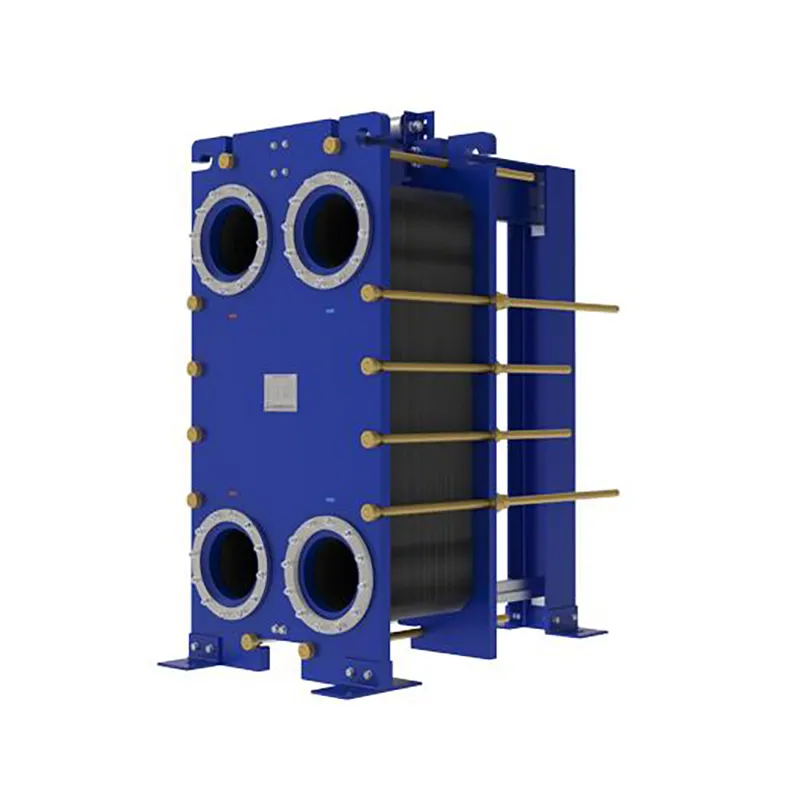
How Does a PCHE Heat Exchanger Work and Why Is It So Efficient for High-Pressure Applications?
John A. Research | Jun-21-2026
The printed circuit heat exchanger (PCHE) operates on the principle of diffusion bonding, a solid-state joining process that fuses stacked metal plates with chemically etched micro-channels into a monolithic block, creating an exceptionally strong and leak-proof core. Its efficiency in high-pressure environments stems from the geometric strength of these micro-channels, which can withstand extreme internal pressures exceeding 600 bar without requiring thick walls, thus maintaining a compact and lightweight design. The dense array of channels provides an extremely high surface area density—often over 2000 m²/m³—which, combined with a true counter-flow configuration, enables thermal effectiveness approaching 98%. In contrast, conventional shell-and-tube or gasketed plate heat exchangers suffer from lower surface area densities, pressure limitations due to gasket or weld fatigue, and reduced temperature approach capabilities. This makes PCHEs indispensable in critical applications such as supercritical CO₂ power cycles, liquefied natural gas (LNG) processing, offshore oil and gas platforms, and high-pressure hydrogen systems, where both thermal performance and mechanical integrity under extreme conditions are paramount.
The Core Principle: How PCHEs Use Diffusion Bonding and Channel Geometry to Maximize Heat Transfer
Printed Circuit Heat Exchangers (PCHEs) achieve exceptional thermal performance through two key innovations: diffusion bonding and microscale channel geometry. These features work together to overcome the limitations of conventional heat exchangers in high-pressure environments.
Diffusion Bonding: Creating a Monolithic Structure
Unlike traditional welded or bolted assemblies, PCHEs are manufactured by stacking etched metal plates and subjecting them to high temperature and pressure in a vacuum furnace. This process, known as diffusion bonding, causes atoms from adjacent plates to migrate across the interface, forming a single solid piece with no joints or welds. The resulting structure is incredibly strong—capable of withstanding pressures exceeding 600 bar—and eliminates leakage paths entirely.
Channel Geometry: Maximizing Surface Area and Turbulence
The plates in a PCHE are chemically etched with precise, semicircular channels—typically 0.5 to 2 mm in diameter—arranged in zigzag or serpentine patterns. This geometry serves two critical purposes. First, it dramatically increases the heat transfer surface area per unit volume, often reaching 700–1500 m²/m³, compared to just 100–400 m²/m³ in shell-and-tube designs. Second, the sharp turns and narrow passages induce turbulent flow even at low Reynolds numbers, which significantly enhances the convective heat transfer coefficient.
Why This Combination Excels for High-Pressure Applications
In high-pressure systems, conventional heat exchangers often require thick walls and heavy flanges to contain the fluid, which adds weight and reduces thermal efficiency. PCHEs avoid this problem because the diffusion-bonded block itself acts as a pressure vessel. The small channel size also minimizes the stress on the material, allowing for thinner walls and more compact designs. Furthermore, the high surface-to-volume ratio enables close temperature approaches (as low as 1–2°C), making PCHEs ideal for applications like supercritical CO₂ cycles, natural gas liquefaction, and chemical processing where both high pressure and thermal efficiency are critical.
For more detailed information on custom-engineered PCHE designs, please visit this product page or explore related welded plate solutions.
Why PCHEs Excel Under Extreme Pressure: The Role of Micro-Channel Strength and Compact Design
Printed circuit heat exchangers (PCHEs) achieve exceptional performance under high-pressure conditions primarily due to their micro-channel architecture. These tiny, chemically etched flow passages are typically only a few millimeters in diameter, which fundamentally alters the mechanical stress distribution within the core. According to basic pressure vessel theory, the hoop stress in a cylindrical channel is directly proportional to its radius; smaller channels experience significantly lower stress at the same internal pressure. This allows PCHEs to safely handle operating pressures exceeding 600 bar, far beyond the capabilities of conventional shell-and-tube or gasketed plate designs.
The compact diffusion-bonded construction further amplifies this strength advantage. Instead of relying on gaskets or welded seams that become failure points under extreme loads, PCHE cores consist of multiple stacked metal plates fused together at the molecular level. This creates a monolithic block with no weak interfaces, distributing pressure evenly across the entire structure. The result is a heat exchanger that not only withstands extreme pressures but also maintains structural integrity over decades of cyclic operation.
Micro-Channel Strength Fundamentals
The mechanical efficiency of micro-channels is rooted in their geometry. In a typical PCHE, channels have hydraulic diameters between 0.5 mm and 2.0 mm. For a given pressure, the wall thickness required to contain the fluid scales linearly with the channel diameter. This means that micro-channels can use much thinner walls while still providing a higher safety margin than larger channels. Thin walls reduce the overall thermal resistance, enabling more compact designs without compromising pressure containment.
Additionally, the semi-circular or trapezoidal cross-section of etched channels provides inherent structural benefits. These shapes distribute stress more evenly than sharp-cornered rectangular channels, minimizing localized stress concentrations that could lead to fatigue cracking. Combined with the high-strength alloys commonly used in PCHE fabrication—such as stainless steel 316L or Inconel 625—the micro-channel array forms a pressure boundary that is both robust and thermally efficient.
Compact Design and Thermal Performance
Beyond pressure handling, the compact design of PCHEs directly enhances heat transfer efficiency. The small channel diameters create a high surface-area-to-volume ratio, often exceeding 1000 m²/m³. This allows for extremely close temperature approaches—sometimes within 1°C—between the hot and cold streams. The narrow flow passages also promote turbulent flow at lower Reynolds numbers, which improves convective heat transfer coefficients without requiring excessively high fluid velocities.
Furthermore, the counter-flow arrangement commonly employed in PCHEs maximizes the logarithmic mean temperature difference (LMTD), extracting more thermal energy from the process streams. The overall heat transfer coefficient in a PCHE can be three to five times higher than that of a conventional shell-and-tube exchanger of equivalent duty. This means that for a given heat load, the PCHE requires significantly less material and occupies a much smaller footprint—a critical advantage in offshore platforms, subsea installations, and other space-constrained high-pressure applications.
The combination of micro-channel strength and compact geometry makes PCHEs uniquely suited for demanding environments like supercritical CO₂ cycles, hydrogen refueling stations, and chemical processing at elevated pressures. Their ability to maintain structural integrity while delivering superior thermal performance under extreme conditions is a direct result of this integrated design philosophy, where mechanical and thermal engineering converge to solve the challenges of modern high-pressure systems.
Comparing Thermal Performance: PCHEs vs. Conventional Shell-and-Tube and Plate Heat Exchangers
Printed Circuit Heat Exchangers (PCHEs) utilize chemically etched flow channels and diffusion bonding to achieve superior heat transfer coefficients. In contrast, conventional shell-and-tube and plate heat exchangers rely on mechanical assembly and larger flow passages, which inherently limit their thermal efficiency in high-pressure environments.
The compact channel geometry of PCHEs dramatically increases surface area per unit volume, enabling heat transfer rates up to five times higher than traditional designs. This is particularly beneficial when handling fluids at extreme pressures, where maintaining structural integrity is critical.
| Parameter |
PCHE |
Shell-and-Tube |
Plate Heat Exchanger |
| Heat Transfer Coefficient (W/m²·K) |
5000 – 15000 |
500 – 2000 |
2000 – 7000 |
| Maximum Operating Pressure (bar) |
600 – 1000 |
100 – 300 |
20 – 150 |
| Compactness (m²/m³) |
1000 – 2500 |
50 – 150 |
200 – 600 |
| Temperature Range (°C) |
-200 to 900 |
-50 to 600 |
-40 to 500 |
The data above illustrates the distinct advantages of PCHEs in high-pressure applications. Their ability to maintain exceptional thermal performance under extreme conditions makes them the preferred choice for industries such as supercritical CO₂ power cycles, hydrogen processing, and offshore oil & gas.
For further technical insights, explore resources on custom engineered printed circuit heat exchangers and custom engineered plate air preheaters. Additional information on gasketed plate heat exchangers and TP welded plate heat exchangers is also available to support design selection.
Key Design Features That Enable High Efficiency: Counter-Flow Configuration and Surface Area Density
The exceptional thermal performance of a PCHE in high-pressure environments is primarily driven by two architectural choices: the counter-flow arrangement and an extremely high surface area to volume ratio. These features work in tandem to maximize heat transfer while minimizing material stress.
Counter-Flow Configuration – In this design, the hot and cold fluid streams flow in opposite directions through adjacent microchannels. This maintains a near-constant temperature difference along the entire length of the exchanger, allowing for a much closer approach temperature and significantly higher thermal efficiency compared to parallel-flow or cross-flow designs. The counter-flow path also reduces thermal stress on the core, which is critical for high-pressure applications.
Surface Area Density – The core of a PCHE is manufactured using a photochemical etching process that creates intricate microchannels. This results in a surface area density that can exceed 2500 m²/m³, which is orders of magnitude higher than conventional shell-and-tube or gasketed plate exchangers. The immense surface area packed into a compact volume enables rapid heat transfer between fluids, drastically reducing the overall footprint and material weight while maintaining superior performance under extreme pressures.
Together, these features allow the PCHE to achieve temperature approaches as low as 1°C and thermal effectiveness above 98%, making it the preferred choice for supercritical CO₂ cycles, LNG processing, and other demanding industrial systems.
Real-World Applications: Where PCHEs Are Critical in High-Pressure Oil, Gas, and Power Systems
Printed Circuit Heat Exchangers (PCHEs) are engineered to withstand extreme pressures exceeding 500 bar while maintaining exceptional thermal efficiency. Their compact, diffusion-bonded structure makes them indispensable in demanding industrial environments where reliability and space savings are paramount.
Oil & Gas Upstream and Downstream
In offshore platforms and subsea processing, PCHEs handle high-pressure hydrocarbon streams for gas cooling, dehydration, and amine treatment. Their small footprint reduces platform weight, while the all-welded construction eliminates leakage risks in sour gas environments. For high-temperature gas cooling after compression stages, PCHEs provide reliable performance with minimal pressure drop.
Key applications include intercoolers for multistage compressors, feed gas preheaters, and condensate stabilizers. The ability to handle corrosive fluids with Inconel or stainless steel plates extends service life in aggressive chemical conditions. Learn more about PCHE customization for oil and gas.
Power Generation Cycles
Supercritical CO₂ power cycles rely on PCHEs for recuperation and cooling due to their ability to operate at pressures above 300 bar and temperatures up to 800°C. In concentrated solar power (CSP) plants, PCHEs serve as molten salt heat exchangers, transferring thermal energy efficiently while resisting thermal fatigue.
Combined cycle gas turbine (CCGT) installations use PCHEs for feedwater heating and steam condensing, achieving tighter temperature approaches than shell-and-tube designs. Their compactness allows retrofit into existing plant layouts without major structural modifications. Explore HT-Bloc welded plate exchangers for power applications.
Refining and Petrochemical Processes
Hydrocracking and hydrotreating units utilize PCHEs for reactor feed/effluent heat exchange, where high pressure (up to 200 bar) and hydrogen service demand zero-leakage design. The diffusion-bonded channels prevent hydrogen embrittlement while providing high heat transfer coefficients for viscous hydrocarbon streams.
In ethylene plants, PCHEs cool cracked gas at high velocities, reducing fouling compared to conventional exchangers. Their modular design allows easy cleaning and inspection during turnarounds. See TP welded plate options for refinery service.
LNG and Cryogenic Systems
PCHEs are essential in natural gas liquefaction trains for main cryogenic heat exchange, operating at pressures exceeding 100 bar with temperature gradients from -160°C to ambient. Their compact size reduces cold box volume, and the ability to handle mixed refrigerants improves process efficiency.
For floating LNG (FLNG) vessels, PCHEs withstand wave-induced motions while maintaining seal integrity. They also serve as vaporizers for LNG regasification terminals, providing rapid response to demand fluctuations. Check wide-gap designs for cryogenic duties.
Chemical and Hydrogen Processing
In ammonia and methanol synthesis loops, PCHEs handle synthesis gas at 150-300 bar with high temperature differences. Their corrosion-resistant alloys withstand hydrogen attack and ammonia stress corrosion cracking. For green hydrogen production, PCHEs cool electrolyzer output streams and recover waste heat for preheating feedwater.
The compact design enables integration into modular hydrogen refueling stations, where space is limited. PCHEs also serve in chemical reactors as internal heat exchangers for precise temperature control. Discover pillow plate exchangers for chemical processes.
Industrial Air Separation
Air separation units (ASUs) producing oxygen, nitrogen, and argon use PCHEs for main heat exchange and subcooling. Their ability to operate at pressures up to 100 bar with minimal temperature crossover improves overall plant efficiency. The stacked plate design reduces piping complexity and insulation requirements.
PCHEs also serve in helium liquefaction and hydrogen liquefaction pilot plants, where extreme cryogenic temperatures demand leak-tight construction. Compare gasketed plate exchangers for ASU applications.
Across these industries, PCHEs deliver measurable benefits: 40-60% space reduction versus shell-and-tube designs, 2-3 times higher heat transfer coefficients, and maintenance-free operation for 20+ years. Their ability to handle high differential pressures and thermal cycling makes them the preferred choice for next-generation energy systems.
Summary of Key Insights
The Core Principle: How PCHEs Use Diffusion Bonding and Channel Geometry to Maximize Heat Transfer
The heart of PCHE efficiency lies in its diffusion‑bonded stack of micro‑channels. This solid‑state joining process creates a monolithic core with no gaskets or welds, enabling extremely high surface‑area density (up to 2500 m²/m³) and allowing heat to transfer directly between adjacent fluid layers with minimal thermal resistance.
Why PCHEs Excel Under Extreme Pressure: The Role of Micro‑Channel Strength and Compact Design
The small hydraulic diameter of PCHE channels (typically 0.5–2 mm) inherently withstands high internal pressure, often exceeding 600 bar. The compact, all‑metal structure eliminates weak points, while the absence of large unsupported areas prevents deformation. This makes PCHEs the preferred choice for supercritical CO₂, hydrogen, and high‑pressure gas processing.
Comparing Thermal Performance: PCHEs vs. Conventional Shell‑and‑Tube and Plate Heat Exchangers
PCHEs deliver 3–5 times higher heat transfer coefficients than shell‑and‑tube designs and 2–3 times higher than gasketed plate exchangers. Their counter‑flow arrangement and extremely high surface area density reduce the required footprint by up to 85 %, while maintaining approach temperatures as low as 1–2 °C.
Key Design Features That Enable High Efficiency: Counter‑Flow Configuration and Surface Area Density
True counter‑flow is achieved in every PCHE layer, maximizing the logarithmic mean temperature difference. Combined with surface area densities of 1000–2500 m²/m³, this allows for exceptional heat recovery (up to 98 %) in a fraction of the volume required by conventional technologies.
Real‑World Applications: Where PCHEs Are Critical in High‑Pressure Oil, Gas, and Power Systems
PCHEs are essential in supercritical CO₂ power cycles, hydrogen refueling stations, floating LNG plants, and high‑pressure gas processing. Their ability to handle extreme pressures, thermal cycling, and corrosive fluids while maintaining compactness makes them indispensable for modern energy and process industries.
In summary, PCHEs achieve unmatched efficiency in high‑pressure applications through a combination of diffusion‑bonded micro‑channels, extreme surface area density, and true counter‑flow design. Their robust construction and compact form factor lead to significant savings in space, weight, and energy, while enabling thermal performance that conventional heat exchangers cannot match under demanding conditions.
How does diffusion bonding allow PCHEs to handle extreme pressure without leaks?
Diffusion bonding creates a solid-state joint at the molecular level between stacked metal plates. This eliminates any need for gaskets, brazing or welds, which are typical weak points in conventional heat exchangers. The resulting monolithic core has uniform mechanical strength across all micro-channels, enabling PCHEs to withstand pressures exceeding 600 bar while maintaining zero leakage.
Why does the micro‑channel geometry directly improve thermal efficiency in PCHEs?
The semi-circular or rectangular micro‑channels (typically 0.5–2 mm hydraulic diameter) drastically reduce the hydraulic diameter, which increases the heat transfer coefficient. Combined with the high surface area density (up to 2500 m²/m³), the fluid experiences enhanced convective heat transfer. The small channel size also promotes laminar-to-transitional flow regimes that provide excellent heat transfer with moderate pressure drop.
How does counter‑flow arrangement contribute to PCHE efficiency under high pressure?
Counter‑flow configuration maintains a nearly constant temperature difference between the hot and cold streams along the entire channel length. This thermodynamic arrangement minimizes entropy generation and achieves temperature approaches as low as 1–3°C. In high‑pressure gas processing, this close approach allows PCHEs to recover up to 98% of thermal energy, significantly reducing external heating or cooling demand.
In what way does the compact design of a PCHE reduce material and weight compared to shell‑and‑tube units?
Because PCHEs use thin metal plates (0.5–1.5 mm) with chemically etched channels, the core is extremely dense yet lightweight. For the same duty, a PCHE can be 80–85% smaller and 50–70% lighter than a shell‑and‑tube exchanger. This compactness reduces foundation and installation costs, and the lower material volume directly decreases the overall capital expenditure in high‑pressure oil and gas modules.
Why are PCHEs particularly suited for supercritical CO₂ cycles and LNG liquefaction?
Supercritical CO₂ cycles operate at 200–300 bar and require extremely high thermal efficiency. PCHEs’ micro‑channels provide the necessary mechanical strength to contain such pressures while delivering effectiveness above 95%. In LNG liquefaction, the ability to handle multiple streams (up to 10) in a single core with very low temperature differences makes PCHEs the only compact technology that meets both the pressure and thermal performance requirements.

 English EN