
SHPHE has delivered printed circuit heat exchangers for a CO₂ reinjection heating service on an offshore natural gas platform. The application combines a high-pressure process stream, thermal-oil heating and limited offshore space, making the exchanger's thermal, mechanical and integration requirements closely connected.
Natural gas containing significant carbon dioxide requires treatment before export. The separated CO₂ stream can then be prepared for reinjection according to the platform's process design. In the announced project, the heating service uses high-temperature thermal oil and the reinjection stream operates above 10 MPa.
Pressure alone does not establish whether a CO₂ stream is supercritical. Temperature, composition and the relevant phase envelope must also be checked. The exchanger's job is to deliver the specified outlet condition across the required flow range while controlling pressure drop and local temperature differences.
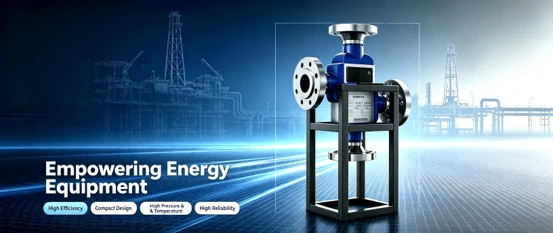
A printed circuit heat exchanger (PCHE) contains etched flow channels in metal plates joined by diffusion bonding. This creates a compact core with a pressure-bearing structure different from a removable gasketed plate pack. Channel geometry, plate ligaments, headers and material are engineered together for the two fluid circuits.
For an offshore module, compactness is valuable only when the complete installation is considered. The review should include the exchanger's dry and operating weight, header arrangement, insulation, filtration, maintenance space and access for removing a complete module.
| Requirement | What must be defined |
|---|---|
| Fluid state | CO₂ composition, inlet conditions and the required reinjection state at each operating case |
| Mechanical envelope | Design pressure and temperature on both sides, differential pressure and operating cycles |
| Channel protection | Permitted particulate carryover and the filtration arrangement |
| Thermal integration | Thermal-oil supply range, heat tracing, insulation and control response |
The project announcement specifically identifies filtration pretreatment, heat tracing and insulation as engineering considerations. These are important for a compact-channel exchanger: the maintenance strategy should prevent debris or an unsuitable fluid state from creating restrictions that cannot be removed by opening individual plates.
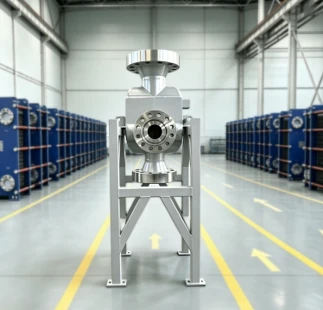
SHPHE's report states that this equipment was designed and fabricated to the applicable ASME requirements. For a new project, the purchase specification should identify the code edition, inspection responsibilities, design-life conditions and required manufacturing records. A product family's maximum published pressure and temperature are not a simultaneous operating guarantee for every unit.
Provide a process datasheet with both fluid compositions, thermal-oil conditions, operating and design pressures, the required outlet state and all start-up or turndown cases. Add offshore weight and layout restrictions so SHPHE can assess the PCHE as part of the complete reinjection package.



 English EN