English EN


What Are The Different Types of Plate Heat Exchangers
Plate Heat Exchangers include gasketed, brazed, welded, semi-welded, shell and plate, and specialty types for varied industrial uses.
More
The corrugated plate pattern is engineered to disrupt boundary layer formation, forcing fluid into chaotic flow paths. This induced turbulence significantly reduces thermal resistance and enhances convective heat transfer coefficients.
Each plate features chevron-style corrugations that create multiple contact points between adjacent plates. These intersections generate high-velocity fluid jets and localized eddies, which continuously sweep the heat transfer surface clean of stagnant film layers.
The alternating channel geometry forces fluids to follow a tortuous path, increasing the effective heat transfer area by up to 30% compared to flat plates. This design achieves heat transfer coefficients 3 to 5 times higher than conventional shell-and-tube exchangers.
Precise control of corrugation angle (typically 30° to 65°) allows optimization for specific fluid properties and flow regimes. Steeper angles promote higher turbulence for viscous fluids, while shallower angles minimize pressure drop for low-viscosity applications.
Learn more about the engineering behind this technology: Gasketed Plate Heat Exchanger Design Details
The gasketed plate heat exchanger delivers an exceptionally high heat transfer coefficient, often 3–5 times greater than traditional shell-and-tube designs. This superior thermal efficiency is achieved through turbulent flow induced by corrugated plate patterns, which maximize surface area contact between fluids while minimizing fouling risks.
Its compact plate-and-frame construction reduces footprint by up to 50% compared to conventional heat exchangers, enabling significant space savings in industrial plants. The modular design allows for easy capacity expansion by simply adding plates, offering unmatched flexibility for evolving process requirements.
By combining high thermal performance with a compact layout, this technology directly reduces energy consumption in industrial heating and cooling applications. Lower approach temperatures (as low as 1°C) enable greater heat recovery, cutting operational costs and supporting sustainability goals without compromising throughput.
In demanding industrial environments, the reliability of gasketed plate heat exchangers depends critically on seal integrity. Advanced elastomeric compounds and precision groove designs ensure zero leakage under thermal cycling, high pressure, and corrosive media.
| Gasket Material | Max Temp (°C) | Chemical Resistance | Leakage Prevention |
|---|---|---|---|
| NBR (Nitrile) | 120 | Oils, fuels, moderate acids | Excellent at low pressure |
| EPDM | 150 | Steam, hot water, ketones | Superior thermal cycling |
| Viton (FKM) | 200 | Strong acids, aromatics | High temp & pressure |
| PTFE (Teflon) | 260 | Nearly universal chemical | Low friction, anti-stick |
Table 1: Common gasket materials and their performance in harsh duty cycles. Proper material selection reduces fugitive emissions and extends maintenance intervals.
Leakage prevention mechanisms include compression stop features, pressure-energized lip seals, and double-gasket vented channels. These designs maintain sealing force even when thermal expansion causes plate movement. For extreme applications, gasketed plate heat exchangers incorporate metal-to-metal contact points to prevent over-compression and gasket extrusion.
Advanced monitoring options such as ported leakage detection grooves allow early warning of seal degradation. Combined with robust materials like EPDM or Viton, these technologies deliver reliable operation in steam, chemical, and high-sanitation processes. For fully welded alternatives, explore TP welded plate heat exchangers or wide gap welded designs for zero-gasket solutions.
In chemical processing, these heat exchangers handle aggressive fluids like sulfuric acid and caustic soda at temperatures up to 180°C and pressures of 16 bar, with flow rates ranging from 10 to 500 m³/h. The gasketed design ensures leak-proof operation and easy maintenance for frequent cleaning cycles.
For food and beverage applications, such as milk pasteurization and brewery wort cooling, operating parameters include temperatures from 4°C to 95°C and pressures below 10 bar. The smooth plate surfaces meet hygiene standards and allow CIP cleaning, reducing downtime and cross-contamination risks.
Pharmaceutical and HVAC sectors also benefit, with precise temperature control within ±0.5°C for sensitive reactions and energy recovery systems. The compact footprint supports integration into existing skids, while the modular plate design allows capacity adjustments from 5 to 1000 kW without replacing the entire unit.
The gasketed plate heat exchanger is designed for modular maintenance, allowing quick access to plate packs without disturbing piping connections. Follow the standard procedure below:
For detailed engineering support, refer to the gasketed plate heat exchanger product page for frame dimensions and gasket material compatibility charts.
Evaluating total cost of ownership (TCO) involves comparing initial investment against recurring maintenance, energy savings, and downtime costs. Key factors include:
For custom-engineered solutions, consult the pillow plates product page or printed circuit heat exchanger page for alternative designs suited to extreme pressures or temperatures.
When selecting a gasketed plate heat exchanger, consider the following parameters to match your process requirements:
For high-temperature air preheating applications, see the plate air preheaters product page. For viscous fluids or slurries, review the wide gap welded plate heat exchanger or TP welded plate heat exchanger options. For fully welded block designs, visit the HT Bloc welded plate heat exchanger page.
波纹板片结构通过精密成型的流道几何,在低雷诺数下即诱发高强度湍流,使热边界层持续破坏与重建,从而获得远高于传统管壳式换热器的对流传热系数。配合紧凑的板束布局,单位体积换热面积提升200%以上,直接降低工业系统中循环泵的电力消耗与冷却/加热介质的用量,为化工、暖通及制药等连续生产场景提供显著的能耗优化空间。
垫片密封系统采用耐高温、抗化学腐蚀的弹性体材料(如EPDM、NBR或氟橡胶),通过压力激活的自紧式密封原理,在运行压力波动或热循环条件下保持可靠的泄漏预防能力。双密封唇结构与泄漏检测槽的设计,使得即使在蒸汽、热油或腐蚀性介质等严苛工况中,也能实现零泄漏运行,保障人员安全与设备连续性。
在化工领域,该换热器成功处理含颗粒悬浮液及高黏度聚合物,通过调整板片波纹角度与间隙实现防堵塞运行;在食品加工中,全焊或可拆卸设计满足CIP在线清洗要求,用于巴氏杀菌、果汁冷却等卫生级工艺,操作温度覆盖-30°C至200°C,设计压力可达2.5MPa,灵活适应多行业工艺流体的精准温控需求。
模块化板片与垫片组件支持快速拆装,无需专用工具即可完成单板更换,大幅缩短计划内停机时间。基于实际工况选型时,通过热工计算与压降优化,可在3-5年内收回初始投资;长期运行中,板片的高耐腐蚀性及垫片的低老化速率进一步降低备件更换频率,综合成本较传统方案降低15%-25%,成为工业热管理系统中兼具高性能与低总拥有成本的优选方案。
综合来看,波纹板式换热器凭借高湍流传热效率、紧凑节能设计、可靠密封技术以及宽泛的工艺适配性,在严苛工业场景中实现了传热性能与运营经济性的平衡,是现代化工业热交换升级的可靠技术载体。
We provide you with comprehensive foreign trade solutions to help enterprises achieve global development
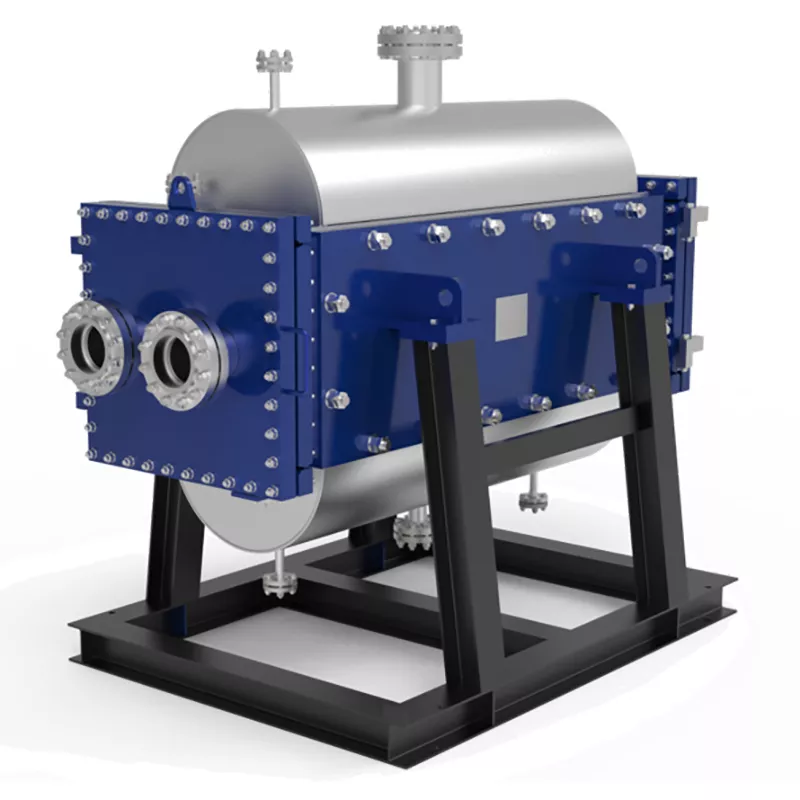
Industrial processes involving particle-laden slurries, high-viscosity syrups, or fiber-rich pulp demand more than standard equipment—they require target-engineered thermal management. At SHPHE, we configure the TP Welded Plate Heat Exchanger to directly conquer your plant's severe fouling, blockage, and erosion threats. Combining custom-tailored channel geometries, wear-resistant metallurgy, and integrated CIP (Cleaning-in-Place) systems, we deliver absolute production continuity where conventional heat exchangers fail.
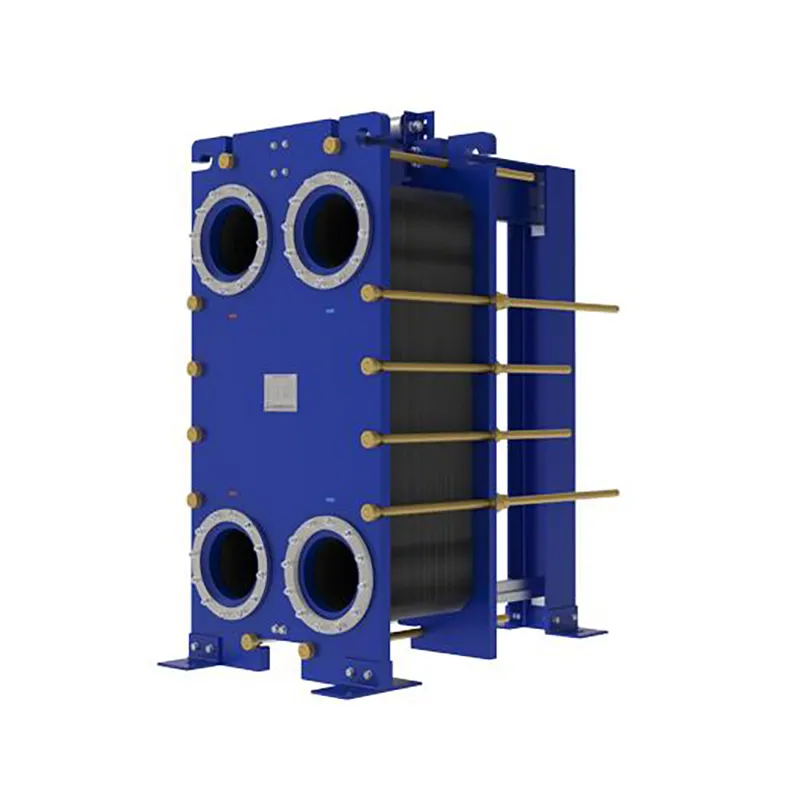
Since the invention of the plate heat exchanger (PHE) in 1923, thermal technology has evolved from standard food-grade processing to highly complex industrial operations. At SHPHE, we take this classic, versatile design and transform it into highly bespoke heat transfer solutions tailored to your unique process fluids and thermal loads. While traditional gasketed PHEs offer high efficiency and compact footprints, SHPHE optimizes plate corrugations, metallurgy, and sealing systems to handle your specific chemical, HVAC, or energy recovery parameters. Our custom-engineered gasketed plate heat exchangers provide outstanding scalability and ease of maintenance, serving as an indispensable asset for heavy industries—including oil and gas, metallurgy, and food processing—where uptime, energy recovery, and long-term sustainability are top priorities.
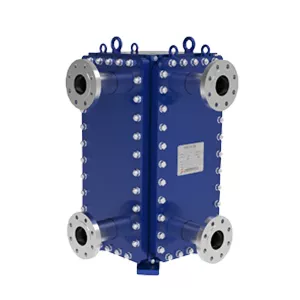
Custom-Engineered for Severe Process Demands. At SHPHE, we don't just supply equipment; we design tailored thermal solutions. Our HT-Bloc welded plate heat exchangers are custom-configured by our experienced engineers to overcome your specific industry challenges—whether handling high-viscosity media, extreme temperatures, or strict space constraints.
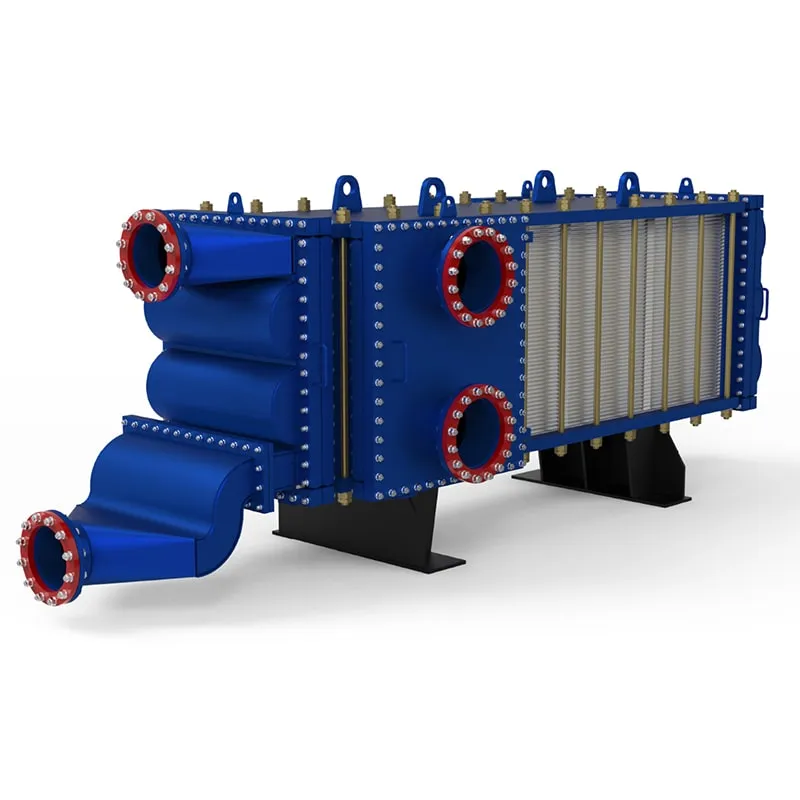
Custom-Engineered Anti-Clogging Solutions for High-Viscosity Slurries:
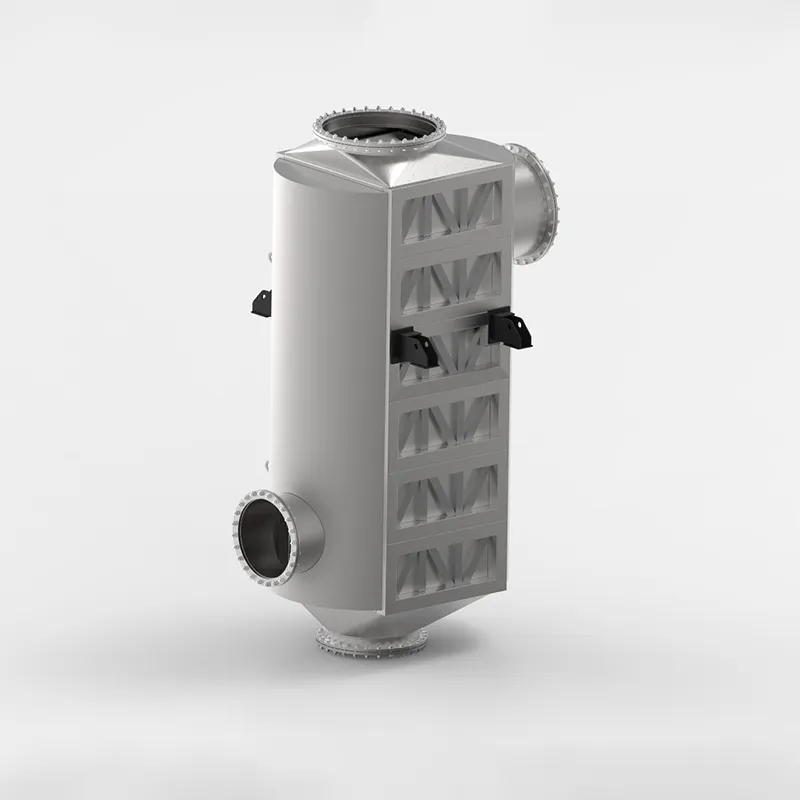
Deployed specifically to conquer severe industrial fouling, SHPHE wide gap welded plate heat exchangers are tailor-built to handle complex media containing dense fibers, coarse crystals, or solid suspensions without clogging. Each non-obstructed channel is calculated and formed by laser-welded plate packs matching your fluid’s exact rheology and grain size, completely eliminating structural "dead zones" and media stagnation. Available in highly compact vertical and versatile horizontal configurations, our vertical engineering drastically reduces plant footprints while maintaining unhindered product throughput, minimal pressure drops, and flawless continuous operations across harsh process loops.