English EN


What Are The Different Types of Plate Heat Exchangers
Plate Heat Exchangers include gasketed, brazed, welded, semi-welded, shell and plate, and specialty types for varied industrial uses.
More
Selecting the right heat exchanger is critical for balancing operational safety and long-term cost efficiency. This guide highlights five proven industrial heat exchanger types that deliver reliable thermal performance while minimizing maintenance and energy expenses. From welded plate designs to custom-engineered solutions, each option is evaluated based on real-world durability, ease of cleaning, and resistance to fouling. Whether you are upgrading an existing system or planning a new installation, these choices help you achieve consistent heat transfer without compromising budget or workplace safety.
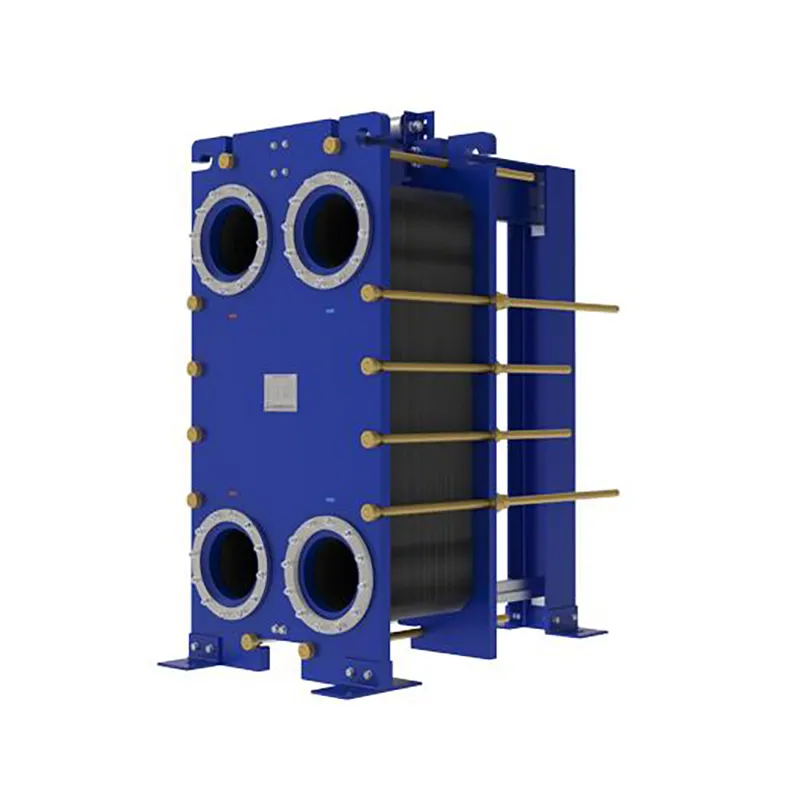
Gasketed plate heat exchangers are widely used in food processing, HVAC, and chemical industries because they offer excellent thermal efficiency and easy maintenance. The plates are clamped together with elastomeric gaskets, allowing quick disassembly for inspection or cleaning. Typical operating pressures range up to 25 bar, and temperatures can reach 180°C depending on gasket material. Their compact footprint reduces floor space requirements by up to 50% compared to shell-and-tube units of similar capacity. For applications requiring frequent cleaning or product changeovers, this design minimizes downtime and keeps operating costs low.
Safety is enhanced by the double-gasket design that prevents cross-contamination between fluids. Many models also feature pressure relief channels that direct any leakage to the outside, protecting both personnel and process integrity. With proper gasket selection, these units handle aggressive media like acids or caustic solutions reliably. Learn more about gasketed plate heat exchanger specifications for your specific duty.
TP (Tranter PHE) welded plate heat exchangers eliminate gaskets entirely by laser-welding the plate pairs. This design is ideal for high-temperature applications up to 350°C and pressures up to 40 bar. The welded construction removes the risk of gasket failure, making it a safer choice for handling flammable, toxic, or high-purity fluids. In chemical processing plants, these units often operate continuously for years without requiring plate replacement.
Cost-effectiveness comes from reduced maintenance intervals and longer service life. The all-welded design also allows for tighter plate spacing, which improves heat transfer coefficients by 15–20% compared to gasketed versions. For processes where fluid leakage cannot be tolerated, such as ammonia or hydrogen service, the TP welded plate exchanger provides a robust solution. Explore the TP welded plate heat exchanger range for detailed technical data.
Wide gap welded plate heat exchangers are designed for fluids containing solids, fibers, or high-viscosity media. The plate gap is typically 5–15 mm, allowing particles up to 10 mm to pass through without clogging. This makes them a cost-effective choice for pulp and paper, wastewater treatment, and food slurries. Because the plates are fully welded on one side, there are no gaskets to replace, and cleaning intervals can be extended by 30–50% compared to standard gasketed units.
Safety benefits include reduced fouling buildup, which lowers the risk of hot spots and thermal stress. The welded construction also prevents leaks even under fluctuating thermal cycles. For industries dealing with sticky or abrasive media, this design significantly cuts downtime and replacement part costs. Check the wide gap welded plate heat exchanger options for handling challenging fluids.
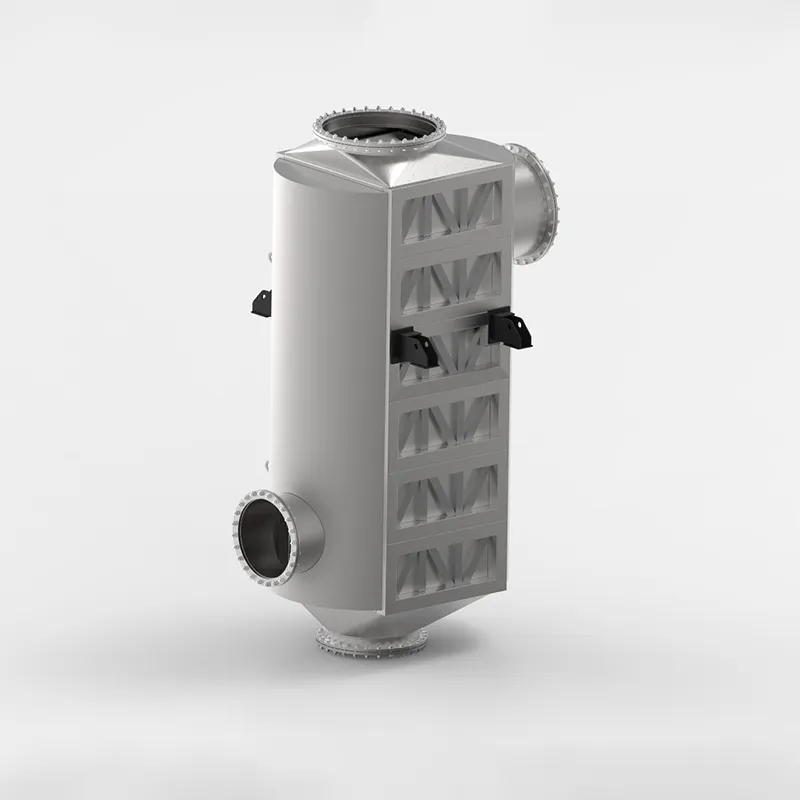
Custom engineered plate air preheaters recover waste heat from flue gases or hot air streams, preheating combustion air to improve boiler or furnace efficiency. By raising incoming air temperature by 100–200°C, these units can reduce fuel consumption by 8–15% in typical industrial settings. The plate design provides a large surface area in a compact module, and the all-welded construction ensures zero leakage between gas and air streams.
Safety is enhanced because the preheater operates at low pressure differentials, minimizing stress on welds. The modular design allows for easy expansion if heat recovery needs increase. With proper material selection (such as stainless steel or Corten), these units withstand corrosive flue gas conditions for 10–15 years. See how custom plate air preheaters can be tailored to your exhaust gas temperature and flow rate.
Printed circuit heat exchangers (PCHEs) use chemically etched flow channels in diffusion-bonded metal plates, achieving very high heat transfer densities. They are ideal for high-pressure applications up to 600 bar and temperatures from cryogenic to 800°C. The compact size—often 80% smaller than shell-and-tube units for the same duty—reduces installation costs and insulation requirements. In petrochemical and hydrogen industries, PCHEs provide exceptional safety because there are no welded joints in the fluid path, eliminating leak points.
Cost-effectiveness stems from the ability to handle extreme conditions without exotic alloys, as the diffusion bonding process creates a monolithic block with strength exceeding the base metal. Maintenance is minimal since there are no moving parts or gaskets. For applications requiring precise temperature control and high reliability, the PCHE is a long-term investment that pays back through energy savings and reduced downtime. Review the custom printed circuit heat exchanger capabilities for your high-pressure or high-temperature process.
Each of these five heat exchanger types addresses specific industrial challenges while keeping safety and total cost of ownership in focus. By matching the design to your fluid properties, pressure, temperature, and cleaning requirements, you can achieve reliable heat transfer without overspending on maintenance or risking operational hazards. Always consult with a process engineer to verify material compatibility and sizing for your exact conditions.
We provide you with comprehensive foreign trade solutions to help enterprises achieve global development
Since the invention of the plate heat exchanger (PHE) in 1923, thermal technology has evolved from standard food-grade processing to highly complex industrial operations. At SHPHE, we take this classic, versatile design and transform it into highly bespoke heat transfer solutions tailored to your unique process fluids and thermal loads. While traditional gasketed PHEs offer high efficiency and compact footprints, SHPHE optimizes plate corrugations, metallurgy, and sealing systems to handle your specific chemical, HVAC, or energy recovery parameters. Our custom-engineered gasketed plate heat exchangers provide outstanding scalability and ease of maintenance, serving as an indispensable asset for heavy industries—including oil and gas, metallurgy, and food processing—where uptime, energy recovery, and long-term sustainability are top priorities.
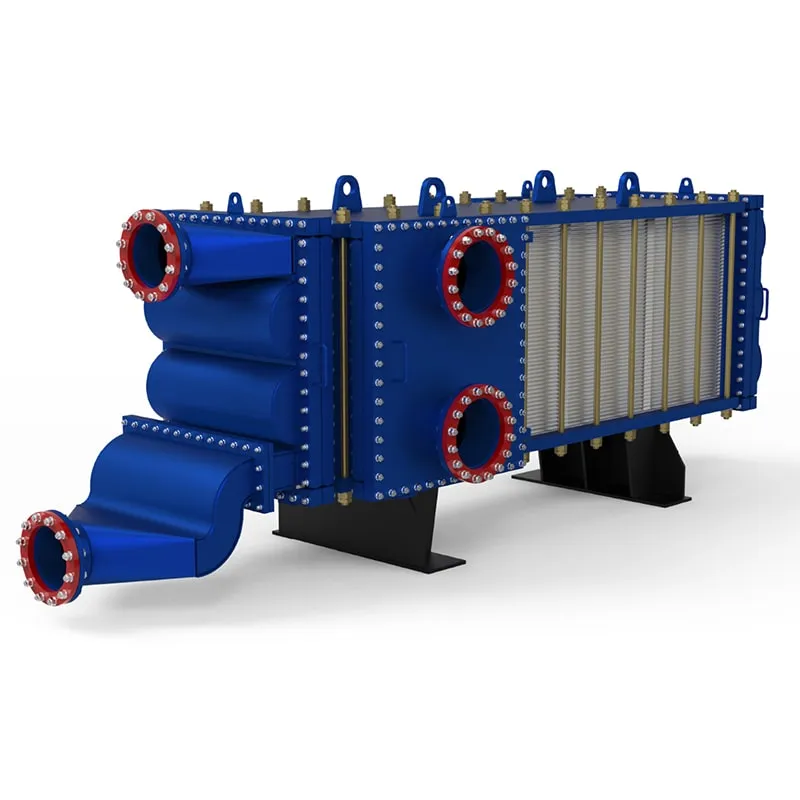
Custom-Engineered Anti-Clogging Solutions for High-Viscosity Slurries:
Deployed specifically to conquer severe industrial fouling, SHPHE wide gap welded plate heat exchangers are tailor-built to handle complex media containing dense fibers, coarse crystals, or solid suspensions without clogging. Each non-obstructed channel is calculated and formed by laser-welded plate packs matching your fluid’s exact rheology and grain size, completely eliminating structural "dead zones" and media stagnation. Available in highly compact vertical and versatile horizontal configurations, our vertical engineering drastically reduces plant footprints while maintaining unhindered product throughput, minimal pressure drops, and flawless continuous operations across harsh process loops.
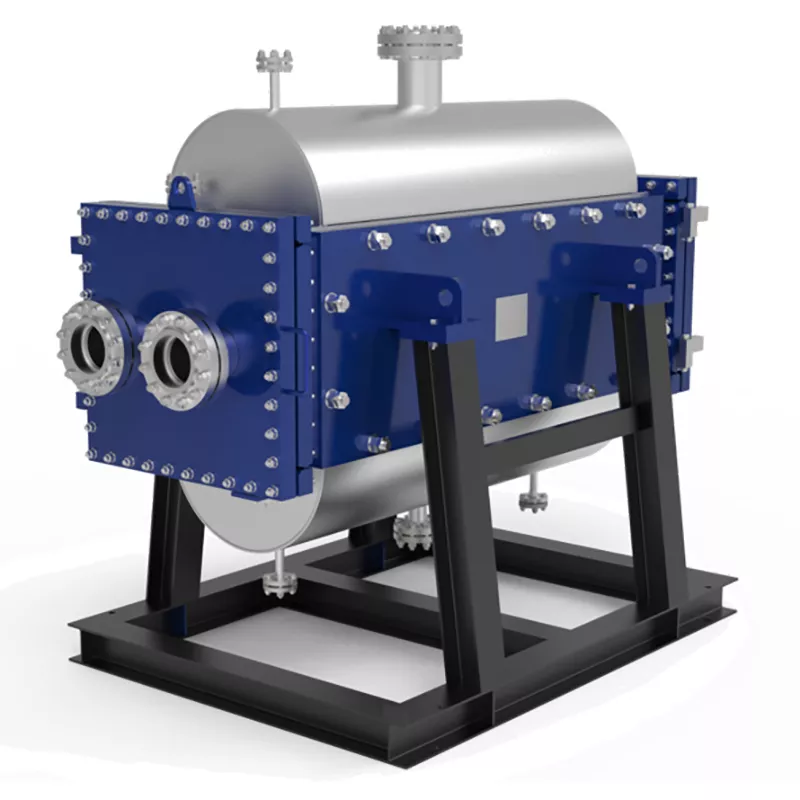
Industrial processes involving particle-laden slurries, high-viscosity syrups, or fiber-rich pulp demand more than standard equipment—they require target-engineered thermal management. At SHPHE, we configure the TP Welded Plate Heat Exchanger to directly conquer your plant's severe fouling, blockage, and erosion threats. Combining custom-tailored channel geometries, wear-resistant metallurgy, and integrated CIP (Cleaning-in-Place) systems, we deliver absolute production continuity where conventional heat exchangers fail.
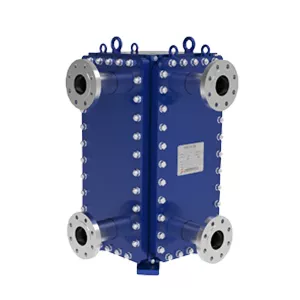
Custom-Engineered for Severe Process Demands. At SHPHE, we don't just supply equipment; we design tailored thermal solutions. Our HT-Bloc welded plate heat exchangers are custom-configured by our experienced engineers to overcome your specific industry challenges—whether handling high-viscosity media, extreme temperatures, or strict space constraints.