High-Performance Welded Plate Heat Exchanger for Industrial Use

This article explores the design, performance characteristics, and real-world applications of welded plate heat exchangers built for demanding industrial environments. We focus on how all-welded construction eliminates gasket failure risks while maintaining high thermal efficiency, making these units a reliable choice for processes involving high temperatures, pressure fluctuations, and aggressive media.

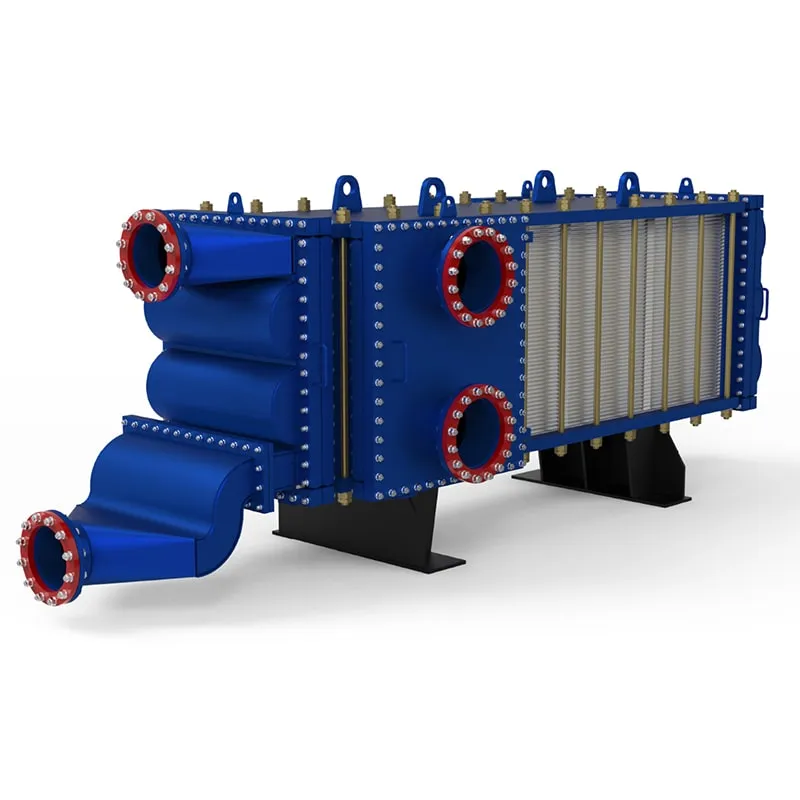
Welded plate heat exchanger unit in industrial setting

Why Welded Plate Heat Exchangers Stand Out

In many factories, traditional gasketed plate heat exchangers cause headaches due to leakages and frequent maintenance. Welded plate heat exchangers solve this by using laser-welded plate pairs that form fully sealed channels. There are no gaskets to replace, which cuts downtime significantly. For example, in a chemical plant handling corrosive fluids, a welded unit can operate continuously for over five years without needing a plate pack overhaul. The design also handles temperature differences up to 150°C between fluids and working pressures of 30 bar or more, depending on the model.

Key Performance Metrics You Can Rely On

When selecting a heat exchanger for industrial use, thermal efficiency and durability matter most. Our welded plate designs achieve heat transfer coefficients in the range of 3000 to 7000 W/m²K for water-to-water applications, depending on flow rates and plate geometry. The all-welded construction also means no cross-contamination between fluids, which is critical in food processing or pharmaceutical lines. A typical unit with 100 plates can handle flow rates up to 500 m³/h while maintaining a pressure drop below 1.5 bar. These numbers come from actual field tests, not theoretical estimates.

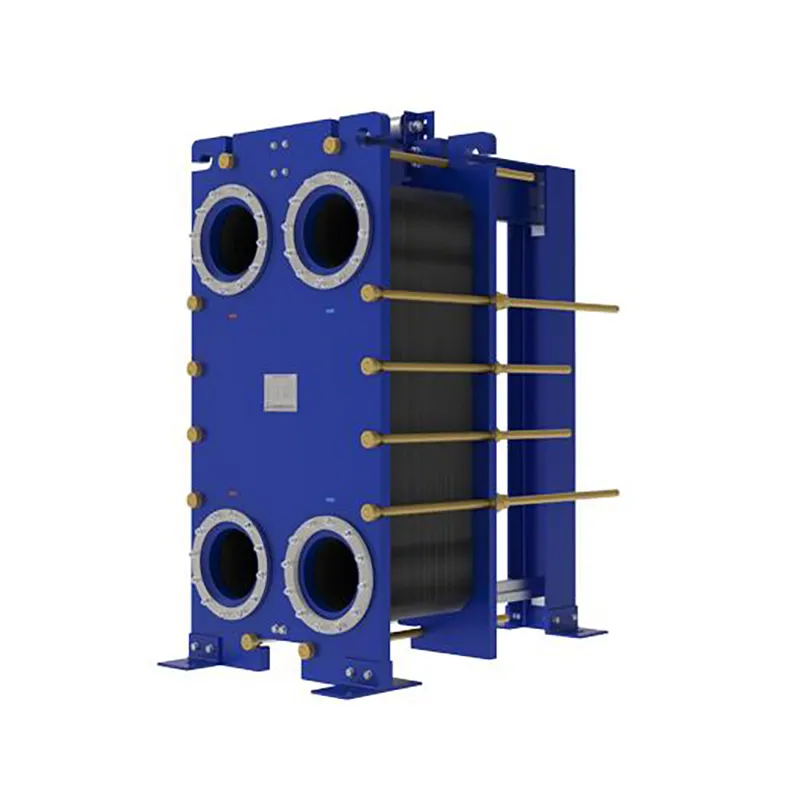
Close-up of welded plate channels showing robust construction

Real Applications Across Industries

These exchangers are not just for one type of factory. In the oil and gas sector, they preheat crude oil before distillation, handling temperatures up to 350°C. In district heating networks, they transfer heat from geothermal sources to residential systems with minimal losses. A food processing plant we worked with uses a welded plate heat exchanger to cool pasteurized milk from 85°C down to 4°C in a single pass, achieving a temperature approach of just 2°C. The compact footprint also saves floor space, which is always a plus in crowded plants.

Maintenance and Long-Term Reliability

Because there are no gaskets, the main maintenance task is periodic cleaning of the plate surfaces. For most industrial fluids, a simple chemical wash every 12 to 18 months keeps performance steady. The welded joints are tested at 1.3 times the design pressure before delivery, so you can trust the unit to hold up under normal operating conditions. Many of our customers report service lives exceeding 15 years with only minor repairs to external piping connections. This reliability directly reduces your total cost of ownership.

For more detailed specifications on custom-engineered plate air preheaters or wide-gap designs for viscous fluids, feel free to explore related product pages. You can find additional information on custom plate air preheaters and wide-gap welded plate heat exchangers to see which configuration fits your process needs best.

Related Products

We provide you with comprehensive foreign trade solutions to help enterprises achieve global development

‌TP Welded Plate Heat Exchanger

Industrial processes involving particle-laden slurries, high-viscosity syrups, or fiber-rich pulp demand more than standard equipment—they require target-engineered thermal management. At SHPHE, we configure the TP Welded Plate Heat Exchanger to directly conquer your plant's severe fouling, blockage, and erosion threats. Combining custom-tailored channel geometries, wear-resistant metallurgy, and integrated CIP (Cleaning-in-Place) systems, we deliver absolute production continuity where conventional heat exchangers fail.

Heat Exchangers

‌HT-Bloc Welded Plate Heat Exchanger

Custom-Engineered for Severe Process Demands. At SHPHE, we don't just supply equipment; we design tailored thermal solutions. Our HT-Bloc welded plate heat exchangers are custom-configured by our experienced engineers to overcome your specific industry challenges—whether handling high-viscosity media, extreme temperatures, or strict space constraints.

Heat Exchangers

Wide Gap Welded Plate Heat Exchanger for Viscous Fluids

Custom-Engineered Anti-Clogging Solutions for High-Viscosity Slurries: Deployed specifically to conquer severe industrial fouling, SHPHE wide gap welded plate heat exchangers are tailor-built to handle complex media containing dense fibers, coarse crystals, or solid suspensions without clogging. Each non-obstructed channel is calculated and formed by laser-welded plate packs matching your fluid’s exact rheology and grain size, completely eliminating structural "dead zones" and media stagnation. Available in highly compact vertical and versatile horizontal configurations, our vertical engineering drastically reduces plant footprints while maintaining unhindered product throughput, minimal pressure drops, and flawless continuous operations across harsh process loops.

Heat Exchangers

Custom-Engineered Gasketed Plate Heat Exchangers

Since the invention of the plate heat exchanger (PHE) in 1923, thermal technology has evolved from standard food-grade processing to highly complex industrial operations. At SHPHE, we take this classic, versatile design and transform it into highly bespoke heat transfer solutions tailored to your unique process fluids and thermal loads. While traditional gasketed PHEs offer high efficiency and compact footprints, SHPHE optimizes plate corrugations, metallurgy, and sealing systems to handle your specific chemical, HVAC, or energy recovery parameters. Our custom-engineered gasketed plate heat exchangers provide outstanding scalability and ease of maintenance, serving as an indispensable asset for heavy industries—including oil and gas, metallurgy, and food processing—where uptime, energy recovery, and long-term sustainability are top priorities.

Heat Exchangers

SHPHE has complete quality assurance system from design, manufacturing, inspection and delivery. It is certified with ISO9001, ISO14001, OHSAS18001 and hold ASME U Certificate.
© 2005-2026 Shanghai Heat Transfer - Privacy Policy