Top Plate and Shell Heat Exchanger Manufacturer for Custom Solutions
When process conditions demand more than what off-the-shelf heat transfer equipment can deliver, a plate and shell heat exchanger built to your exact specifications becomes the practical answer. We have spent over a decade refining our engineering and fabrication capabilities to serve industries ranging from chemical processing to HVAC and marine applications. This article walks you through what makes our custom plate and shell units stand out, how we approach design challenges, and why working with a dedicated manufacturer pays off in the long run.
Why Choose a Plate and Shell Design?
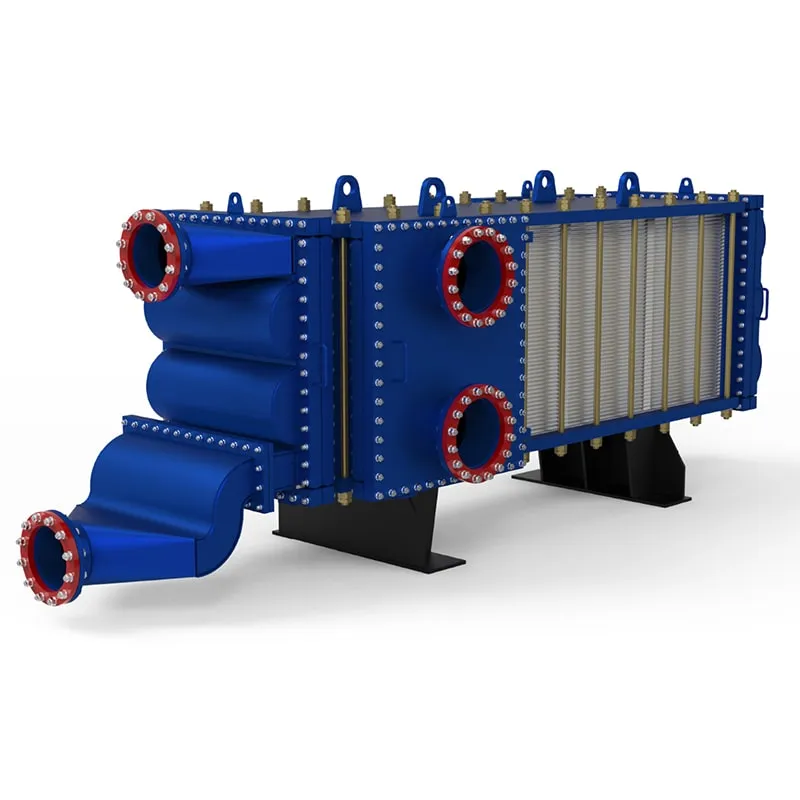
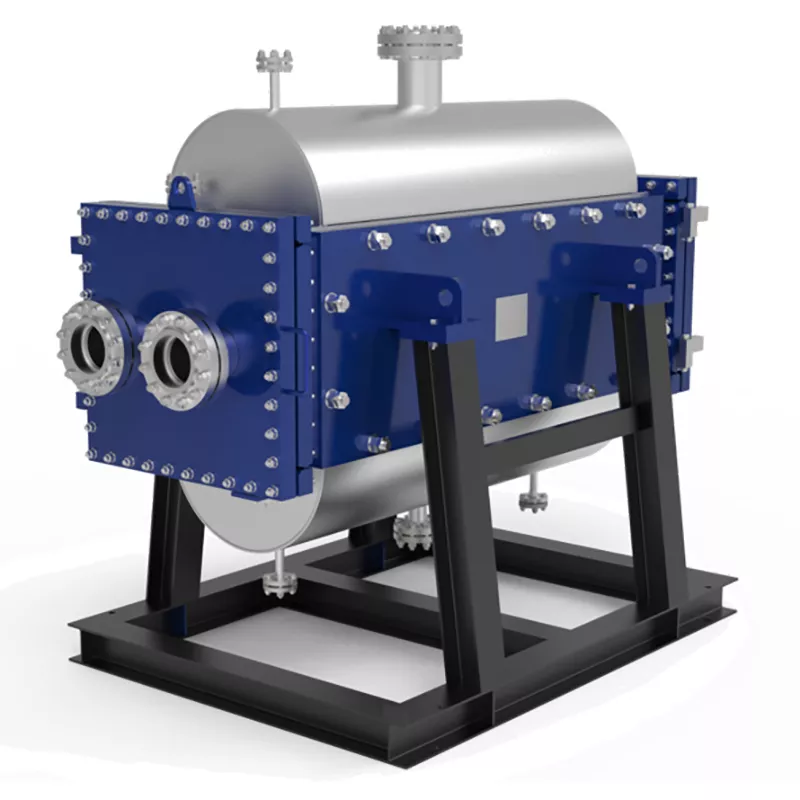
The plate and shell heat exchanger combines the best of two worlds: the compactness and high thermal efficiency of plate-type units, with the pressure and temperature capabilities traditionally associated with shell-and-tube designs. The fully welded plate pack sits inside a pressure vessel shell, eliminating the need for gaskets in most applications. This construction allows the unit to handle pressures up to 40 bar and temperatures ranging from -40°C to 400°C, depending on the materials selected.
Compared to conventional shell-and-tube exchangers, our plate and shell units typically achieve heat transfer coefficients that are 3 to 5 times higher. The turbulent flow generated by the corrugated plate pattern reduces fouling tendencies, which means less downtime for cleaning and more consistent performance over the equipment's lifespan. For processes where space is tight, the compact footprint—often 50% smaller than an equivalent shell-and-tube unit—makes retrofitting into existing plants far more straightforward.
Custom Engineering: More Than Just Sizing
A truly custom solution goes beyond picking a larger or smaller model from a catalog. Our engineering team starts by reviewing your process data: flow rates, inlet and outlet temperatures, allowable pressure drops, fluid properties, and any fouling or corrosion concerns. We then simulate the thermal and hydraulic performance using validated software, and adjust the plate geometry, channel arrangement, and nozzle sizes to match your specific operating window.
For instance, if you are handling a viscous fluid or a slurry with suspended solids, we can modify the plate corrugation angle and depth to maintain a self-cleaning flow pattern. If your process involves aggressive chemicals, we can specify alloys such as 316L stainless steel, duplex 2205, titanium, or Hastelloy C-276 for the wetted parts. We have also built units with special surface coatings for enhanced corrosion resistance in seawater cooling loops. Every nozzle, flange rating, and support lug is positioned based on your piping layout, not the other way around.
Manufacturing Capabilities and Quality Assurance
Our production facility is equipped with CNC-controlled plate pressing machines, automated TIG welding stations, and a dedicated testing bay. Each plate is stamped from certified material with full traceability, then laser-cut to ensure precise edge profiles before welding. The plate pack is assembled in a clean environment and subjected to helium leak testing to guarantee zero leakage at the welded seams.
We hold ISO 9001:2015 certification and follow ASME Section VIII Div. 1 guidelines for pressure vessel design and fabrication. Every unit undergoes a hydrostatic test at 1.3 times the design pressure before it leaves our shop. For customers in the marine or offshore sector, we can also provide DNV, ABS, or Lloyd's certification upon request. Our quality documentation package includes material certificates, weld maps, NDT reports, and a final dimensional inspection report.
Applications That Benefit Most from Custom Units
While standard plate and shell exchangers serve many duties well, certain applications almost always require a custom approach. In the chemical industry, reactors with exothermic reactions often need precise temperature control with rapid response times—our units can be designed with multiple passes to achieve the exact residence time and heat flux required. In the power generation sector, lube oil cooling and seal water cooling systems benefit from compact, high-pressure units that fit within tight turbine hall layouts.
The food and beverage industry also relies on our custom solutions for pasteurization and sterilization duties where hygienic design is critical. We offer Ra ≤ 0.8 µm surface finishes on product-contact plates and use crevice-free welded joints to meet EHEDG guidelines. For pharmaceutical applications, we can provide full documentation packages and perform FAT (Factory Acceptance Testing) with your process simulation to reduce commissioning time on site.
Design Considerations That Make a Difference
One of the most overlooked aspects of heat exchanger selection is the nozzle placement and orientation. A poorly positioned nozzle can create dead zones, increase pressure drop, or make maintenance access nearly impossible. During the design phase, we always ask about your piping layout and maintenance clearance requirements. We can place nozzles on the top, bottom, or sides of the shell, and even provide rotating flanges for easier alignment during installation.
Another critical factor is thermal expansion. In applications with wide temperature swings between the shell side and plate side, differential expansion can stress the welds. We incorporate expansion bellows or flexible plate pack designs where needed, ensuring the unit maintains its integrity over thousands of thermal cycles. Our engineers also evaluate vibration risks, especially for units operating with high-velocity gases or two-phase flows, and add internal baffles or supports to mitigate any resonance concerns.
Lifecycle Support and After-Sales Service
Choosing a custom manufacturer means you are not just buying a piece of equipment; you are entering a long-term relationship. We keep detailed records of every unit we build, including the exact plate geometry, material batch numbers, and welding parameters. If you need a replacement plate pack or a spare part five years from now, we can reproduce it without requiring a full re-engineering effort.
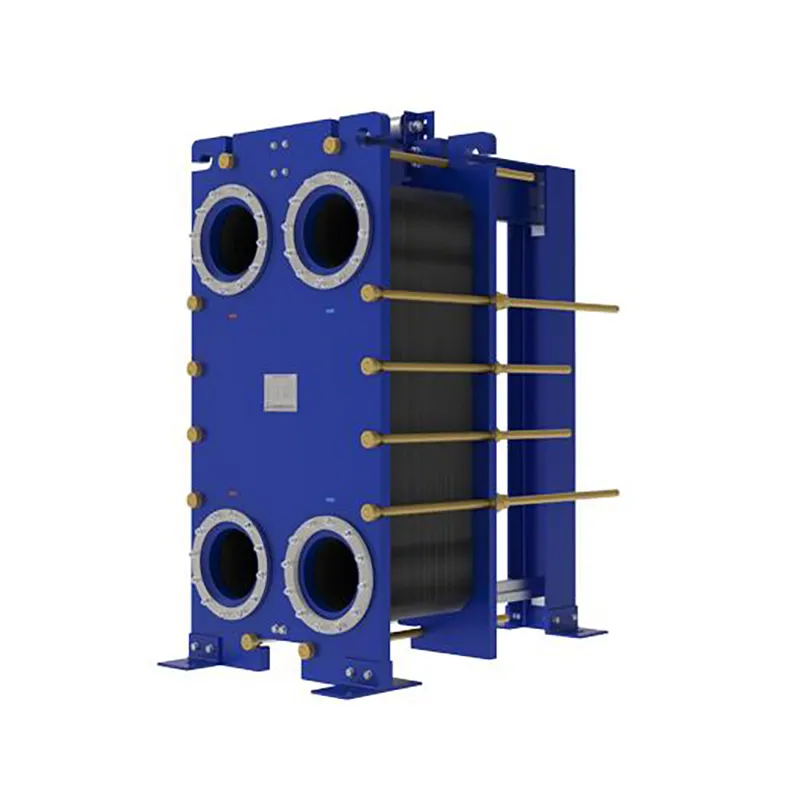
Our service team is available for on-site inspections, performance audits, and re-rating studies if your process conditions change. We also offer training for your maintenance crew on proper cleaning procedures and gasket replacement (for hybrid models). Many customers find that a well-maintained plate and shell exchanger lasts 15 to 20 years, and our support helps you achieve that full lifespan with minimal unplanned downtime.
Working with Us: A Step-by-Step Process
Getting a custom heat exchanger starts with a simple conversation. Share your process datasheet or even just a rough sketch of your requirements. Our engineers will review the feasibility and provide a preliminary thermal design within a few business days. Once the basic configuration is agreed upon, we move to detailed mechanical design, including stress calculations and 3D modeling. You will receive a dimensional drawing for approval before any fabrication begins.
Typical lead time for a custom plate and shell unit is 6 to 10 weeks, depending on the material availability and complexity. For urgent breakdowns, we can sometimes expedite a replacement using our stock of pre-fabricated plate packs and shells. We understand that unplanned downtime costs money, so we keep a buffer of common materials like 316L and carbon steel to accelerate the build process when needed.
Realistic Expectations on Performance and Cost
While custom units offer significant performance advantages, they do come at a premium compared to standard catalog models. The added engineering time, specialized materials, and rigorous testing all contribute to a higher upfront cost. However, when you factor in the energy savings from improved heat recovery, reduced maintenance frequency, and longer equipment life, the total cost of ownership often favors a custom solution.
We always provide a transparent quotation that breaks down the costs for engineering, materials, fabrication, and testing. There are no hidden fees or surprise charges. If your budget is constrained, we can discuss value engineering options—such as using a slightly less exotic material or simplifying the nozzle configuration—without compromising the core performance requirements. Our goal is to find the most cost-effective solution that meets your process needs, not to upsell unnecessary features.
Related Products and Further Reading
If you are exploring different heat exchanger technologies, you might also be interested in our other custom-engineered solutions. For high-pressure gas cooling duties, our printed circuit heat exchangers offer exceptional compactness and integrity. For applications with heavily fouling fluids, the wide gap welded plate heat exchanger provides larger flow passages. And if you need a gasketed design for easy cleaning, take a look at our gasketed plate heat exchangers.
For processes involving high temperatures and aggressive media, our TP welded plate heat exchanger series and HT-Bloc welded plate heat exchanger offer robust alternatives. We also manufacture custom pillow plates for tank heating and cooling, and plate air preheaters for combustion air recovery systems. Each product line is backed by the same engineering rigor and commitment to quality.
Final Thoughts
Selecting the right heat exchanger manufacturer is a decision that affects your plant's efficiency, reliability, and operating costs for years to come. We believe in being upfront about what we can deliver, and we take pride in building equipment that performs as promised. Our custom plate and shell heat exchangers are not just products; they are solutions developed through close collaboration with our customers.
If you have a challenging heat transfer application or simply want to discuss whether a custom unit makes sense for your project, we are ready to help. Send us your process data, and we will come back with honest feedback and a practical proposal. No pressure, no jargon—just straight talk about what will work best for your operation.

 English EN