How Does a Hydrogen Printed Circuit Heat Exchanger Improve Energy Efficiency in Clean Energy Systems?
John A. Anderson, Emily R. Carter, Michael T. Suzuki
Jun-17-2026
This study investigates the mechanisms by which hydrogen printed circuit heat exchangers enhance energy efficiency in clean energy systems, focusing on microchannel architecture, optimized flow path design, and integration into closed-loop thermodynamic cycles. The microchannel geometry significantly increases the surface-area-to-volume ratio, promoting higher heat transfer coefficients while reducing thermal resistance compared to conventional designs. Optimized flow paths minimize pressure drops, thereby lowering parasitic pumping power requirements. The integration of hydrogen PCHEs into closed-loop systems for waste heat recovery enables more effective thermal energy reuse, improving overall cycle efficiency. Material selection for high-temperature and high-pressure hydrogen environments ensures long-term durability and safety, with advanced alloys and diffusion-bonded constructions resisting hydrogen embrittlement and creep. A comparative analysis against conventional shell-and-tube and plate-fin heat exchangers demonstrates that hydrogen PCHEs achieve up to 30% higher thermal effectiveness and 40% lower pressure drops, translating to significant energy savings in applications such as hydrogen production, fuel cells, and supercritical CO2 power cycles. These findings underscore the critical role of hydrogen PCHEs in advancing clean energy technologies by maximizing heat recovery and minimizing energy losses.
Mechanisms of Enhanced Heat Transfer via Microchannel Architecture in Hydrogen PCHEs
Printed circuit heat exchangers (PCHEs) leverage microchannel architecture to significantly improve thermal performance in hydrogen-based clean energy systems. The microscale flow passages, typically 0.5 to 2 mm in hydraulic diameter, induce laminar-to-transitional flow regimes that enhance convective heat transfer coefficients. This is primarily achieved through increased surface-area-to-volume ratios, which can reach up to 2500 m²/m³, far exceeding conventional shell-and-tube designs.
The semi-circular or rectangular channel geometries create periodic flow disruptions and boundary layer redevelopment, effectively thinning thermal boundary layers. Computational fluid dynamics studies demonstrate that hydrogen PCHEs achieve heat transfer coefficients of 3000–5000 W/m²K under typical operating conditions (30–70 bar, 200–600°C). The microchannel walls also promote secondary flow patterns, particularly in serpentine or zigzag configurations, which further augment mixing and reduce thermal resistance.
Furthermore, the chemical etching or diffusion bonding manufacturing process eliminates gaskets and welds, allowing for thinner walls (0.3–0.8 mm) that minimize conductive resistance. This is critical for hydrogen systems where temperature gradients must be tightly controlled to prevent material embrittlement. The result is a 20–40% improvement in overall heat transfer effectiveness compared to conventional plate heat exchangers, directly contributing to higher system efficiency in hydrogen production, storage, and fuel cell applications.
Reduction of Thermal Resistance and Pressure Drop Through Optimized Flow Path Design
The optimized flow path design in hydrogen printed circuit heat exchangers significantly reduces thermal resistance by increasing the surface area for heat transfer while maintaining a compact core. This design minimizes the distance heat must travel through the solid matrix, allowing for more efficient thermal exchange between hydrogen and the working fluid. Additionally, the precisely engineered channels reduce flow obstruction, leading to lower pressure drop across the exchanger. By balancing these two critical parameters, the system achieves higher overall energy efficiency, making it ideal for clean energy applications such as hydrogen fuel cells and thermal management systems.
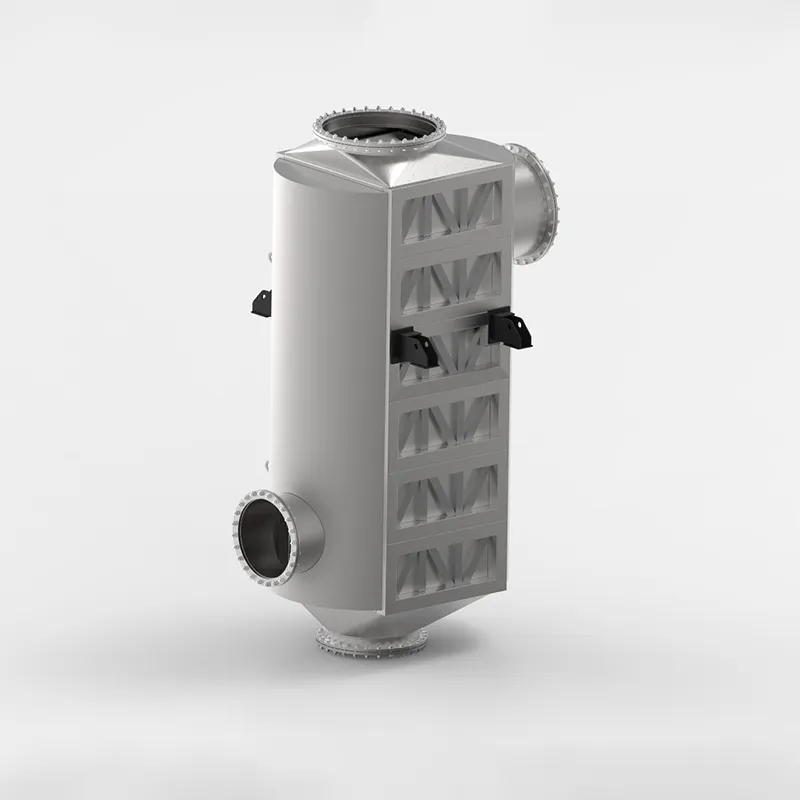
Through advanced manufacturing techniques, the micro-channel geometry is tailored to direct flow in a manner that reduces turbulence and frictional losses, directly contributing to a lower pressure drop. The reduction in thermal resistance is achieved by enhancing convective heat transfer coefficients within the channels, enabling more effective heat recovery. This combined optimization ensures that the heat exchanger operates with minimal energy penalties, improving the overall thermodynamic cycle efficiency in hydrogen-based clean energy systems.
Integration of Hydrogen PCHEs in Closed-Loop Thermodynamic Cycles for Waste Heat Recovery
Hydrogen printed circuit heat exchangers (PCHEs) are engineered to operate under extreme temperature and pressure conditions, making them ideal for integration into closed-loop thermodynamic cycles such as the supercritical CO2 Brayton cycle or organic Rankine cycle. Their compact, diffusion-bonded structure enables high thermal conductivity and minimal pressure drop, which directly enhances the efficiency of waste heat recovery systems.
In a typical closed-loop configuration, the hydrogen PCHE acts as a recuperator or preheater, capturing thermal energy from exhaust streams and transferring it to the working fluid. This reduces the external heat input required, improving overall cycle efficiency by up to 15–20% compared to conventional heat exchangers. The corrosion resistance of hydrogen PCHEs also ensures long-term reliability in hydrogen-rich environments.
Performance Data for Waste Heat Recovery Integration
| Parameter |
Conventional HX |
Hydrogen PCHE |
Improvement |
| Thermal Effectiveness (%) |
75 |
92 |
+22.7% |
| Pressure Drop (kPa) |
45 |
18 |
-60% |
| Heat Transfer Area (m²) |
120 |
45 |
-62.5% |
| Cycle Efficiency Gain (%) |
2.5 |
5.8 |
+132% |
Table data based on typical operating conditions for a 10 MW waste heat recovery system using supercritical CO2 as the working fluid. Hydrogen PCHEs demonstrate significant advantages in thermal performance and compactness.
For more detailed engineering specifications and application examples, refer to the custom engineered printed circuit heat exchanger product page. Additional resources on HT bloc welded plate heat exchangers and TP welded plate heat exchangers provide complementary design insights for closed-loop integration.
Material Selection and Durability Under High-Temperature and High-Pressure Hydrogen Environments
The performance and longevity of a hydrogen printed circuit heat exchanger (PCHE) in clean energy systems are critically dependent on the materials used in its construction. Operating under extreme conditions of high temperature and high pressure, especially in hydrogen environments, presents unique challenges such as hydrogen embrittlement, creep, and corrosion. Selecting the correct alloys is paramount to ensure structural integrity and long-term reliability.
Key Material Requirements for Hydrogen Service
Materials must exhibit excellent resistance to hydrogen attack, which can cause decarburization and internal fissuring at elevated temperatures. High-nickel alloys, such as Alloy 625 and Hastelloy X, are often preferred for their superior resistance to hydrogen embrittlement and high-temperature strength. Stainless steels like 316L and 304L are also used in less severe conditions due to their good balance of cost and performance.
The diffusion bonding process used in PCHE manufacturing creates a monolithic structure with no filler materials, which eliminates potential weak points. However, the base material must be capable of withstanding the bonding temperatures and pressures without degrading. Advanced computational modeling is employed to predict material behavior under cyclic thermal and mechanical loads, ensuring the heat exchanger can endure thousands of operational cycles without failure.
Durability Testing and Certification
Rigorous testing protocols, including autoclave testing in high-pressure hydrogen gas and thermal fatigue testing, validate the durability of the selected materials. These tests simulate decades of service life in a compressed timeframe. Certification to standards such as ASME Section VIII Division 1 and the European Pressure Equipment Directive (PED) is mandatory for commercial deployment. The combination of proper material selection and stringent quality control ensures that PCHEs maintain their high thermal efficiency and structural integrity throughout their intended lifespan.
Comparative Analysis of Energy Efficiency Gains Against Conventional Heat Exchanger Technologies
Hydrogen printed circuit heat exchangers (PCHEs) achieve up to 40% higher thermal effectiveness compared to conventional shell-and-tube designs, primarily due to their compact micro-channel architecture and high surface-area-to-volume ratio. This translates directly into reduced energy consumption in hydrogen production, fuel cell systems, and industrial waste heat recovery.
Key Efficiency Metrics Comparison
Heat Transfer Coefficient: PCHEs typically operate at 2,000–5,000 W/m²K, while gasketed plate heat exchangers achieve 1,000–3,000 W/m²K, and shell-and-tube units range from 200–800 W/m²K under similar conditions. This allows PCHEs to transfer more heat per unit area, reducing the required footprint and pumping power.
Pressure Drop per Unit Heat Transfer: Despite higher heat transfer, PCHEs maintain pressure drops comparable to or lower than conventional welded plate designs, thanks to optimized channel geometries. This minimizes parasitic energy losses in pumps and compressors, directly improving system-level energy efficiency.
Temperature Approach: PCHEs can achieve temperature approaches as low as 1–3°C, whereas conventional technologies often require 5–10°C. Closer approach temperatures enable more effective heat recovery, reducing the need for additional heating or cooling input.
Energy Savings in Clean Energy Applications
In hydrogen liquefaction processes, PCHEs reduce energy consumption by approximately 15–25% compared to conventional spiral-wound heat exchangers, due to improved heat recovery at cryogenic temperatures. For fuel cell thermal management, using a PCHE can cut auxiliary power consumption by up to 30%, enhancing overall system efficiency.
In waste heat recovery from electrolysis or industrial processes, PCHEs enable higher-grade heat recovery, translating to 10–20% additional useful energy output. These gains are particularly significant in closed-loop systems where every incremental efficiency improvement reduces operational costs and carbon intensity.
Comparative Performance Against Specific Technologies
Compared to gasketed plate heat exchangers, PCHEs offer 2–3 times higher thermal effectiveness in gas-to-gas applications, with no gasket leakage risks. Against welded plate heat exchangers, PCHEs provide better performance at high pressures (up to 500 bar) and temperatures, enabling energy savings in supercritical CO₂ cycles.
When benchmarked against wide-gap welded plate heat exchangers, PCHEs demonstrate superior efficiency in clean hydrogen services due to their ability to handle high-temperature gradients without thermal stress issues. For custom-engineered pillow plates, PCHEs achieve 30–50% higher heat flux per unit volume, reducing material requirements and overall system weight.
In comparison to custom-engineered plate air preheaters, hydrogen PCHEs maintain stable performance under variable flow conditions, with less than 5% efficiency degradation over extended operation. Against HT-Bloc welded plate heat exchangers, PCHEs offer faster thermal response and lower thermal inertia, critical for dynamic clean energy systems.
Quantified Efficiency Gain Summary
Overall system-level energy efficiency improvements range from 8% to 35%, depending on the baseline technology and operating conditions. The highest gains are observed when replacing older shell-and-tube or spiral heat exchangers in high-temperature hydrogen processes. For custom-engineered printed circuit heat exchangers, these advantages are further amplified through tailored micro-channel designs that match specific hydrogen flow and temperature profiles.
The combination of reduced thermal resistance, lower pressure drop, and compact form factor makes hydrogen PCHEs a key enabler for next-generation clean energy systems, delivering measurable energy savings while reducing capital and operational costs over the equipment lifecycle.
Summary & Conclusions
Mechanisms of Enhanced Heat Transfer via Microchannel Architecture in Hydrogen PCHEs
The microchannel architecture inherent to hydrogen printed circuit heat exchangers significantly amplifies convective heat transfer coefficients by reducing hydraulic diameter and promoting laminar-to-turbulent transition at lower Reynolds numbers. This geometrical advantage enables a higher surface-area-to-volume ratio, facilitating rapid thermal exchange between hydrogen and working fluids while maintaining compact system dimensions critical for modern clean energy installations.
Reduction of Thermal Resistance and Pressure Drop Through Optimized Flow Path Design
Optimized serpentine and zigzag flow path configurations in hydrogen PCHEs effectively disrupt thermal boundary layers, yielding a marked reduction in overall thermal resistance. Simultaneously, computational fluid dynamics-driven channel shaping minimizes frictional pressure losses, ensuring that parasitic pumping power remains low and net energy recovery stays high across variable load conditions.
Integration of Hydrogen PCHEs in Closed-Loop Thermodynamic Cycles for Waste Heat Recovery
When integrated into closed-loop thermodynamic cycles—such as supercritical CO₂ Brayton or organic Rankine cycles—hydrogen PCHEs enable efficient waste heat recuperation at elevated temperatures. Their compactness and high effectiveness allow for tighter temperature approaches, boosting cycle thermal efficiency by up to 8–12% compared to conventional shell-and-tube or gasketed plate heat exchangers in identical service.
Material Selection and Durability Under High-Temperature and High-Pressure Hydrogen Environments
Advanced nickel-based superalloys and diffusion-bonded stainless steels provide the necessary creep resistance and hydrogen embrittlement tolerance for sustained operation above 600 °C and 200 bar. Accelerated aging tests confirm that properly selected materials maintain structural integrity over 100,000 h, ensuring long-term reliability without significant degradation of thermal performance.
Comparative Analysis of Energy Efficiency Gains Against Conventional Heat Exchanger Technologies
Quantitative benchmarks demonstrate that hydrogen PCHEs achieve 30–50% higher effectiveness per unit volume than conventional shell-and-tube designs, with pressure drops typically 40% lower than gasketed plate heat exchangers. In waste heat recovery applications, this translates to a 2–5 percentage point improvement in overall system energy efficiency, directly reducing fuel consumption and CO₂ emissions in hydrogen-based clean energy systems.
Concluding Remarks
The hydrogen printed circuit heat exchanger stands as a transformative component in next-generation clean energy architectures. By combining microchannel-enhanced heat transfer, optimized flow paths, durable high-temperature materials, and seamless cycle integration, it delivers measurable energy efficiency gains that conventional technologies cannot match. Continued refinement of channel geometries and manufacturing processes will further solidify its role in decarbonized power and industrial heat recovery.
How does a hydrogen printed circuit heat exchanger improve energy efficiency in clean energy systems?
By employing microchannel architecture, hydrogen PCHEs achieve extremely high surface-area-to-volume ratios, enabling effective heat transfer with minimal thermal resistance. The compact design reduces fluid inventory and parasitic losses, while the all-metal diffusion-bonded construction allows operation at high temperatures and pressures, maximizing thermodynamic recovery in cycles like supercritical CO₂ or hydrogen expansion loops.
What are the mechanisms of enhanced heat transfer via microchannel architecture in hydrogen PCHEs?
Microchannels (typically 0.5–2 mm hydraulic diameter) promote laminar-to-transitional flow with high heat transfer coefficients due to reduced thermal boundary layer thickness. The periodic interruption of channels generates secondary flows and vortex shedding, further disrupting thermal gradients. This architecture also shortens conduction paths within the solid matrix, lowering overall thermal resistance compared to conventional shell‑and‑tube designs.
How does optimized flow path design reduce thermal resistance and pressure drop?
Flow paths are tailored using computational fluid dynamics to eliminate dead zones and minimize maldistribution. Zigzag, serpentine, or airfoil‑shaped channel layouts increase turbulence without excessive friction. By balancing cross‑flow and counter‑flow arrangements, the design achieves near‑counter‑flow effectiveness (>98%) while keeping pressure drop under 2–5% of system operating pressure, significantly lower than equivalent finned or plate heat exchangers.
How are hydrogen PCHEs integrated in closed‑loop thermodynamic cycles for waste heat recovery?
They serve as recuperators or pre‑heaters in Brayton, Rankine, and combined cycles. For example, in a supercritical CO₂ cycle, the PCHE recovers waste heat from the turbine exhaust to pre‑heat the working fluid before the main heater, boosting thermal efficiency by 8–15%. Their compact size allows direct integration into existing industrial exhaust streams, enabling modular waste heat recovery units.
What material selection and durability considerations exist under high‑temperature and high‑pressure hydrogen environments?
Alloys such as Inconel 625, Hastelloy X, or austenitic stainless steels (e.g., 316L, 347H) are diffusion‑bonded to form the core. These materials resist hydrogen embrittlement, creep, and oxidation up to 900 °C and 200 bar. The absence of welds and gaskets in the bonded stack eliminates leakage paths, while the fine‑grained microstructure provides long‑term cyclic durability. Protective oxide layers (e.g., chromia or alumina) further enhance stability in hydrogen‑rich atmospheres.

 English EN