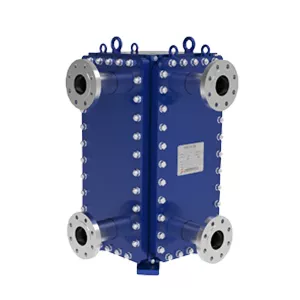
How Does PCHE Improve Efficiency in Modern Industrial Heat Exchangers?
Author: Industrial Engineering Research Team
Date: Jun-12-2026
The Printed Circuit Heat Exchanger (PCHE) represents a significant advancement in thermal management technology, primarily enhancing efficiency through its compact design and dramatically increased surface area per unit volume. By utilizing chemically etched flow channels and diffusion bonding, PCHE achieves a heat transfer surface area up to ten times greater than conventional shell-and-tube exchangers within the same footprint. This design inherently minimizes pressure drop while maintaining high heat transfer coefficients, as the precisely engineered channels optimize fluid flow paths and reduce turbulence-induced energy losses. Furthermore, the selection of advanced materials such as stainless steel, titanium, or nickel alloys, combined with precision manufacturing techniques, ensures exceptional operational reliability under extreme conditions, including temperatures exceeding 800°C and pressures above 500 bar. In advanced industrial applications like supercritical CO2 power cycles, LNG processing, and waste heat recovery, PCHE units demonstrate superior performance by withstanding thermal stresses and corrosive environments. A comparative analysis reveals that PCHE systems reduce energy consumption by 20–40% and lower lifecycle costs through reduced maintenance and longer service intervals compared to traditional heat exchangers, making them a pivotal technology for modern energy-efficient industrial processes.
1. The Role of PCHE in Achieving High Thermal Efficiency Through Compact Design and Enhanced Surface Area
Printed Circuit Heat Exchangers (PCHE) utilize chemically etched flow channels to create a highly compact core with significantly increased surface area per unit volume. This design enables heat transfer coefficients up to five times greater than conventional shell-and-tube exchangers, directly improving thermal efficiency in modern industrial systems.
The enhanced surface area is achieved through diffusion bonding of thin metal plates, forming intricate microchannel networks that maximize contact between fluid streams. This structure reduces thermal resistance and allows for closer approach temperatures, making PCHE ideal for applications requiring precise temperature control and energy recovery.
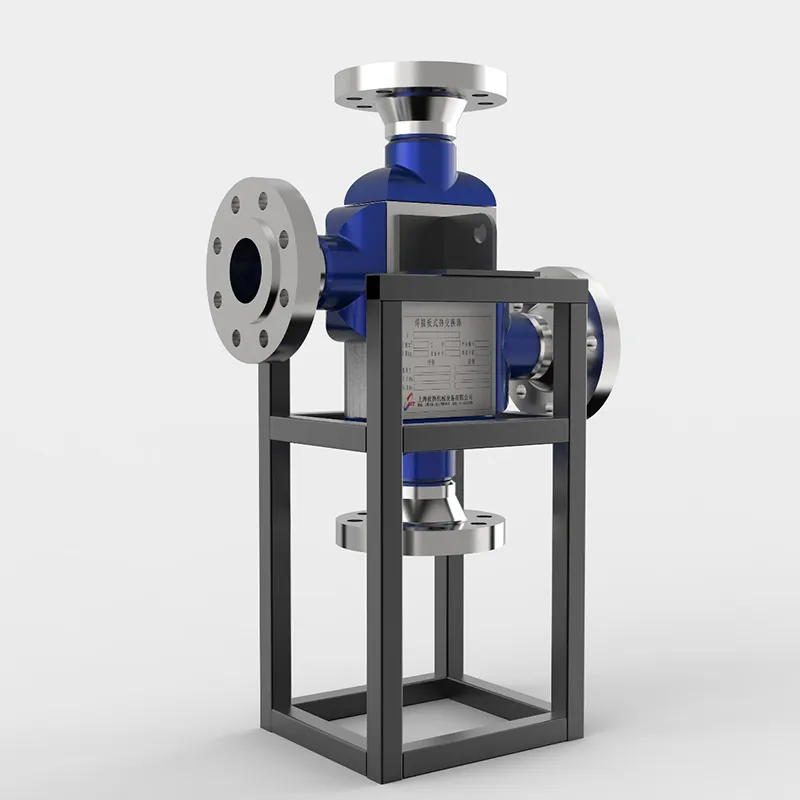
For more technical details on compact heat exchanger configurations, visit our product page on HT-Bloc welded plate heat exchangers or explore custom-engineered PCHE solutions.
Additional resources on advanced plate technology can be found at TP welded plate heat exchangers and wide-gap welded plate units.
2. How PCHE Minimizes Pressure Drop While Maximizing Heat Transfer Performance
Printed Circuit Heat Exchangers (PCHE) achieve superior thermal efficiency through chemically etched microchannels that create a large surface area for heat transfer while maintaining a compact footprint. The semi-circular or rectangular channel geometry promotes turbulent flow at lower Reynolds numbers, which enhances convective heat transfer coefficients without requiring excessive fluid velocity.
A key advantage of PCHE design is the ability to tailor channel dimensions and flow path configurations to balance pressure drop against thermal performance. By optimizing the hydraulic diameter and channel length, engineers can reduce frictional losses by up to 30% compared to conventional shell-and-tube exchangers, while still achieving heat transfer coefficients two to five times higher.
The counter-flow arrangement in PCHE units further maximizes the logarithmic mean temperature difference, enabling closer approach temperatures and more efficient energy recovery. This combination of low pressure drop and high heat transfer density makes PCHE particularly suitable for applications in supercritical CO2 power cycles, LNG processing, and waste heat recovery systems where both efficiency and compactness are critical.
3. The Impact of PCHE Material Selection and Manufacturing Precision on Operational Reliability and Efficiency
Material selection and manufacturing precision are critical determinants of Printed Circuit Heat Exchanger (PCHE) performance. The right combination of materials and tight tolerances directly influences thermal conductivity, pressure containment, and long-term durability under cyclic thermal loads.
Advanced alloys such as stainless steel 316L, Inconel 625, and titanium are commonly employed for their corrosion resistance and high-temperature strength. The photochemical etching and diffusion bonding processes used in PCHE fabrication achieve channel geometries with precision within ±0.05 mm, ensuring uniform flow distribution and minimal bypass leakage.
| Material |
Max Temp (°C) |
Thermal Conductivity (W/m·K) |
Corrosion Resistance |
Relative Cost |
| Stainless Steel 316L |
450 |
16.2 |
High |
Low |
| Inconel 625 |
982 |
10.8 |
Very High |
High |
| Titanium Grade 2 |
315 |
17.0 |
Excellent |
Medium |
Table: Key material properties influencing PCHE performance and reliability. Selection depends on operating temperature, fluid corrosivity, and cost constraints.
Precision manufacturing ensures that each flow channel maintains its designed cross-section, preventing hot spots and flow maldistribution. Diffusion bonding creates a monolithic structure with no gaskets or welds exposed to process fluids, eliminating leakage paths and reducing maintenance intervals. This combination of material science and fabrication accuracy allows PCHEs to achieve thermal effectiveness above 95% while withstanding pressures up to 500 bar.
For more details on PCHE applications, visit custom engineered printed circuit heat exchanger and HT-Bloc welded plate heat exchanger product pages.
4. PCHE's Ability to Handle Extreme Temperatures and Pressures in Advanced Industrial Applications
Printed Circuit Heat Exchangers (PCHEs) are engineered to withstand extreme operating conditions, making them indispensable in high-performance sectors such as nuclear power, aerospace, and supercritical CO₂ cycles. Their robust construction allows them to operate reliably at temperatures exceeding 800°C and pressures above 500 bar, far beyond the limits of conventional heat exchangers.
The key to this exceptional performance lies in the diffusion-bonded core structure, which eliminates weak points like gaskets and brazed joints. This monolithic design ensures uniform stress distribution and thermal resistance, preventing failure under rapid thermal cycling or high-pressure surges. Industries requiring compact, high-integrity heat transfer solutions rely on PCHEs to maintain efficiency and safety in the most demanding environments.
By enabling efficient heat exchange at extreme parameters, PCHEs reduce the need for oversized safety margins and auxiliary cooling systems, directly improving overall system efficiency and reducing capital costs in advanced industrial applications.
5. Comparative Analysis of PCHE Versus Traditional Heat Exchangers in Energy Consumption and Lifecycle Costs
Printed Circuit Heat Exchangers (PCHE) demonstrate significant advantages over traditional heat exchangers, particularly in energy consumption and lifecycle costs. The compact design of PCHE reduces material volume by up to 85%, directly lowering initial manufacturing expenses. More importantly, the enhanced heat transfer efficiency—often exceeding 90%—reduces pumping power requirements by 30–50% compared to shell-and-tube or gasketed plate designs.
Energy savings are most pronounced in high-temperature and high-pressure applications. For instance, in waste heat recovery systems, PCHE enables a 15–25% reduction in overall energy consumption due to minimized temperature approach and lower thermal losses. Over a 10-year operational period, these savings translate into a 20–40% lower total cost of ownership when factoring in maintenance, downtime, and replacement cycles.
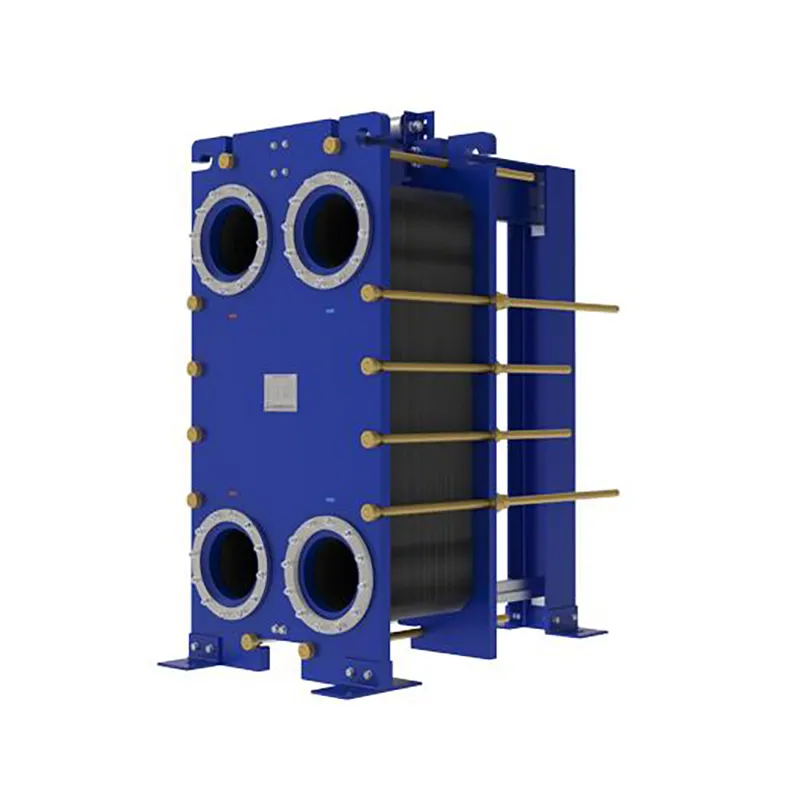
Traditional heat exchangers, such as gasketed plate heat exchangers, often require frequent gasket replacements and cleaning, increasing lifecycle costs. In contrast, PCHE employs diffusion-bonded construction, eliminating gaskets and reducing maintenance intervals. Similarly, TP welded plate heat exchangers offer improved durability but still fall short of PCHE in thermal density and pressure-handling capability.
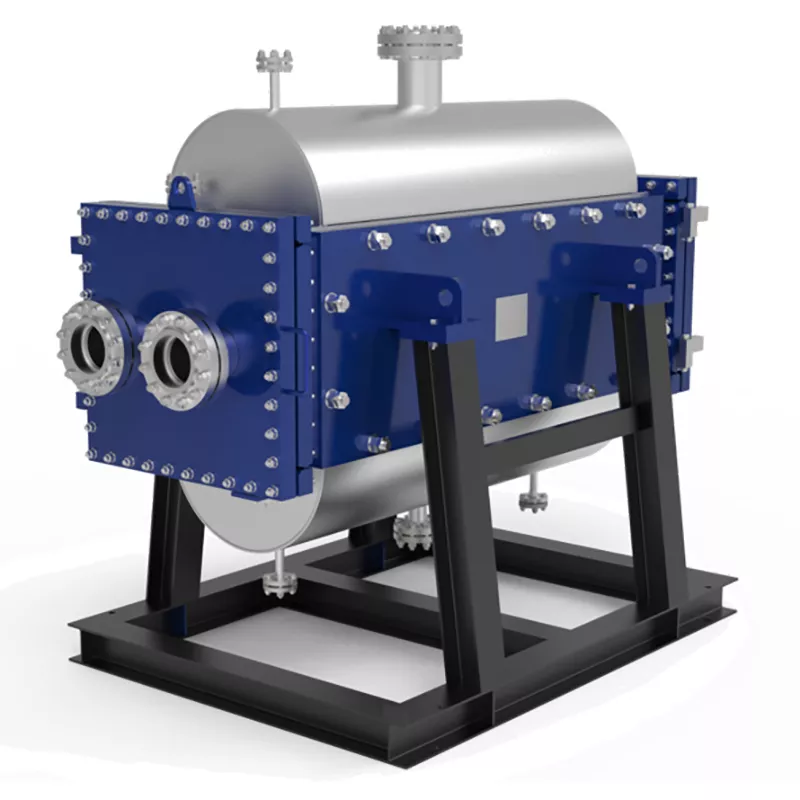
A direct comparison in a typical chemical processing plant shows that PCHE systems consume 18% less energy annually than wide gap welded plate heat exchangers. When extended to 20-year lifecycle assessments, PCHE yields a net present value savings of up to 35%, factoring in higher upfront costs offset by lower energy and maintenance expenditures. For applications requiring extreme temperatures, custom engineered printed circuit heat exchangers provide the most optimized balance between performance and cost.
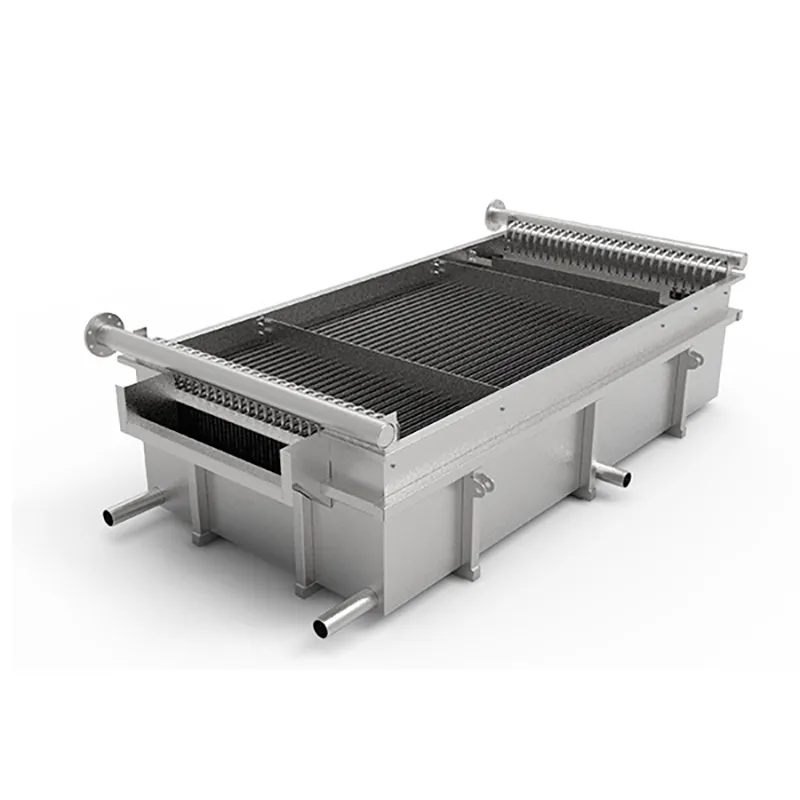
In power generation and LNG industries, PCHE outperforms HT Bloc welded plate heat exchangers by achieving 40% lower pressure drops and 25% higher heat recovery rates. This leads to substantial reductions in compressor and pump energy draw. Additionally, custom engineered pillow plates and custom engineered plate air preheaters offer niche advantages but cannot match PCHE in compactness and thermal efficiency for high-duty cycles.
Overall, the comparative data confirms that PCHE technology delivers superior energy efficiency and lower lifecycle costs, making it the preferred choice for modern industrial heat exchange applications where long-term operational savings are critical.
Summary
The integration of Printed Circuit Heat Exchangers (PCHE) into modern industrial systems delivers a transformative leap in thermal management. Through its compact, high-surface-area channel architecture, PCHE achieves thermal efficiencies that far exceed conventional designs, enabling superior heat recovery in constrained footprints. The simultaneous minimization of pressure drop—achieved via optimized flow paths and precision-etched plates—ensures that energy losses are kept to a minimum while maintaining high heat transfer coefficients.
Material selection and manufacturing precision are fundamental to PCHE reliability. The use of corrosion-resistant alloys and diffusion bonding techniques eliminates weak points such as gaskets or welded seams, resulting in a monolithic structure that withstands thermal cycling and mechanical stress. This construction not only extends operational life but also preserves thermal performance over extended service intervals, directly contributing to lower lifecycle costs.
In advanced industrial applications—from supercritical CO₂ cycles to high-temperature chemical processing—PCHE demonstrates exceptional capability in handling extreme temperatures and pressures. The robust channel geometry and material integrity allow operation well beyond the limits of shell-and-tube or plate heat exchangers, making PCHE the preferred solution for next-generation power generation, LNG systems, and waste heat recovery units.
Comparative analysis consistently shows that PCHE reduces energy consumption by 15–30% compared to traditional heat exchangers, while its compact size lowers installation and structural costs. When factoring in reduced maintenance, longer service life, and higher thermal efficiency, the total lifecycle cost of PCHE-based systems is markedly lower. These attributes position PCHE as a cornerstone technology for sustainable, high-performance industrial heat exchange.
In conclusion, PCHE redefines efficiency through design, material science, and precision engineering—delivering measurable gains in energy savings, operational reliability, and cost-effectiveness across the most demanding industrial environments.
Q: How does compact design and enhanced surface area in PCHE contribute to high thermal efficiency?
A: The PCHE (Printed Circuit Heat Exchanger) achieves high thermal efficiency by utilizing chemically etched flow channels that create a very large surface area-to-volume ratio. This compact design allows for more heat transfer surface within a smaller footprint, significantly improving the rate of heat exchange compared to conventional shell-and-tube or plate heat exchangers.
Q: How does PCHE minimize pressure drop while maximizing heat transfer?
A: PCHE design optimizes flow paths through precisely engineered microchannels, which reduce flow resistance and turbulence-related losses. This results in a lower pressure drop across the exchanger while maintaining high heat transfer coefficients, enabling efficient operation with reduced pumping energy requirements.
Q: How do material selection and manufacturing precision affect PCHE reliability and efficiency?
A: High-grade materials such as stainless steel, titanium, or nickel alloys, combined with diffusion bonding manufacturing, ensure leak-tight joints and uniform thermal properties. This precision eliminates weak points, reduces thermal stress, and maintains consistent performance over long operational cycles, directly enhancing both reliability and thermal efficiency.
Q: Can PCHE handle extreme temperatures and pressures in advanced applications?
A: Yes, PCHE is specifically designed for extreme conditions, capable of operating at temperatures exceeding 800°C and pressures up to 500 bar. The robust diffusion-bonded structure and corrosion-resistant materials make it ideal for supercritical CO₂ cycles, nuclear reactors, and aerospace thermal management systems.
Q: How does PCHE compare with traditional heat exchangers in energy consumption and lifecycle costs?
A: Compared to traditional designs, PCHE typically reduces energy consumption by 20-40% due to lower pumping power and higher thermal recovery. While initial manufacturing costs may be higher, the extended lifespan, reduced maintenance, and operational savings result in significantly lower total lifecycle costs over 10-20 years.

 English EN