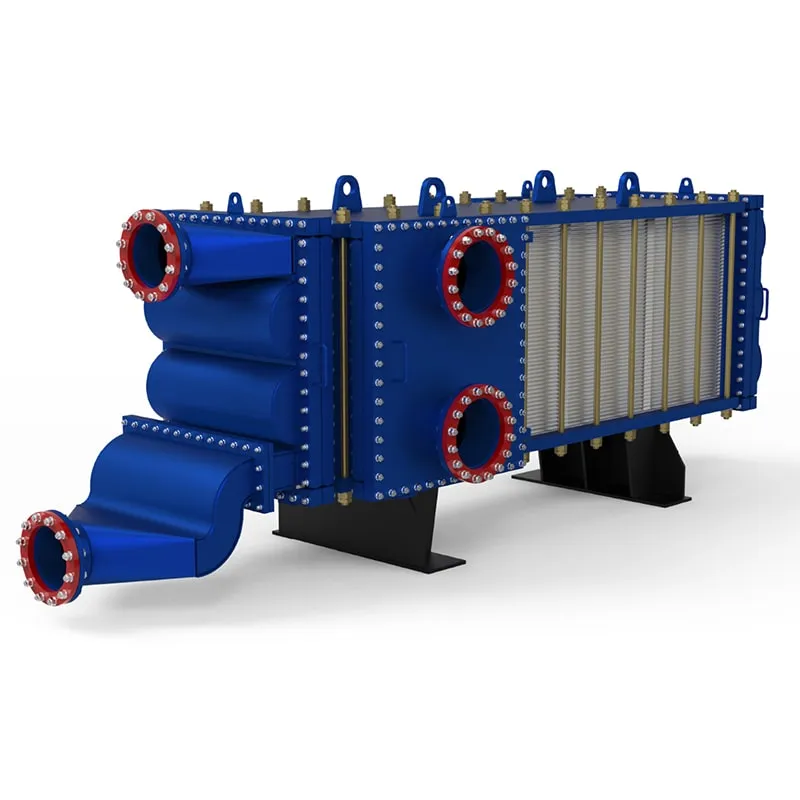
When selecting a heat exchanger plate, the material grade and surface geometry directly affect how efficiently your system transfers heat. Most industrial plates are pressed from stainless steel 304, 316L, or titanium, depending on the fluid chemistry and operating temperature. For example, 316L stainless steel offers excellent resistance to chloride-induced stress corrosion cracking, making it a preferred choice in marine and chemical processing applications. Plates made from titanium, while more expensive, provide superior performance in highly corrosive environments like seawater cooling or brine heating.
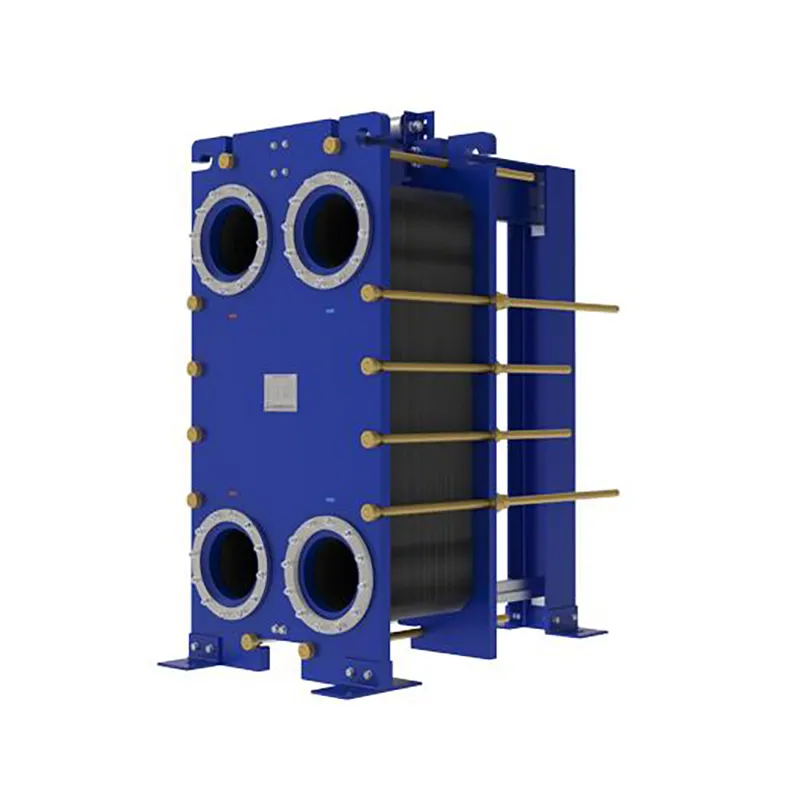
The corrugation pattern on a plate is not just for structural strength—it creates turbulent flow even at low Reynolds numbers. Turbulence breaks up the boundary layer on the plate surface, increasing the heat transfer coefficient by 30% to 50% compared to laminar flow conditions. In a typical gasketed plate heat exchanger, the chevron angle (commonly 30°, 45°, or 60°) determines the balance between thermal performance and pressure drop. A 45° chevron angle is widely used because it provides a good compromise: a heat transfer coefficient of about 5000 to 7000 W/m²K for water-to-water duty, with a pressure drop of 30 to 80 kPa per pass.
Plate thickness also plays a critical role. Standard plates range from 0.4 mm to 0.8 mm. Thinner plates reduce thermal resistance and material cost, but they must withstand the design pressure and clamping force. For high-pressure applications above 16 bar, plates of 0.6 mm or 0.8 mm thickness are common. The gasket material, typically NBR or EPDM, must be compatible with the fluid temperature range. NBR works well for oil and water up to 130°C, while EPDM handles steam and hot water up to 160°C.
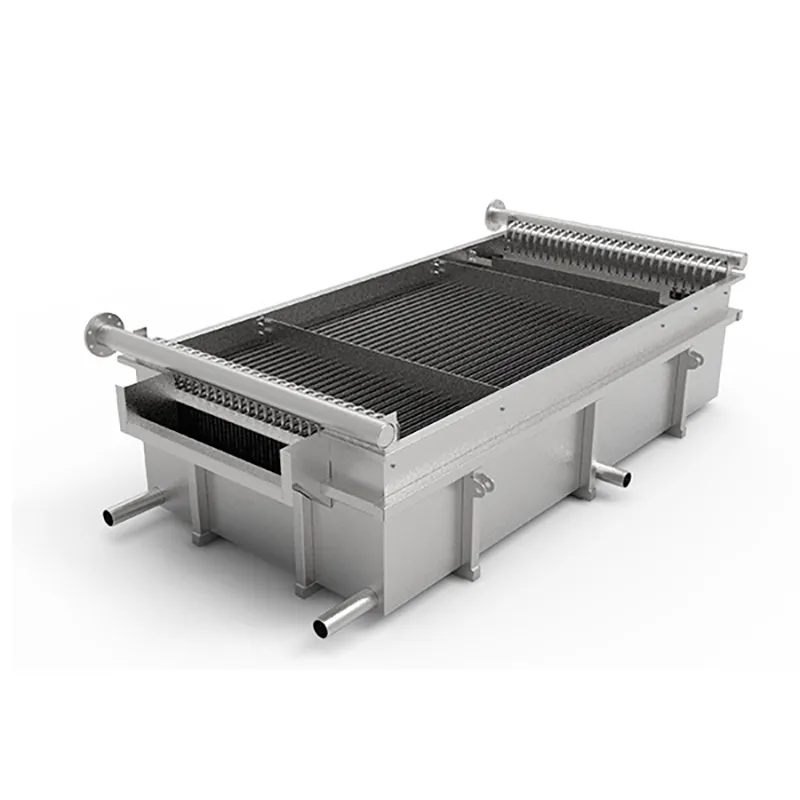
In custom-engineered designs, such as those used in plate air preheaters, the plate geometry is optimized for gas-to-gas heat recovery. These plates often have deeper corrugations and wider channel gaps to handle particulate-laden exhaust streams. The heat transfer coefficient in air-to-air applications is lower, typically 30 to 60 W/m²K, but the plate surface area is increased to compensate. For custom pillow plates, the embossed pattern creates a dimpled surface that provides high burst pressure resistance, ideal for jacketed vessels and tank heating.
Another key performance indicator is the plate's fouling resistance. In food processing or dairy applications, plates with a smooth surface finish (Ra less than 0.8 µm) reduce bacterial adhesion and make cleaning-in-place (CIP) more effective. The plate's port size and distribution area must also be matched to the flow rate to avoid maldistribution. A well-designed plate ensures that the fluid spreads evenly across the entire heat transfer area, maximizing the effective use of every square centimeter.
For heavy-duty industrial processes, HT-bloc welded plate heat exchangers use fully welded plate pairs to eliminate gaskets, allowing operation at temperatures up to 350°C and pressures up to 40 bar. The all-welded construction also prevents fluid intermixing, which is critical for ammonia or hydrogen service. In these units, the plate pack is assembled from laser-welded cassettes, each cassette containing two plates welded together along the periphery. The channel gap is typically 3 mm to 6 mm, balancing thermal performance with the ability to handle viscous fluids.
When evaluating a plate's long-term reliability, consider the clamping force distribution. Uneven clamping can cause gasket extrusion or plate deformation. High-quality plates are stamped with precise tolerances (typically ±0.1 mm on the corrugation depth) to ensure uniform contact pressure. This is especially important in gasketed plate heat exchangers, where the gasket groove must be accurately formed to prevent leaks. A properly designed plate pack will have a leak rate of less than 10⁻⁶ mbar·L/s under helium testing.
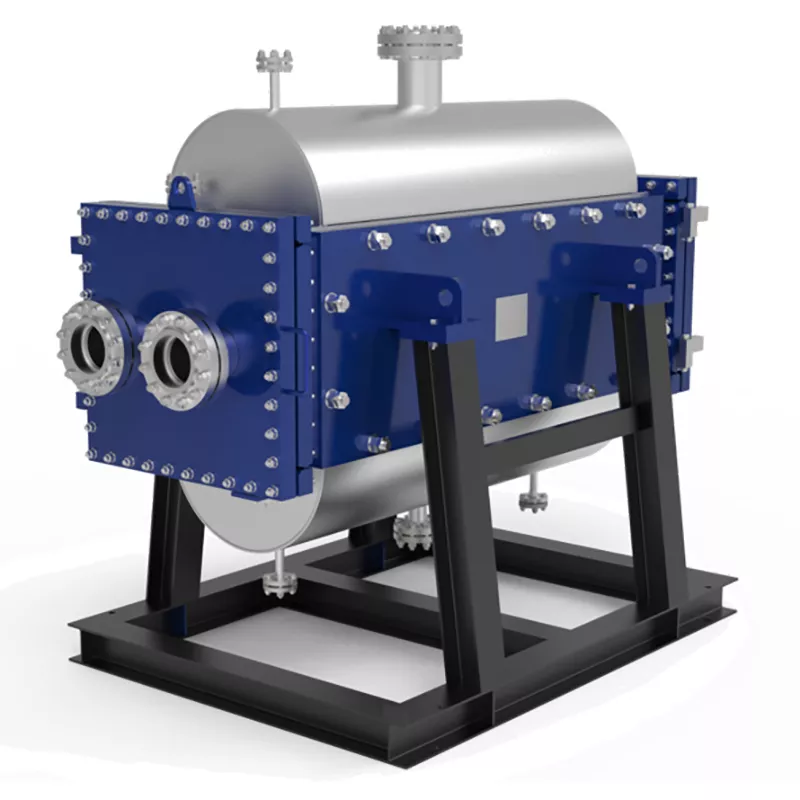
For extreme temperature differentials or thermal cycling, plates with expansion bellow features are available. These are commonly used in TP welded plate heat exchangers, where the plate pack is enclosed in a shell. The bellows absorb differential expansion between the plate pack and the shell, preventing stress cracking at the weld joints. In wide gap welded plate heat exchangers, the channel gap can be as large as 12 mm to 20 mm, allowing fibrous or viscous media to flow without clogging. These plates are often used in pulp and paper, sugar refining, and waste heat recovery from flue gases.
Finally, always verify the plate's pressure rating and thermal duty with the manufacturer's performance curves. A high-quality plate will have a documented heat transfer coefficient versus flow velocity chart, along with pressure drop data for both the hot and cold sides. This transparency allows engineers to size the heat exchanger accurately, avoiding oversizing or undersizing. Whether you are retrofitting an existing unit or designing a new system, investing in quality plates pays off through lower energy consumption, reduced maintenance, and longer equipment life.

 English EN