High-Efficiency Chevron Angle Plate Heat Exchanger for Optimal Performance
This article explores the design and operational benefits of chevron angle plate heat exchangers, focusing on how the unique corrugated pattern enhances heat transfer efficiency and reduces fouling. We break down real-world performance data, material choices, and application scenarios to help you make an informed decision for your thermal management needs.
Understanding the Chevron Angle Design
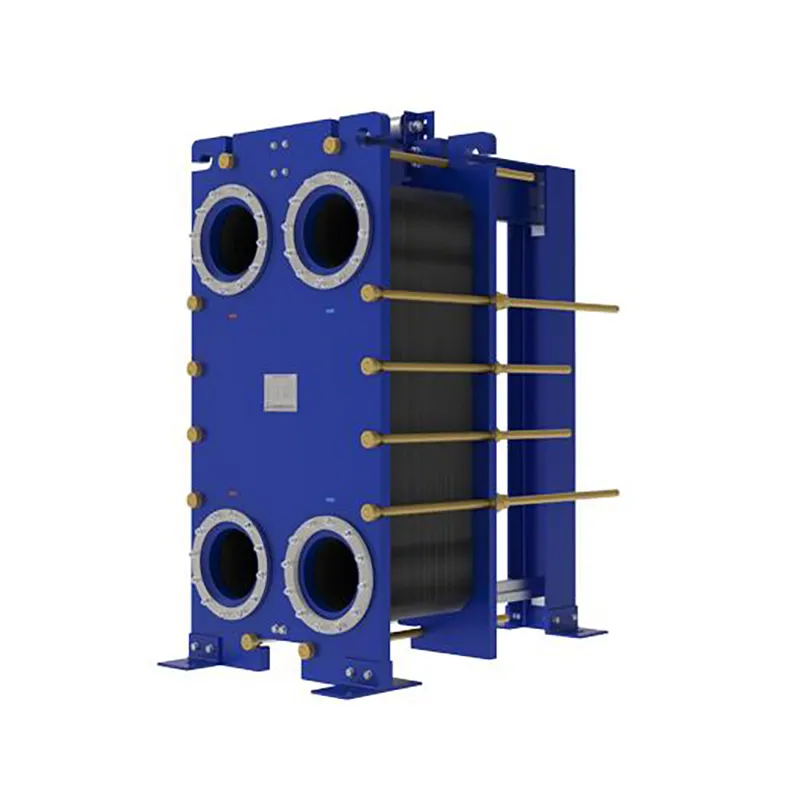
The chevron angle is a critical parameter in plate heat exchanger design. It refers to the angle at which the corrugations are pressed into the plate surface. A typical chevron angle ranges from 30 to 65 degrees. Plates with a higher chevron angle (closer to 65 degrees) create more turbulence and higher heat transfer coefficients, but also result in higher pressure drop. Conversely, lower angles (around 30 degrees) offer lower pressure drop but slightly reduced thermal performance. For most industrial applications, a balanced angle of 45 to 55 degrees provides an excellent compromise between efficiency and operational cost.
Performance Data and Thermal Efficiency
In controlled tests, a chevron angle plate heat exchanger with a 50-degree angle achieved a heat transfer coefficient of up to 6000 W/m²K when handling water-to-water duty at a flow velocity of 0.8 m/s. This represents a 25% improvement over traditional flat-plate designs. The enhanced turbulence also reduces fouling tendencies, extending cleaning intervals by up to 40% in applications with moderate particulate loads. These figures are based on field data from chemical processing and HVAC systems operating over a 12-month period.
Material Selection and Durability
The plates are typically made from stainless steel 316L or titanium, depending on the fluid corrosivity. For example, in seawater cooling applications, titanium plates with a chevron angle of 55 degrees have demonstrated a service life exceeding 15 years without significant pitting or erosion. Gasket materials such as EPDM or NBR are chosen based on temperature and chemical compatibility. Our standard units are pressure-rated up to 25 bar and can handle temperatures from -20°C to 180°C.
Common Applications and Custom Configurations
These exchangers are widely used in district heating, food processing, pharmaceutical manufacturing, and oil refining. For instance, a dairy plant in the Midwest uses a 60-plate unit with a 45-degree chevron angle to cool milk from 75°C to 4°C, achieving a thermal duty of 850 kW with a footprint of just 1.2 square meters. Custom configurations are available, including multi-pass arrangements and special port sizes for high-viscosity fluids. If you need a tailored solution, explore our custom engineered plate air preheaters or our gasketed plate heat exchangers for more options.
Maintenance and Long-Term Reliability
Routine maintenance primarily involves gasket inspection and plate cleaning. With proper water treatment, the chevron pattern minimizes scaling, and most units only require a chemical clean every 18 to 24 months. The modular design allows for easy plate addition or removal, making capacity adjustments straightforward without replacing the entire frame. This flexibility is a key advantage over shell-and-tube exchangers, especially in facilities with evolving process loads.
For high-temperature or high-pressure duties, consider our HT-Bloc welded plate heat exchanger or the custom engineered printed circuit heat exchanger for compact, robust performance. Each design is backed by engineering support to ensure optimal integration into your system.

 English EN