Free Flow Plate Heat Exchanger: Ultimate Guide & Benefits

Free flow plate heat exchangers are a specialized type of plate heat exchanger designed to handle fluids containing fibers, particles, or high-viscosity substances without clogging. Unlike conventional gasketed plate heat exchangers, they feature wide gaps and unobstructed flow channels, making them ideal for industries like food processing, pulp and paper, and wastewater treatment. This guide covers their working principle, key advantages, common applications, and selection criteria to help you decide if they are the right fit for your thermal management needs.

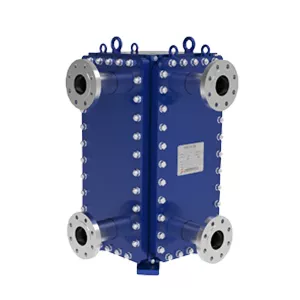
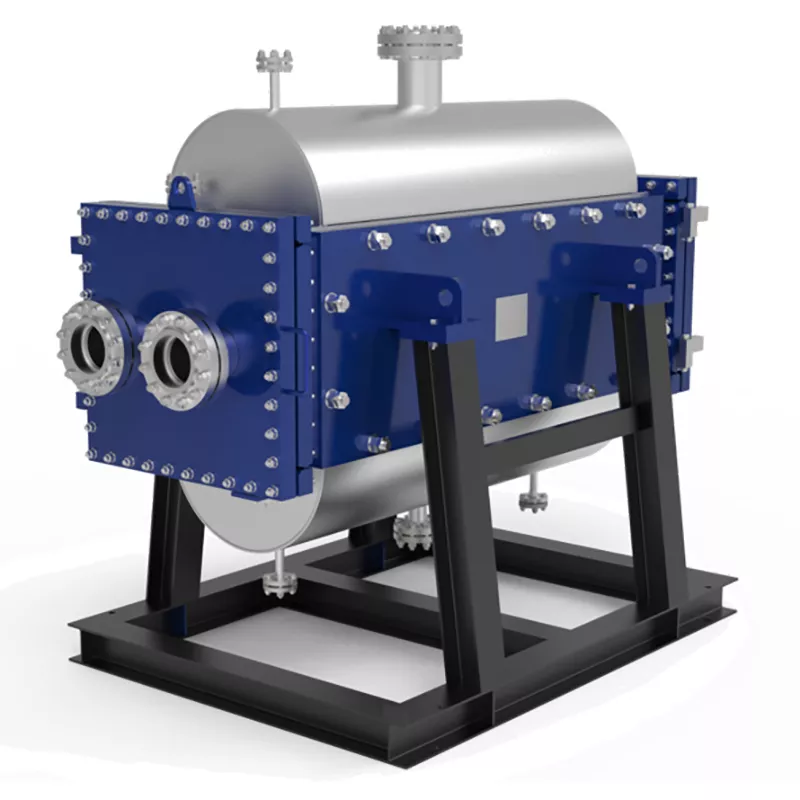
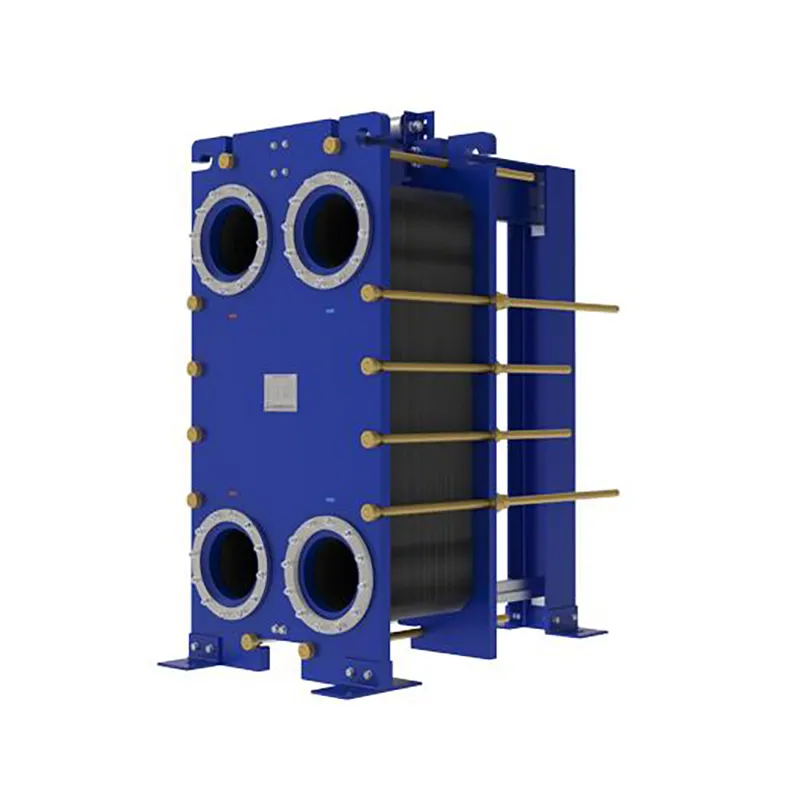
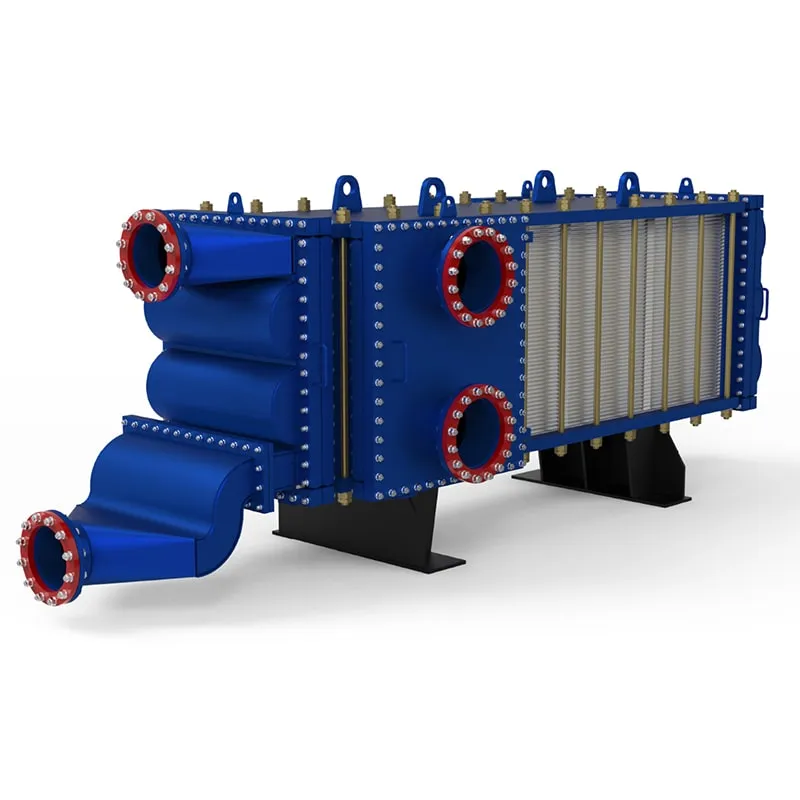
Free flow plate heat exchanger with wide gap channels for handling fibrous fluids

What Is a Free Flow Plate Heat Exchanger?

A free flow plate heat exchanger is a heat transfer device that uses specially designed plates with large gaps—typically 5 mm to 15 mm—between them. These gaps allow fluids with suspended solids, long fibers, or high viscosity to pass through without blocking the channels. The plates are often corrugated or have a chevron pattern to promote turbulence and enhance heat transfer, but the key difference is that there are no narrow passages or sharp turns that could trap debris.

This design is a direct response to the limitations of standard plate heat exchangers, which can quickly become clogged when processing non-homogeneous fluids. Free flow models maintain high thermal efficiency while offering reliable operation in demanding environments.

Key Benefits of Free Flow Plate Heat Exchangers

  • Clog-Free Operation: The wide gaps (up to 15 mm) allow fluids containing fibers, pulp, sludge, or particles up to 10 mm in diameter to flow freely, reducing maintenance downtime.
  • High Thermal Efficiency: Even with wide channels, the corrugated plate design generates turbulence, achieving heat transfer coefficients comparable to standard plate heat exchangers.
  • Easy Cleaning and Inspection: The plate pack can be opened and inspected without special tools. Many models are designed for CIP (clean-in-place) procedures, saving labor and chemical costs.
  • Compact Footprint: Compared to shell-and-tube heat exchangers, free flow plate units occupy 30% to 50% less floor space for the same duty.
  • Versatile Material Options: Plates are available in stainless steel (304, 316L), titanium, and Hastelloy, allowing compatibility with corrosive or acidic process streams.

Common Applications and Industries

Free flow plate heat exchangers are used wherever conventional plate heat exchangers would fail due to fouling or clogging. Typical applications include:

  • Food and Beverage: Heating or cooling fruit purees, vegetable pulps, sauces, and dairy products with fruit chunks.
  • Pulp and Paper: Recovering heat from black liquor, white water, and stock suspensions containing fibers.
  • Wastewater Treatment: Sludge heating or cooling in anaerobic digesters and thermal hydrolysis processes.
  • Chemical Processing: Handling polymer solutions, slurries, and crystallizing streams.
  • Pharmaceuticals: Processing fermentation broths and cell cultures with suspended solids.

For more specialized configurations, you can explore wide gap welded plate heat exchangers or gasketed plate heat exchangers for applications requiring different sealing or maintenance approaches.

How to Select the Right Free Flow Plate Heat Exchanger

Choosing the correct model depends on several factors that should be evaluated based on your actual process conditions:

  • Particle Size and Concentration: Measure the maximum particle size and fiber length in your fluid. Free flow gaps should be at least 3 times the largest particle diameter to ensure safe passage.
  • Operating Temperature and Pressure: Standard models handle up to 180°C and 16 bar. For higher demands, consider HT-Bloc welded plate heat exchangers which can withstand up to 350°C and 40 bar.
  • Fluid Viscosity: For fluids above 1000 cP, wider gaps and lower pressure drop designs are recommended. Some manufacturers offer custom plate geometries for high-viscosity applications.
  • Cleaning Requirements: If your process requires frequent cleaning, choose a model with easy plate access and CIP compatibility. Welded designs like TP welded plate heat exchangers offer leak-free operation but may require chemical cleaning.
  • Material Compatibility: Check the pH and chloride content of your fluids. Stainless steel 316L is suitable for most food and mild chemical applications, while titanium is preferred for seawater or high-chloride environments.

Performance Data and Real-World Examples

In a typical fruit puree application, a free flow plate heat exchanger can achieve a heat transfer coefficient of 1500–2500 W/m²·K when processing apple puree at 5% solids content, with a pressure drop of only 0.3–0.8 bar. This is significantly better than a shell-and-tube unit, which might achieve only 600–900 W/m²·K for the same duty.

In the pulp and paper industry, a free flow unit recovering heat from paper machine white water (containing 0.5–2% fiber) can operate continuously for 6–12 months between cleanings, compared to 2–4 weeks for a standard plate heat exchanger. This translates to a 70% reduction in maintenance labor and a 40% increase in overall heat recovery efficiency.

For extreme conditions, such as handling abrasive slurries or high-temperature processes, custom-engineered solutions like printed circuit heat exchangers or custom pillow plates may offer better durability and thermal performance.

Maintenance Tips for Long Service Life

To get the most out of your free flow plate heat exchanger, follow these practical maintenance guidelines:

  • Monitor Pressure Drop: A gradual increase in pressure drop across the unit indicates fouling. Schedule cleaning when the drop exceeds 20% of the baseline value.
  • Use Proper Cleaning Agents: For organic fouling (food, pulp), use 1–2% caustic soda solution at 60–80°C. For scale or mineral deposits, use 2–5% phosphoric or nitric acid solution.
  • Inspect Gaskets Annually: Even though free flow units have fewer gaskets than standard models, check for wear or hardening every 12 months. Replace if cracks or deformation are visible.
  • Check Plate Alignment: After reassembly, ensure plates are properly aligned to avoid bypass flow. Misalignment can reduce thermal performance by 15–25%.
  • Keep Spare Plates on Hand: Having 2–3 spare plates in storage allows quick replacement if a plate is damaged, minimizing production downtime.

Conclusion

Free flow plate heat exchangers offer a practical and efficient solution for challenging heat transfer applications involving fibrous, particulate, or viscous fluids. Their wide-gap design prevents clogging, reduces maintenance, and extends operational life compared to conventional heat exchangers. By carefully evaluating your process parameters—particle size, temperature, pressure, and cleaning requirements—you can select a model that delivers reliable performance and a strong return on investment. For specialized needs, always consult with an experienced manufacturer to tailor the design to your exact conditions.

Related Products

We provide you with comprehensive foreign trade solutions to help enterprises achieve global development

‌TP Welded Plate Heat Exchanger

Industrial processes involving particle-laden slurries, high-viscosity syrups, or fiber-rich pulp demand more than standard equipment—they require target-engineered thermal management. At SHPHE, we configure the TP Welded Plate Heat Exchanger to directly conquer your plant's severe fouling, blockage, and erosion threats. Combining custom-tailored channel geometries, wear-resistant metallurgy, and integrated CIP (Cleaning-in-Place) systems, we deliver absolute production continuity where conventional heat exchangers fail.

Heat Exchangers

‌HT-Bloc Welded Plate Heat Exchanger

Custom-Engineered for Severe Process Demands. At SHPHE, we don't just supply equipment; we design tailored thermal solutions. Our HT-Bloc welded plate heat exchangers are custom-configured by our experienced engineers to overcome your specific industry challenges—whether handling high-viscosity media, extreme temperatures, or strict space constraints.

Heat Exchangers

Custom-Engineered Gasketed Plate Heat Exchangers

Since the invention of the plate heat exchanger (PHE) in 1923, thermal technology has evolved from standard food-grade processing to highly complex industrial operations. At SHPHE, we take this classic, versatile design and transform it into highly bespoke heat transfer solutions tailored to your unique process fluids and thermal loads. While traditional gasketed PHEs offer high efficiency and compact footprints, SHPHE optimizes plate corrugations, metallurgy, and sealing systems to handle your specific chemical, HVAC, or energy recovery parameters. Our custom-engineered gasketed plate heat exchangers provide outstanding scalability and ease of maintenance, serving as an indispensable asset for heavy industries—including oil and gas, metallurgy, and food processing—where uptime, energy recovery, and long-term sustainability are top priorities.

Heat Exchangers

Wide Gap Welded Plate Heat Exchanger for Viscous Fluids

Custom-Engineered Anti-Clogging Solutions for High-Viscosity Slurries: Deployed specifically to conquer severe industrial fouling, SHPHE wide gap welded plate heat exchangers are tailor-built to handle complex media containing dense fibers, coarse crystals, or solid suspensions without clogging. Each non-obstructed channel is calculated and formed by laser-welded plate packs matching your fluid’s exact rheology and grain size, completely eliminating structural "dead zones" and media stagnation. Available in highly compact vertical and versatile horizontal configurations, our vertical engineering drastically reduces plant footprints while maintaining unhindered product throughput, minimal pressure drops, and flawless continuous operations across harsh process loops.

Heat Exchangers
SHPHE has complete quality assurance system from design, manufacturing, inspection and delivery. It is certified with ISO9001, ISO14001, OHSAS18001 and hold ASME U Certificate.
© 2005-2026 Shanghai Heat Transfer - Privacy Policy