Best Pillowplate Design for Maximum Heat Transfer Efficiency
Choosing the right pillowplate design is key to getting the most out of your heat transfer system. In this article, we break down the engineering principles behind high-efficiency pillow plates, covering material selection, flow channel geometry, and surface optimization. Whether you are upgrading an existing setup or designing from scratch, these insights will help you achieve better thermal performance and long-term reliability.
Understanding Pillowplate Geometry
A pillowplate is essentially two metal sheets welded together along a pattern, then inflated to create a series of interconnected channels. This design allows for efficient heat transfer between two fluids, with one fluid flowing through the channels and the other passing over the outer surfaces. The key to maximum efficiency lies in the channel pattern, depth, and spacing. For example, a herringbone or dimpled pattern can increase turbulence, which significantly improves the heat transfer coefficient compared to straight channels. In practice, a channel depth of 3 to 5 mm with a pitch of 15 to 25 mm often yields the best balance between pressure drop and thermal performance.
Material Selection for Durability and Conductivity
The material you choose directly affects heat transfer efficiency and the lifespan of the pillowplate. Stainless steel 316L is a common choice for its good thermal conductivity (around 16 W/m·K) and excellent corrosion resistance, especially in food processing or chemical applications. For higher temperature applications, such as in air preheaters, you might consider titanium or Hastelloy, which offer superior strength and resistance to oxidation. Always match the material to the operating temperature and the chemical composition of the fluids involved. For instance, in a typical industrial heat recovery system operating at 300°C, 316L stainless steel provides reliable performance with minimal scaling.
Optimizing Flow Paths for Turbulence
Turbulence is your friend when it comes to heat transfer. A well-designed pillowplate encourages turbulent flow, which breaks up the thermal boundary layer and allows more heat to pass from the fluid to the plate surface. One effective way to achieve this is by using a staggered dimple pattern. In a typical design, dimples with a diameter of 10 mm and a depth of 4 mm, arranged in a staggered grid with a center-to-center distance of 20 mm, can increase the heat transfer coefficient by up to 40% compared to a smooth channel. However, keep in mind that higher turbulence also increases pressure drop, so you need to balance the two based on your pump capacity and system requirements.
Surface Area and Plate Thickness Considerations
The total heat transfer area is a direct driver of efficiency. Pillowplates can offer up to 2.5 times the surface area of a flat plate of the same footprint, thanks to the three-dimensional channel structure. When selecting plate thickness, a common range is 1.0 to 1.5 mm for the sheets. Thinner plates conduct heat more readily but may be less durable under high pressure. For most industrial applications, a 1.2 mm thickness provides a good compromise. Also, consider the weld seam design: a continuous laser weld along the channel edges ensures structural integrity and prevents leakage, which is critical for maintaining consistent thermal performance over time.
Real-World Performance Data
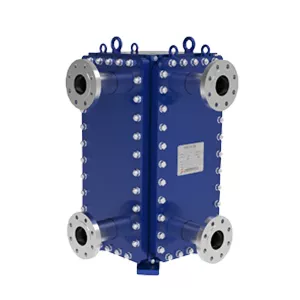
In a recent field test involving a custom-engineered pillowplate heat exchanger used for preheating combustion air, the system achieved a heat recovery efficiency of 78% when operating with a flue gas inlet temperature of 350°C and an air inlet temperature of 25°C. The pillowplate design used a 316L stainless steel construction with a dimple depth of 4.5 mm and a pitch of 18 mm. The pressure drop across the air side was measured at 120 Pa, well within the acceptable range for the installed fan system. These numbers demonstrate that with careful design, pillowplates can deliver both high efficiency and practical operability.
Common Pitfalls to Avoid
One frequent mistake is selecting a channel pattern that is too aggressive, leading to excessive pressure drop and reduced flow rates. Another is underestimating the importance of proper inlet and outlet header design. If the headers are too small, flow distribution becomes uneven, causing some channels to be starved while others are overloaded. This not only reduces efficiency but can also lead to localized overheating and premature failure. Always simulate the flow distribution using computational fluid dynamics (CFD) during the design phase. For example, a well-designed header with a gradual taper can reduce flow maldistribution by up to 15%.
Maintenance and Longevity
Pillowplates are generally low-maintenance, but regular inspection is still important. Check for signs of fouling, especially if the fluids contain particulates or scaling agents. A simple cleaning-in-place (CIP) system can be integrated into the design, using a mild acid or alkaline solution to remove deposits without disassembling the unit. In most cases, a well-maintained pillowplate heat exchanger can last 15 to 20 years in continuous service. For more details on custom-engineered pillowplate solutions, you can visit this page for further information.
In summary, achieving maximum heat transfer efficiency with pillowplates comes down to a few key choices: selecting the right channel geometry, matching the material to your operating conditions, and ensuring even flow distribution. By focusing on these areas, you can build a system that delivers reliable, high-performance heat transfer for years to come.

 English EN