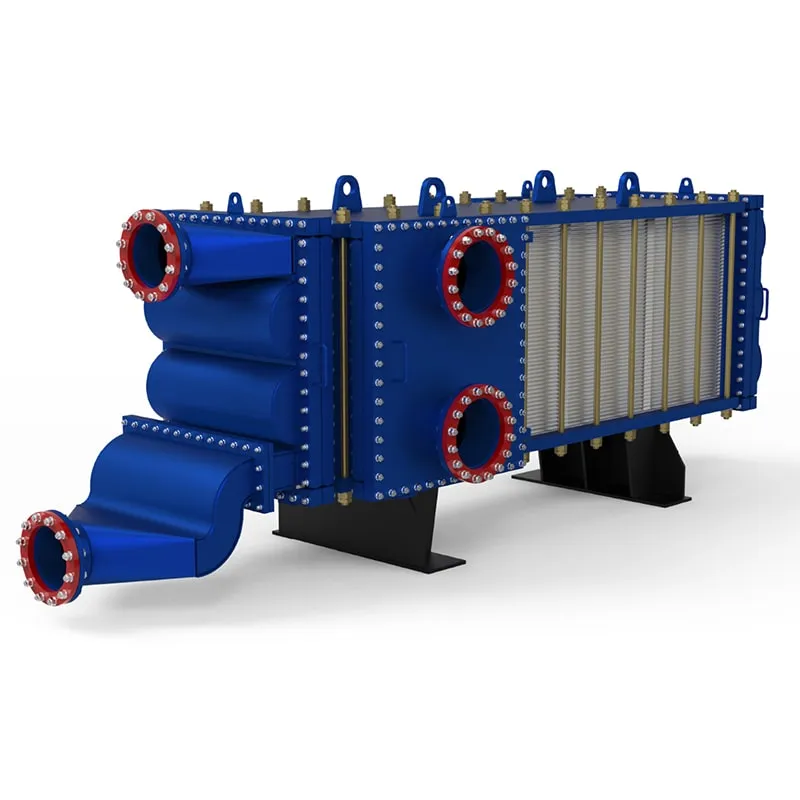
Why Choose a Plate Heat Exchanger for Oil Cooling?
Traditional shell-and-tube coolers have long been used for oil cooling, but plate heat exchangers have become the preferred choice in many modern systems. The corrugated plate pattern creates turbulent flow at lower velocities, which significantly improves heat transfer coefficients compared to smooth tubes. This means you can achieve the same cooling duty with a much smaller footprint—an important consideration when space is tight on machinery skids or inside engine rooms.
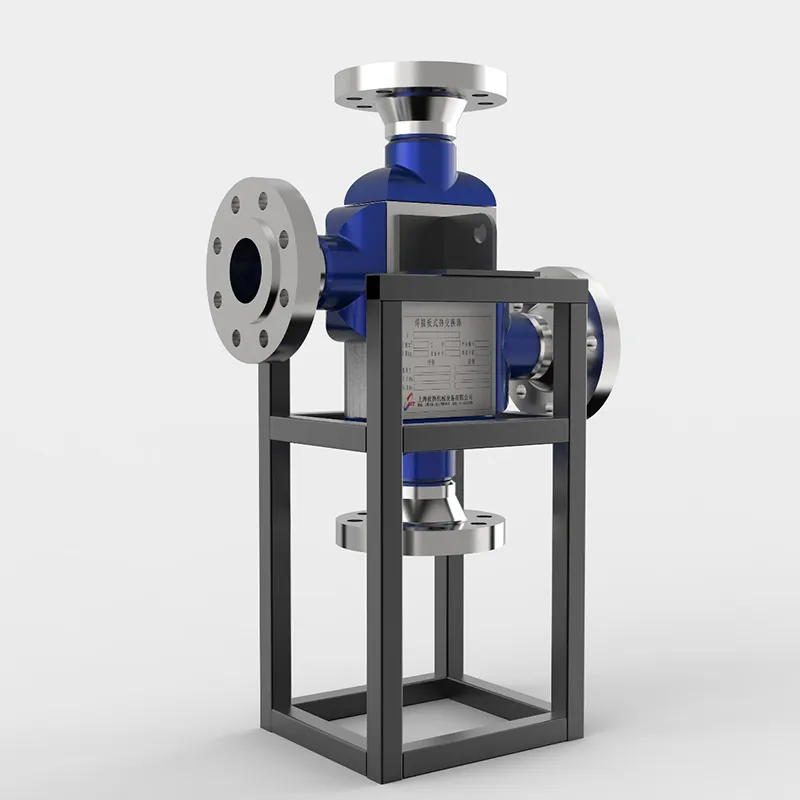
Another advantage is the ability to inspect and clean the plates. Gasketed plate heat exchangers can be opened easily for mechanical cleaning, which is particularly useful when dealing with oils that may leave deposits over time. For applications where gaskets are not suitable due to chemical compatibility or extreme temperatures, welded plate heat exchangers offer a robust alternative with no gasket failure risk.
How Water to Oil Plate Heat Exchangers Work
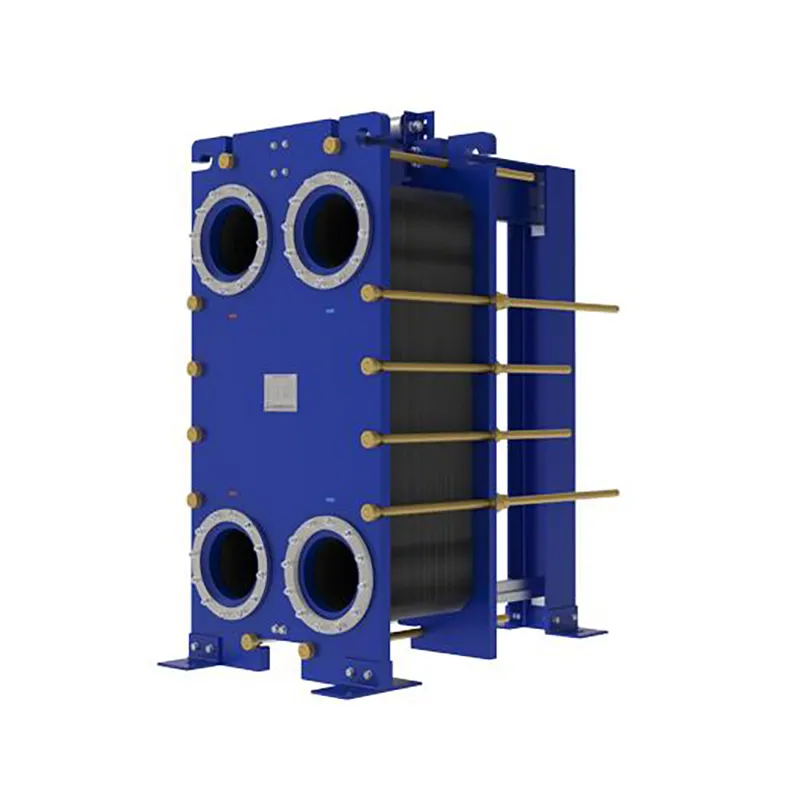
The exchanger consists of a series of corrugated metal plates stacked together, with gaskets directing the oil and water into alternating channels. Hot oil flows through one set of channels while cooling water flows through the adjacent channels in the opposite direction (counter-current flow). The heat from the oil passes through the thin plate material into the water, which carries it away.
The efficiency of this design comes from the large surface area packed into a small volume. A typical plate can have a heat transfer area of 0.1 to 4 square meters, and a single frame can hold dozens of plates. The counter-current arrangement also allows for a closer approach temperature—meaning you can cool the oil closer to the inlet water temperature than with other designs.
Key Design Considerations for Oil Cooling Applications
Selecting the right water to oil plate heat exchanger requires careful attention to several factors:
Oil viscosity and flow rate: Oils are more viscous than water, especially at lower temperatures. This affects pressure drop and heat transfer performance. The plate pattern must be selected to handle the specific viscosity range of your oil, and the pump must have sufficient head to overcome the pressure drop through the exchanger.
Water quality: Cooling water can contain suspended solids, minerals, or biological matter that may foul the plate surfaces. If your water source is not clean, consider a wide-gap plate heat exchanger which has wider channels that can handle particulates without clogging.
Temperature and pressure limits: Standard gasketed units typically handle up to 180°C and 25 bar. For higher temperatures or pressures, welded or brazed designs are more appropriate. Always verify that the gasket material is compatible with both the oil and the water at your operating conditions.
Maintenance access: If your system runs continuously, choose a unit that can be serviced without excessive downtime. Gasketed units offer the flexibility of adding or removing plates to adjust capacity, which is useful if your cooling requirements change over time.
Typical Performance Data
For a typical hydraulic oil cooling application, a water to oil plate heat exchanger can achieve heat transfer coefficients in the range of 800 to 1500 W/m²·K, depending on oil viscosity and flow conditions. The overall heat transfer coefficient (U-value) for an oil-water system usually falls between 300 and 700 W/m²·K. Pressure drop on the oil side is typically kept below 1 bar to avoid excessive pump energy consumption.
As an example, consider a lubrication system circulating 200 liters per minute of ISO VG 46 oil that needs to be cooled from 65°C to 50°C using cooling water at 30°C. A plate heat exchanger with approximately 15 square meters of surface area would be required, with a water flow rate of about 150 liters per minute to achieve the desired cooling duty. These figures will vary based on the specific plate geometry and flow arrangement.
Installation and Operation Tips
Proper installation is essential for getting the most out of your water to oil plate heat exchanger. Mount the unit with sufficient clearance on the bolted end so plates can be removed for inspection. Piping should be supported independently to avoid stress on the exchanger nozzles. It is also wise to install strainers on both the oil and water inlet lines to protect the narrow plate channels from debris.
During operation, monitor the approach temperature (the difference between the oil outlet temperature and the water inlet temperature). A gradual increase in this temperature difference indicates fouling, and the unit should be cleaned before performance degrades significantly. For most industrial oils, cleaning intervals of 12 to 24 months are typical, but this depends heavily on water quality and oil condition.
Comparing Plate Heat Exchangers with Other Cooling Methods
When deciding on a cooling solution, it helps to compare options. Air-cooled radiators are simpler but less efficient, requiring much larger surface areas and consuming more fan power. Shell-and-tube coolers are more robust but heavier and bulkier for the same duty. Water to oil plate heat exchangers strike a balance between efficiency, size, and cost, making them ideal for most industrial applications where a reliable water supply is available.
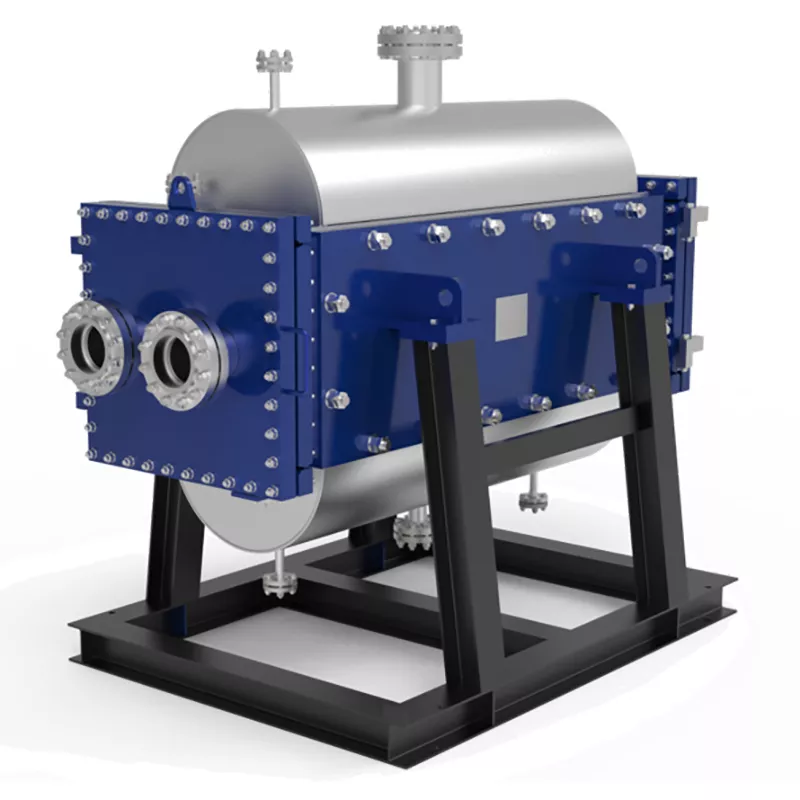
For specialized applications, other plate technologies may be worth exploring. Printed circuit heat exchangers offer extreme compactness for high-pressure services, while pillow plates provide a simple, cost-effective solution for tank heating or cooling. Each technology has its niche, but the gasketed plate design remains the workhorse for water-oil cooling duties.
Making the Right Selection
To choose the correct water to oil plate heat exchanger, you need accurate data on oil flow rate, inlet and outlet temperatures, allowable pressure drop, and cooling water temperature. With this information, a thermal design can be performed to determine the number of plates, plate size, and flow configuration. It is always advisable to work with a manufacturer who can provide a thermal rating based on your specific conditions rather than relying on generic sizing charts.
Also consider the materials of construction. Stainless steel plates (AISI 316) are standard for most oil-water applications. If the cooling water is seawater or has high chloride content, titanium plates may be necessary to prevent corrosion. Gasket materials should be selected based on oil type and temperature—Nitrile (NBR) works well for mineral oils up to 120°C, while EPDM or Viton may be required for higher temperatures or specific chemical compatibility.
Conclusion
Water to oil plate heat exchangers provide an efficient, compact, and cost-effective solution for cooling lubricating and hydraulic oils. Their high heat transfer coefficients, small footprint, and ease of maintenance make them a popular choice across industries ranging from marine and power generation to manufacturing and mobile equipment. By paying attention to oil properties, water quality, and operating conditions, you can select a unit that delivers reliable performance for years to come.
For applications requiring custom-engineered solutions or specialized plate designs, consulting with an experienced manufacturer ensures you get a heat exchanger matched precisely to your system requirements. Whether you need a standard gasketed unit or a more robust welded plate design, the right choice depends on your specific operating parameters and maintenance preferences.

 English EN