What a Pillow Plate Does in a Falling Film Chiller
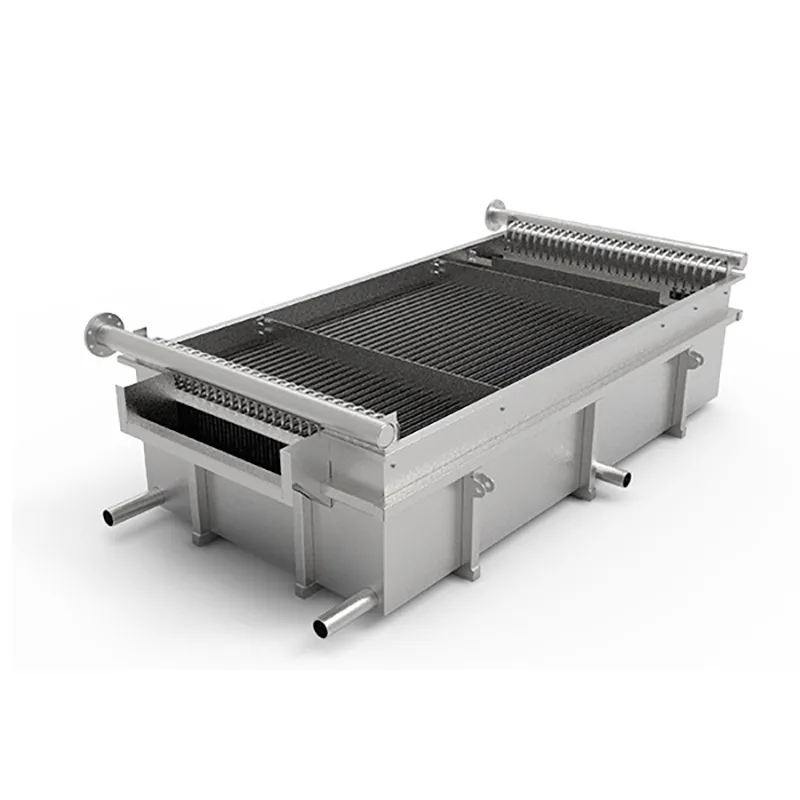
A pillow plate is made from two sheets of metal that are spot-welded in a pattern and then inflated under pressure. The result is a panel with internal channels that follow the weld pattern, giving the plate its characteristic dimpled look. In a falling film chiller, the cooling medium flows inside these channels while the liquid to be cooled is distributed across the outside surface and runs down as a thin film.
This arrangement has a few practical advantages. The thin film on the outside means gravity does most of the work — you need far less pumping energy than a flooded or forced-circulation design. The internal channel pattern promotes turbulence in the coolant, which keeps heat transfer coefficients high without adding pressure drop you cannot afford. And because the plate is a single welded unit with no gaskets in the cooling path, the risk of leaks at high differential pressure is low.
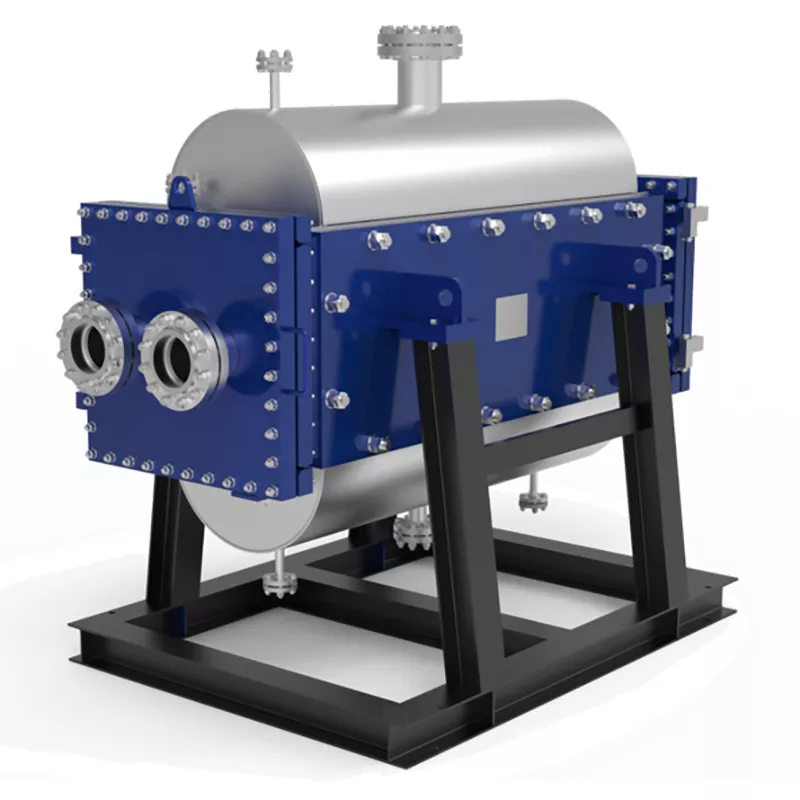
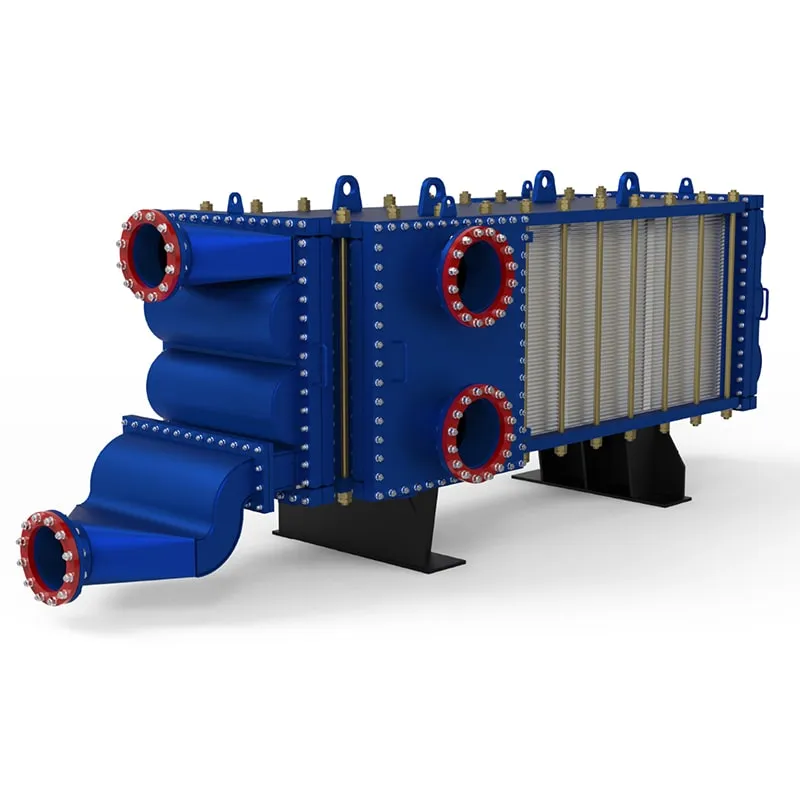
If your process also involves other heat transfer duties, it helps to compare plate designs side by side. Gasketed units suit lower pressures and frequent cleaning, while welded designs handle aggressive media. You can review the differences on the gasketed plate heat exchanger page and the TP welded plate heat exchanger page before settling on a pillow plate for your chiller.
Why Falling Film Plus Pillow Plate Works Well for Industrial Cooling
The combination addresses a common problem in industrial cooling: you need a large heat transfer surface but want to keep the refrigerant charge low. In a falling film chiller, only a thin layer of liquid covers the plate at any moment, so the amount of refrigerant in circulation is a fraction of what a flooded evaporator would require. That matters for both cost and safety, especially with natural refrigerants like ammonia or CO₂.
The pillow plate also handles the thermal side well. The dimpled channel geometry creates repeated flow separation and reattachment inside the coolant passages, which keeps the heat transfer coefficient steady across a wide range of flow rates. On the film side, the plate surface can be oriented so the liquid spreads evenly without dry patches — a key concern in falling film designs, since dryout sharply reduces performance. Well-designed distributors and a plate surface that wets uniformly are what make the difference here.
Temperature approach is another point in favor. Falling film chillers with pillow plates can run with a close approach between the process fluid and the coolant, which reduces compressor lift and saves energy over the life of the unit. For processes that need tight temperature control — food processing, chemical reactions, or pharmaceutical cooling — that stability is often worth more than the upfront equipment cost.
Where This Design Fits Best
Falling film pillow plate chillers are a strong fit for several industrial duties:
- Dairy and beverage processing — rapid cooling of milk, whey, or juice where gentle handling and cleanability matter. The smooth film side is easier to clean than a flooded bundle.
- Chemical and petrochemical cooling — where low refrigerant charge and resistance to fouling on the process side are priorities. Wide-gap variants exist for streams with solids; see the wide gap welded plate heat exchanger if your fluid carries particles.
- HVAC and district cooling — large-capacity chillers benefit from the compact footprint and low charge. If air-side heat recovery is part of the picture, a plate air preheater can complement the cooling loop.
- Power and industrial utilities — where reliability and low maintenance over long run times outweigh initial cost.
For very high pressures or corrosive coolants, a printed circuit heat exchanger may be the better choice, but for most atmospheric-to-moderate-pressure cooling duties, the pillow plate is simpler and more cost-effective.
Specifying a Pillow Plate: What to Check
When you size a pillow plate for a falling film chiller, a few parameters drive the outcome more than others:
- Plate material and thickness. Stainless 304/316L covers most duties. For chloride-bearing coolants or seawater, duplex or titanium may be needed. Thickness affects both pressure rating and heat transfer — thinner plates transfer heat better but flex more under pressure cycling.
- Channel pattern and inflation pressure. The weld pattern determines flow distribution and turbulence. A denser pattern gives higher heat transfer but higher pressure drop. Work with the manufacturer to match the pattern to your flow rate and allowable pressure drop.
- Film distribution. The liquid distributor above the plate must wet the full surface evenly. Ask for the recommended minimum wetting rate and confirm your flow stays above it across the turndown range.
- Fouling allowance. Falling film surfaces foul more slowly than submerged ones, but the process side still needs a cleaning plan. Design in access for CIP and check whether the plate spacing allows inspection.
Custom pillow plate geometries are available for non-standard footprints or where the plate must fit an existing vessel. The custom engineered pillow plates page covers the range of sizes and connection options. For duties that combine cooling with high-pressure service, the HT bloc welded plate heat exchanger is worth a look as an alternative.
Maintenance and Long-Term Reliability
A pillow plate has no gaskets in the cooling circuit, so the usual leak paths at port connections are eliminated. The welded structure tolerates thermal cycling well, provided the pressure and temperature limits are respected. In practice, the maintenance focus shifts to two areas: keeping the film side clean and monitoring the coolant side for scale.
On the film side, a visual inspection during scheduled shutdowns catches uneven wetting or buildup early. Most units are designed for CIP, so a caustic or acid wash cycle handles normal fouling. On the coolant side, water quality matters — if you use a glycol loop or cooling tower water, check conductivity and inhibitor levels regularly. Scale inside the channels is harder to remove than on an open surface, so prevention is cheaper than cleaning.
Pressure testing at commissioning and periodically afterward confirms the welds are sound. Because the plate is a single welded assembly, a failed weld shows up as a cross-contamination between coolant and process fluid — so any change in coolant chemistry or process fluid quality should trigger a check.
Is a Falling Film Pillow Plate Right for Your Plant?
If your cooling duty involves a large heat load, a need to minimize refrigerant charge, and a process fluid that can be distributed as a film, a falling film chiller with pillow plates is a practical choice. It is not the answer for every situation — very high viscosity fluids, streams with heavy solids, or duties requiring frequent mechanical cleaning may point toward other designs. But for the majority of industrial cooling applications, the combination of low charge, high heat transfer, and simple maintenance is hard to beat.
The best next step is to share your duty — flow rate, temperatures, fluid properties, and pressure limits — with an engineer who can run the numbers on plate geometry and channel pattern. That conversation usually settles the question faster than any general guide.

 English EN