High-Efficiency Pillow Plate Ice Bank for Industrial Cooling
An ice bank is only as good as the heat transfer surface inside it. Pillow plate ice banks use dimple-welded stainless steel panels that inflate into a three-dimensional flow channel, giving chilled water a large, evenly distributed contact area during the charging cycle. This article explains how the design works, where it fits in industrial cooling, and what to check before specifying one for your plant.
Peak cooling loads rarely arrive on schedule. In food processing, dairy, brewing, and chemical plants, the chiller demand can spike for a few hours and then drop back to a baseline. Oversizing a chiller to cover the peak means paying for capacity that sits idle most of the day. An ice bank flips that logic: it builds ice during low-load hours and releases stored cooling when demand climbs, smoothing the load on the refrigeration system.
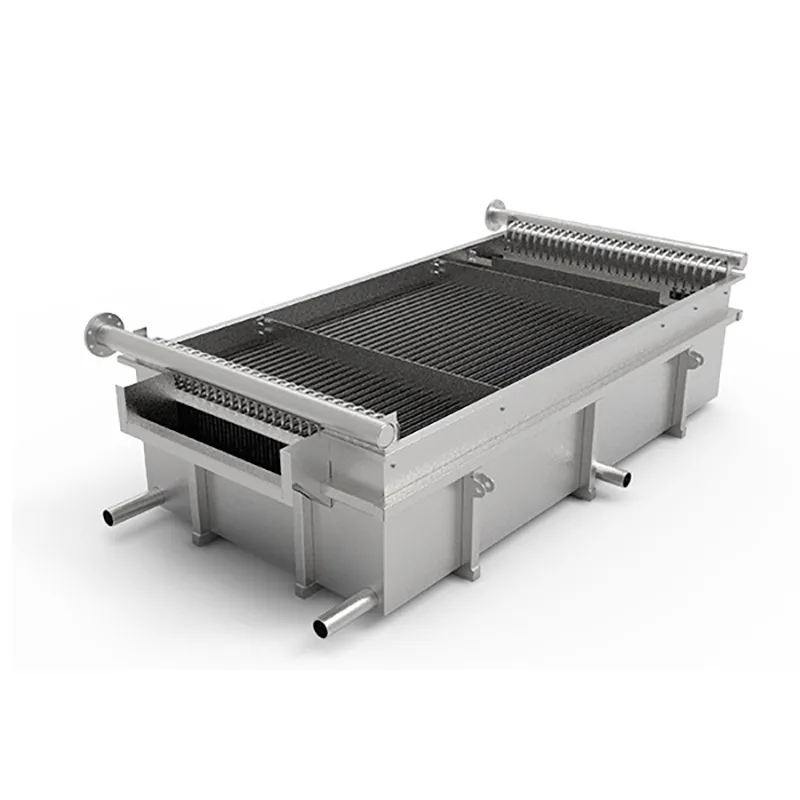
The heat transfer surface is where an ice bank succeeds or fails. Pillow plates are made from two stainless steel sheets that are spot-welded in a pattern and then inflated under pressure. The result is a panel with internal channels that promote turbulent flow and a surface that stays uniform in temperature. Compared with coil-based ice banks, the flat panel geometry packs more surface area into the same tank volume and is easier to clean.
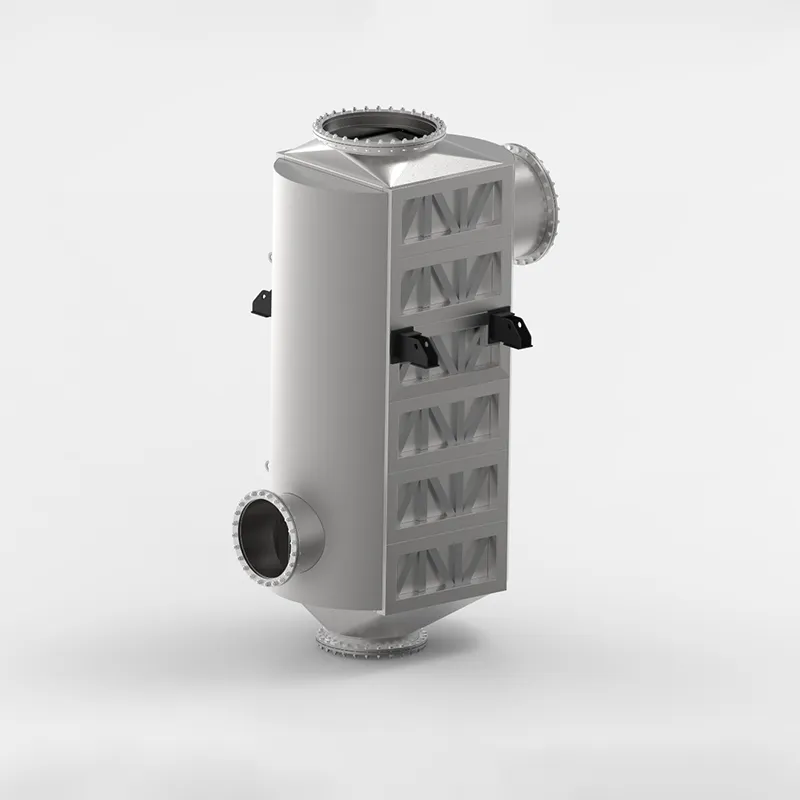
How the Pillow Plate Ice Bank Works
During the charging phase, refrigerant or a secondary coolant circulates through the pillow plate channels at a temperature below 0°C. Water in the tank freezes onto the outer surface of the panels, building an ice layer. In the discharge phase, return chilled water flows over the ice and gives up heat, melting the ice and delivering cold water to the process at a stable temperature, typically around 1 to 4°C depending on the application.
Because the panels are inflated, the internal channel geometry can be tuned during design. A wider inflation gives lower pressure drop; a tighter pattern gives higher turbulence and better heat transfer coefficients. This flexibility is why pillow plate construction is often chosen for ice storage where both thermal performance and pumping energy matter. The same dimple-welded panel technology is used across our custom engineered pillow plates range, which can be adapted to different tank sizes and coolant circuits.
Where It Fits in an Industrial Cooling System
Ice banks are most useful when the cooling load profile has a clear peak-to-average ratio. Typical cases include batch cooling in breweries, rapid cooldown after pasteurization, and plants that face demand charges on electricity. By shifting part of the refrigeration work to off-peak hours, the ice bank reduces the size of the chiller and the electrical demand at peak. It also provides a buffer: if a chiller trips, stored ice keeps the process running while the fault is addressed.
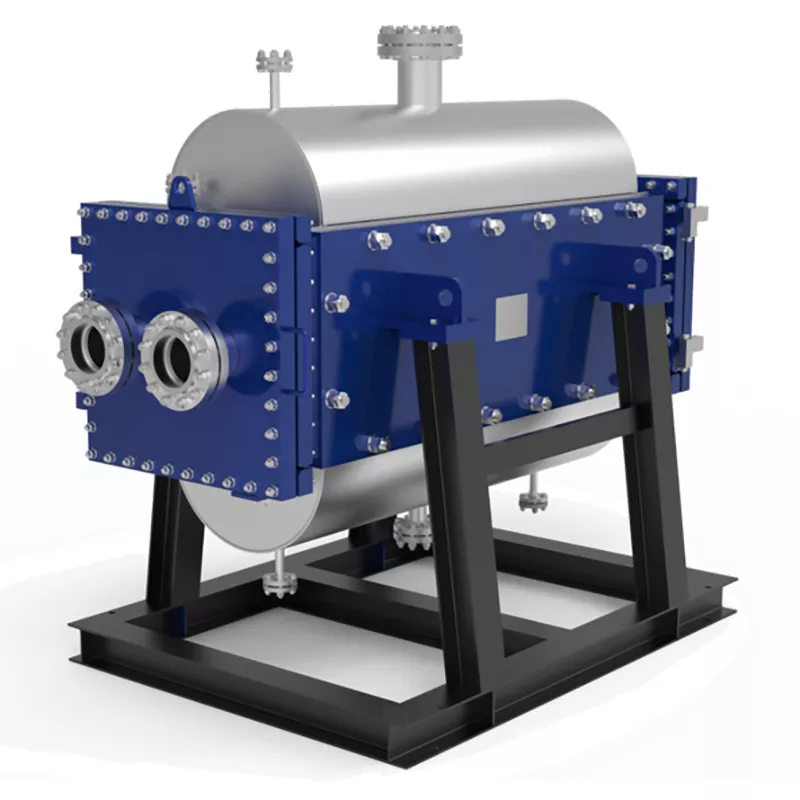
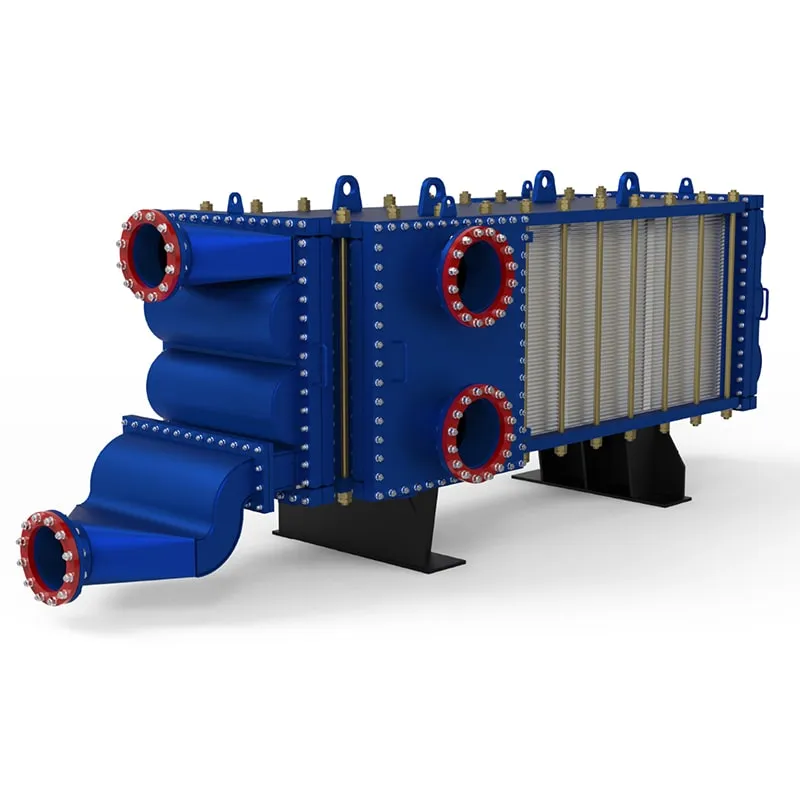
Integration matters as much as the panel itself. The ice bank needs a well-designed distribution header so water flows evenly across all panels, and the tank layout should allow service access without draining the whole system. In many plants, the ice bank is paired with a plate heat exchanger that isolates the ice tank loop from the process loop, keeping the two circuits at their own pressure and cleanliness levels. Our gasketed plate heat exchangers are commonly used in this isolation duty.
Design Points That Affect Performance
Three factors drive the real-world performance of a pillow plate ice bank. First, ice thickness: thicker ice stores more energy per unit of tank volume but adds thermal resistance and slows the discharge rate. Most industrial designs target an ice layer that balances storage density against response time. Second, water quality: dissolved solids and biological growth affect both heat transfer and hygiene, so the tank water needs filtration and periodic treatment. Third, panel spacing: too close and ice bridges between panels, reducing surface area; too far apart and the tank footprint grows.
Stainless steel grade also deserves attention. Grades such as 304 and 316L are common, with 316L preferred where the water has higher chloride content or where cleaning chemicals are aggressive. The welding pattern and inflation pressure should be specified to match the operating pressure of the refrigerant circuit, and the panel should be pressure-tested before installation.
Practical Considerations Before You Specify
Start with the load profile, not the equipment. A 24-hour cooling demand curve shows how much energy can realistically be shifted and what storage volume is needed. From there, the ice bank size follows from the allowable ice thickness and the tank geometry. It is also worth checking how the ice bank will interact with existing chillers: in some plants the ice bank handles the peak alone, while in others it works in series to lower the return water temperature and improve chiller efficiency.
Maintenance access is easy to overlook at the design stage. Panels should be removable or at least accessible for inspection, and the tank should have a drain and a level indicator. If the ice bank serves a hygienic process, the tank headspace and venting need to prevent condensation and contamination. For plants that already use welded plate equipment, the same maintenance routines and spare parts approach can often be extended to the ice bank panels, which keeps training and inventory simpler.
Finally, compare the total picture rather than the tank price alone. A pillow plate ice bank with good flow distribution and correctly sized panels may cost more upfront than a coil unit, but it can reduce chiller cycling, lower peak demand charges, and provide a cooling buffer that protects production. For facilities where cooling reliability directly affects output, that combination is usually worth the engineering effort.

 English EN