
Alumina precipitation cooling requires controlled heat removal from an alkaline, solids-bearing process stream. A wide-gap welded plate exchanger can be evaluated when narrow passages, deposits or maintenance access constrain the existing cooling arrangement. SHPHE's Australian application provides a specific example of this duty.
The required temperature profile supports the precipitation process, while the fluid may contain seed crystals and other suspended matter. The exchanger therefore needs both a thermal calculation and an assessment of passage, distribution, fouling and erosion.
A design that looks satisfactory at maximum flow can still be unsuitable at turndown. Minimum flow, changes in slurry concentration and upstream debris conditions should be included when checking the operating envelope.
| Item | Value reported for this application |
|---|---|
| Service | Alumina decomposition / precipitation cooling |
| Design pressure | 1.3 MPa |
| Design temperature | 100°C |
| Plate material | Duplex stainless steel |
| Heat load | 10,000 kW |
| Heat transfer area | 500 m² |
| Design basis stated in the report | ASME BPVC Section VIII, Division 1, with U marking |
The application report describes operation from 2021 and refers to the project's Australian registration arrangements. These statements relate to that equipment and project. Requirements for a different jurisdiction or installation should be checked against its own equipment documentation.
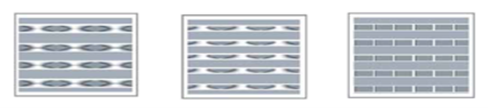
The wide-gap welded plate heat exchanger provides a larger slurry-side passage with geometry selected for the medium. Distribution at the inlet matters as much as nominal gap: uneven entry can create low-flow deposits in one area and concentrated wear in another.
The welded plate pack removes interplate elastomeric gaskets from that part of the fluid boundary. The actual cover arrangement determines inspection and cleaning access. Openable covers do not mean the welded pack can be separated into individual plates.
| Question | Why it changes the comparison |
|---|---|
| What solids and agglomerates must pass? | Determines whether the available passages and inlet are suitable |
| Which side forms the most persistent deposits? | Determines the required access and cleaning method |
| What is the permitted pressure loss? | Connects the exchanger to the installed pump and operating range |
| How much access space is available? | Can outweigh a nominal footprint advantage |
| What happens during an upstream screen failure? | Defines protection and inspection requirements beyond normal service |
Record flows, temperatures and pressure drop at commissioning. During service, compare like-for-like operating points and retain deposit and wear observations from inspections. The useful outcome is sustained temperature control with a practical maintenance burden, rather than a claim that any wide-gap unit is impossible to block.
For a similar enquiry, provide process composition, solids and particle data, viscosity, normal and minimum flow, the required cooling profile and available water conditions. Include the existing cleaning history and the project's code and document requirements.



 English EN