
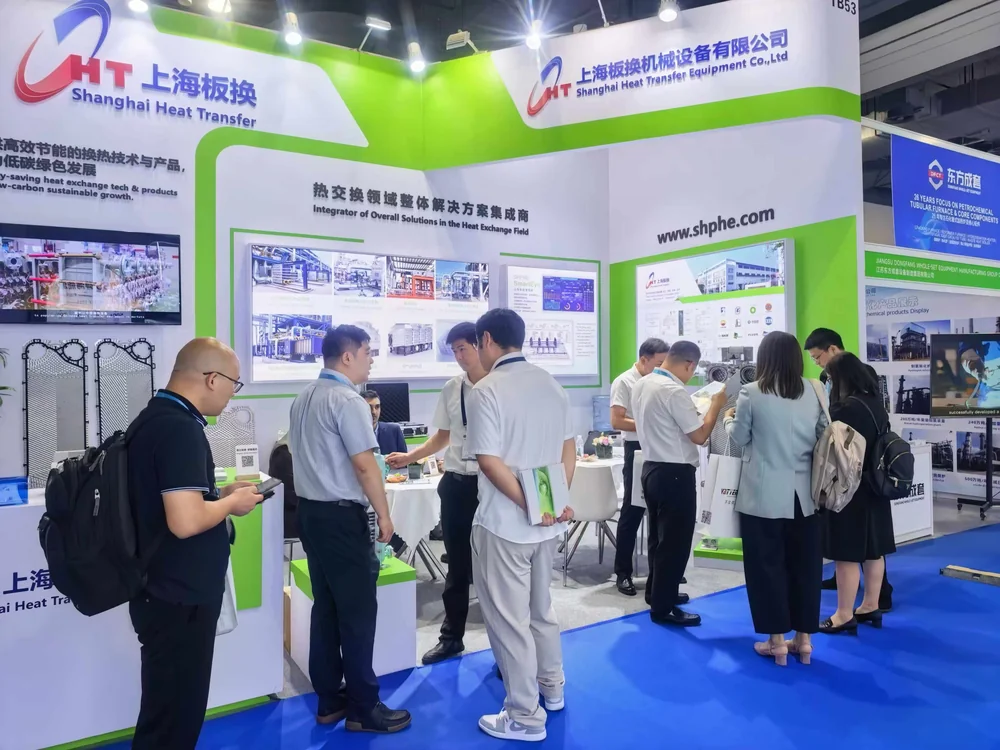
SHPHE presented its plate heat exchanger solutions at CSSOPE 2026 on 2–3 July at the Shanghai Convention & Exhibition Center of International Sourcing. The discussions connected equipment design with the practical requirements of oil and gas, refining, petrochemical and EPC procurement teams.
Visitors to the SHPHE booth discussed structural design, operating-condition compatibility, equipment upgrades and overseas project support. These are useful starting points because the term “plate heat exchanger” covers several pressure-boundary and maintenance arrangements.
A close-temperature-approach liquid duty, a solids-bearing slurry and a high-pressure gas cooler should not be evaluated using one generic product specification. Each requires an appropriate thermal and mechanical design basis.
| Procurement question | Relevant SHPHE direction |
|---|---|
| How can a compact process exchanger retain access for channel cleaning? | HT-Bloc welded plate heat exchanger, with configuration-specific removable covers |
| Which welded plate arrangement suits the process and enclosure requirements? | TP welded plate heat exchanger, subject to the duty and selected construction |
| How can a high-pressure clean-gas duty fit within a constrained module? | printed circuit heat exchanger (PCHE), with filtration and transient conditions considered |
| Where is removable plate access useful for liquid utilities? | gasketed plate heat exchangers, within the selected material and gasket envelope |
A productive technical follow-up turns a general application conversation into a defined enquiry. Both-side fluid composition, flow cases, inlet and outlet temperatures and allowable pressure drop are the core thermal inputs. Design pressures, temperatures, material requirements and the requested code establish the mechanical scope.
Project constraints also matter: lifting and transport limits, equipment orientation, pipe interfaces, maintenance access and required documentation can change the preferred configuration. The inspection plan and approval schedule should be discussed before they become delivery bottlenecks.
Retrofitting a refinery or chemical plant is more than matching a nameplate heat duty. Minimum-flow operation, start-up, seasonal cooling-water changes and expected fouling can determine whether the proposal is practical. Comparing bidders at the same operating cases helps make thermal guarantees and pressure losses understandable.
The exhibition created opportunities to continue these project discussions with international partners. The useful next step is a clear process datasheet and a list of the decisions the project needs to resolve.



 English EN