
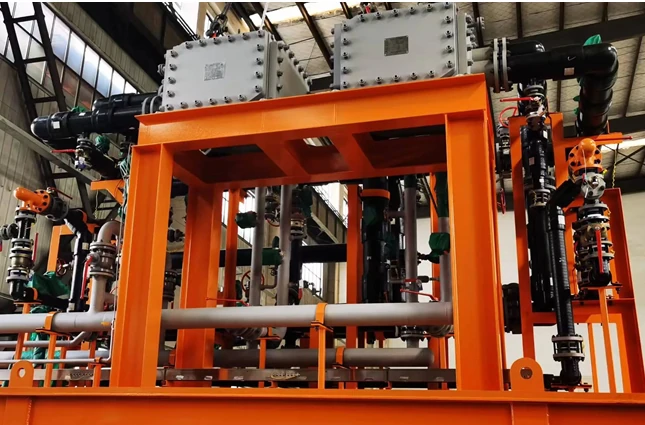
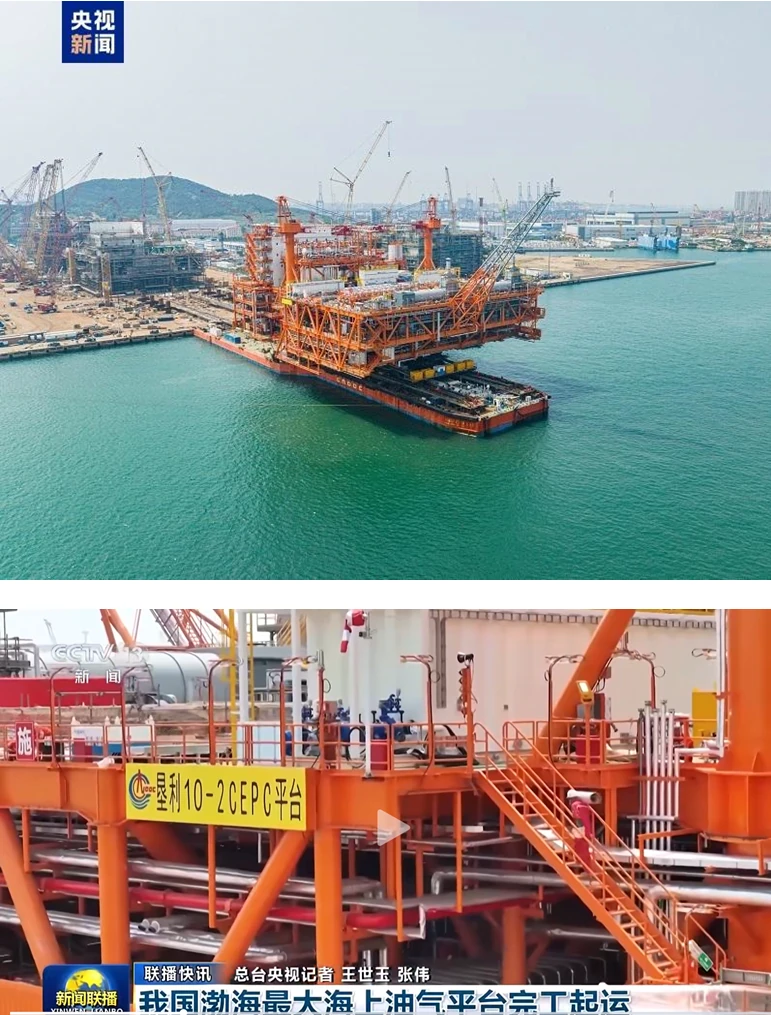
An offshore platform equipped with SHPHE plate heat exchanger skids departed Qingdao port for marine operations, according to the company's June 2025 project announcement. The supply used an integrated modular approach to address the limited space, marine environment and installation interfaces of a major Bohai Bay development.
A skid-mounted system places the exchanger within an agreed package boundary that can include piping, valves, instruments, pumps and controls. The detailed scope depends on the project. Its value lies in coordinating those interfaces before the equipment reaches a constrained offshore site.
SHPHE's technical team participated in early design and manufacturing quality control and carried out Factory Acceptance Testing. The delivered package therefore represents both heat-transfer equipment and the associated system-integration work described in the project report.
| Constraint | Package review |
|---|---|
| Limited deck area | Include valves, maintenance clearance and lifting access in the footprint |
| Weight and support | Review dry, operating and lifting conditions with the platform structure |
| Marine exposure | Match wetted materials, external protection and instrument suitability to the service |
| Site connection | Define nozzle locations, utility requirements, signals and the package boundary |
| Maintenance | Provide a practical isolation, draining and equipment-removal route |
Skid mounting does not determine the exchanger technology. A compatible liquid-utility duty may use a gasketed plate heat exchangers, while a process duty requiring a welded plate core and cover access may lead to a HT-Bloc welded plate heat exchanger assessment. The fluid pair, operating envelope and cleaning strategy decide the equipment.
Seawater, closed freshwater and process liquids also impose different compatibility requirements. “Marine grade” is not a complete plate-alloy or gasket specification.
Factory acceptance should connect the approved drawings and equipment identification with the checks required by the contract. These may include pressure-boundary records, valve and instrument checks, control functions and interface verification, according to the supplied scope.
Factory preassembly can reduce site fabrication, but offshore connection and commissioning remain planned activities. The project should define the system checks, operating cases and acceptance records needed after installation.
Provide the process datasheets, package battery limits, general arrangement and required control philosophy. Include weight restrictions, lifting requirements, applicable marine or classification specifications and the document schedule. These inputs allow SHPHE to evaluate the thermal core and the complete skid together.



 English EN