
SHPHE has shipped another group of large welded plate heat exchangers to an Australian mining customer. The delivery builds on equipment already operating at the customer's project sites and repeat orders earned through application fit, manufacturing quality and overseas support.
For mining and alumina producers, a heat exchanger is part of a continuous production process. Thermal performance matters, but so do the ability to handle the actual process fluid, maintain stable flow and return equipment to service during a planned maintenance window. The customer's previous operating experience was therefore an important foundation for this delivery.
SHPHE's published delivery announcement describes demanding requirements for equipment performance, manufacturing quality and operational stability. The repeat business reflects the importance of matching those requirements throughout engineering, production and shipment, rather than selecting equipment on nominal heat transfer area alone.
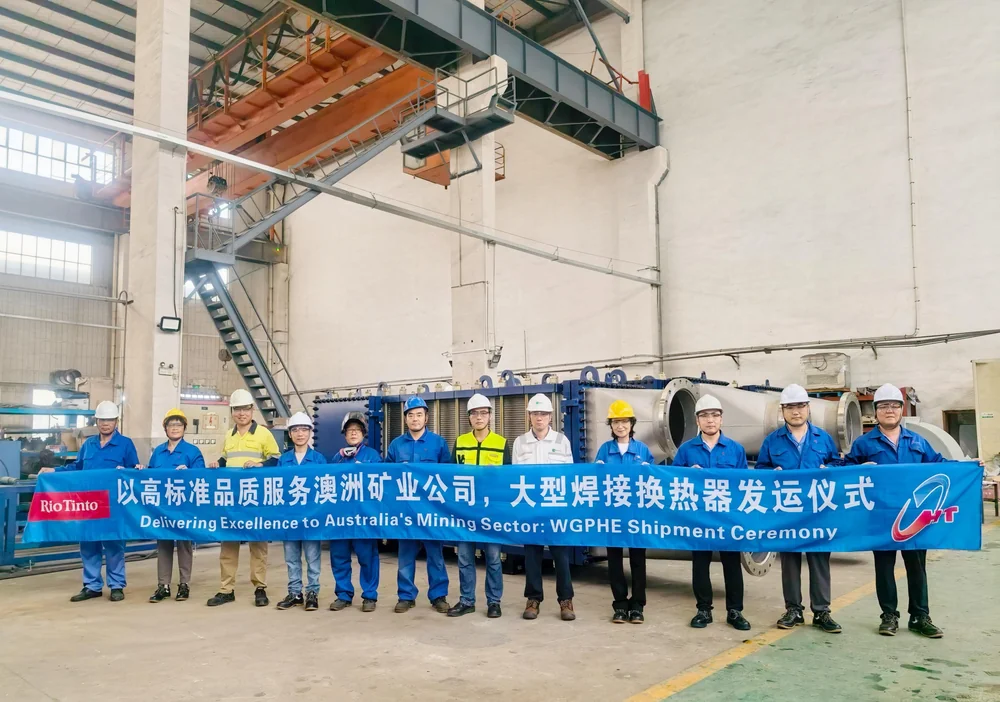
Mining facilities contain very different heat exchange duties. A slurry cooler must accommodate solids and erosion, while a utility-water exchanger may prioritize close temperature control and accessible plate cleaning. The right product family depends on the fluid and the maintenance strategy.
| Process condition | Engineering focus | Product direction |
|---|---|---|
| Solids-bearing or viscous slurry | Particle passage, inlet distribution, wear and cleaning access | wide-gap welded plate heat exchanger |
| Hot process liquid requiring welded plate channels | Sealing arrangement, alloy selection and service access | HT-Bloc welded plate heat exchanger |
| Changing production load | Normal, minimum and maximum flow conditions | Duty-specific thermal and hydraulic review |
Wide channels can reduce the tendency for particles or fibers to bridge a passage. They do not remove the need to characterize the slurry, protect against oversized debris or maintain an appropriate operating velocity. Corrosion and erosion must also be evaluated separately when selecting a plate material.
Overseas supply adds practical requirements to the equipment specification: transport dimensions, lifting arrangements, nozzle protection, preservation during storage and the documents needed at site. A complete handover should connect the approved drawings and inspection records with the delivered equipment identification.
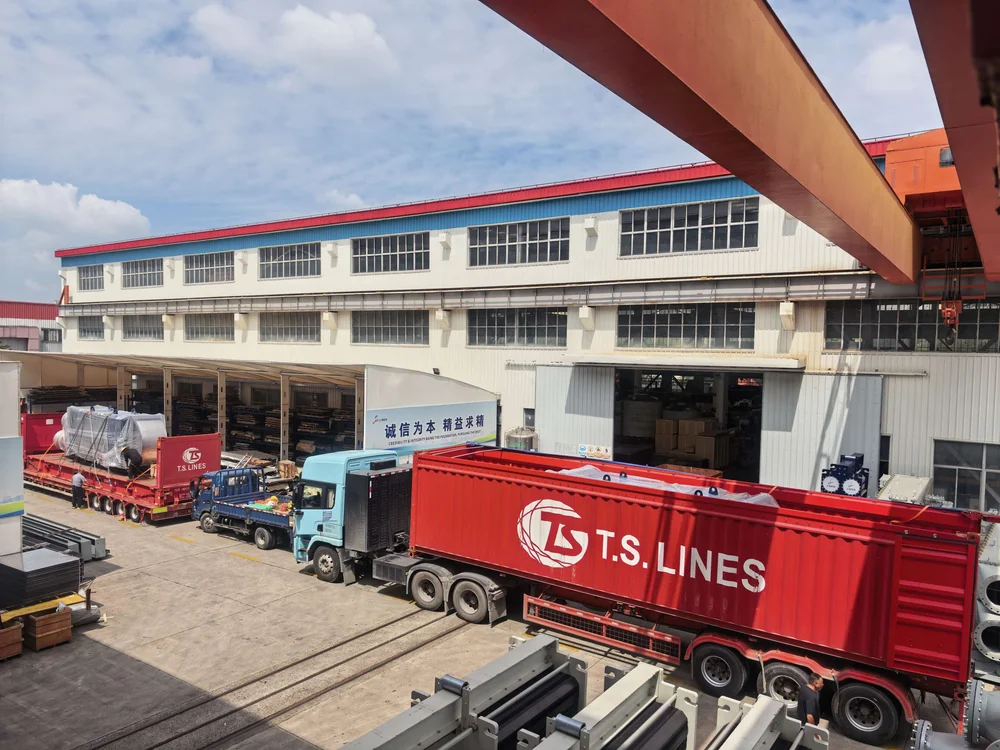
For the operating team, the useful starting point is a clear clean-equipment baseline: flow, inlet and outlet temperatures, pressure drop and the agreed thermal duty. Those records make later troubleshooting more reliable and help distinguish changing plant conditions from exchanger fouling.
Provide the process-fluid composition, solids loading, particle-size distribution, viscosity at operating temperature and required heat load. Add the available cooling medium, pressure-drop allowance and maintenance constraints. SHPHE can use this information to evaluate a welded plate solution for the actual service.



 English EN