
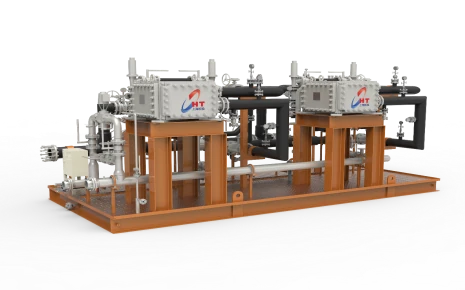
A marine heat exchanger skid integrates a thermal core with the piping, valves, instruments and controls included in an agreed package scope. The exchanger type and materials are selected for the fluid service; the skid then coordinates installation, operation and maintenance within the vessel or offshore layout.
Specify whether the package includes pumps, filters, electrical controls, instruments and the supporting structure. Identify process and utility tie-ins, electrical and signal interfaces, and which functions remain with the vessel or platform.
Factory preassembly can reduce site fabrication and improve interface control. It does not remove the need for site connection, system checks and approved commissioning after delivery.
| Duty | Package function | Engineering focus |
|---|---|---|
| Central and auxiliary cooling | Transfer heat from managed freshwater circuits to a separate heat sink | Seasonal seawater conditions, circuit separation and availability |
| Lubrication or hydraulic-oil cooling | Maintain the oil temperature required by the served machinery | Oil viscosity, allowable pressure loss and contamination |
| HVAC water circuits | Connect heating or cooling sources with the distribution loop | Control range, pressure separation and utility conditions |
| Crude-oil heating or cooling | Support the defined process location | Composition, fouling, materials and process safety requirements |
| Desalination-related temperature conditioning | Provide the temperature specified by the selected process | Membrane or process limits; heating is not automatically beneficial |
Specialized aquaculture or water-conditioning duties require their own temperature and compatibility specifications. A general marine skid should not be assumed suitable for biological or potable-water service without reviewing those requirements.
A gasketed plate heat exchangers can be considered for compatible liquid duties with removable plate access. A HT-Bloc welded plate heat exchanger may be evaluated where a welded core and accessible covers suit the process. A printed circuit heat exchanger (PCHE) requires a separate assessment of high-pressure service, fluid cleanliness and the bonded-channel maintenance route.
Seawater, closed freshwater, glycol and process oil should each be described separately. Plate alloy, gaskets, seals, piping and instruments must all suit the actual medium and temperature range.
Include operating weight, center of gravity, support loads, lifting points and space for isolation and maintenance. A small thermal core can still require substantial valve, filter and service clearance.
For marine projects, specify the required classification or project approvals, motion and vibration conditions, external protection and documentation. These requirements are resolved for the supplied package rather than inferred from the word “offshore.”
FAT verifies the agreed factory scope and records before shipment. Site commissioning confirms the package's integration with actual utilities, process streams and controls. Both stages need an acceptance basis and a clear division of responsibilities.
Provide the duty list, battery limits, process datasheets, vessel arrangement and control requirements when starting a skid enquiry. SHPHE can then evaluate the thermal equipment and the surrounding package as one coordinated supply.



 English EN