
A printed circuit heat exchanger can be considered for selected high-pressure or cryogenic duties on an FLNG facility when compactness and weight are important. Selection still depends on fluid cleanliness, phase behavior, pressure loss and operating transients. PCHE is a duty-specific option, rather than a universal replacement for every exchanger on the vessel.
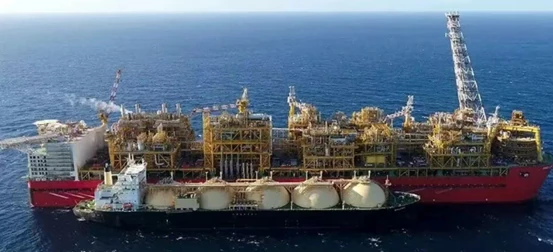
FLNG facilities integrate natural-gas treatment, liquefaction, storage and offloading. Pretreatment removes contaminants to the requirements of the downstream process. Different treatment steps address acid gases, water and other contaminants; their specifications must come from the selected process design.
Liquefaction duty, compressor cooling and boil-off-gas conditioning have different fluid and temperature profiles. An FLNG facility also differs from an FSRU, whose principal task is LNG storage and regasification. The two should not be treated as the same process package.
| Process position | Potential reason to consider PCHE | Key condition to resolve |
|---|---|---|
| Clean-gas compressor cooling | High-pressure service within a constrained module | Condensate handling, upstream separation and pressure loss |
| Selected cryogenic process exchange | Compact heat-transfer area and pressure capability | Validated temperature profiles, phase distribution and thermal stress |
| Boil-off-gas conditioning | Integration of a defined gas cooling or heating duty | Actual composition, pressure, phase change and operating range |
| Fuel-gas or other gas-heating service | Compact equipment with a project-specific thermal design | Minimum temperature, control and transient requirements |
The main liquefaction exchanger technology is selected as part of the overall process package. Any proposed PCHE duty should be supported by the relevant thermal, hydraulic and mechanical validation, particularly where two-phase flow is involved.
The printed circuit heat exchanger (PCHE) uses diffusion-bonded channels that cannot be opened as individual plates. Its available passage must be reviewed against particulate carryover, liquids, deposits and any risk of freezing under an upset condition.
Establish the role of inlet separation and filtration before specifying a compact gas cooler. If seawater is a heat sink, evaluate whether a controlled intermediate loop is appropriate. Direct seawater exposure cannot be accepted from a generic application label without materials, fouling and protection review.
Cryogenic streams and mixed fluids can have strongly varying properties. A design must examine the temperature approach throughout the exchanger and the distribution of any two-phase flow. Matching the nominal inlet and outlet temperatures is not enough to prove that every part of the core has an acceptable approach or stress condition.
Start-up, cooldown, warm-up, emergency isolation and depressurization can create demanding combinations of pressure and temperature difference. Include the specified operating cycles and transient limits in the equipment design basis.

Compare dry and operating weight, headers, insulation, supports, filter packages and the maintenance-removal envelope. A compact core does not eliminate those interfaces. Module access and replacement logistics are especially important when channels cannot be mechanically opened.
Provide both stream compositions, phase states, load cases, pressure-drop allowances and the complete pressure-temperature envelope. Add vessel layout, motion or support requirements where applicable, requested inspection scope and the process designer's transient cases.
Published product-family limits are useful for initial screening. The supplied unit's design and validated operating cases determine whether the proposed PCHE is appropriate for the actual FLNG duty.



 English EN