
Acrylic-acid overhead condensation requires thermal performance, corrosion resistance and process stability to be evaluated together. SHPHE's application report describes a large fully welded plate solution for a 160,000-tonne/year integrated acrylic-acid project, including a reported single-unit area of 7,300 m².
Acrylic-acid and ester refining can involve corrosive components, temperature-sensitive material and continuous operation. The condenser's temperature profile and flow distribution must align with the process design, including the licensor's requirements for managing polymerization risk.
A larger exchanger is not automatically a better solution. Residence time, liquid distribution, pressure loss and the approach to the cooling medium can affect process behavior as well as the achievable heat duty.
| Item | Reported project value |
|---|---|
| Plant context | 160,000 tonnes/year integrated acrylic-acid project |
| Single-unit heat transfer area | 7,300 m² |
| Maximum processing capacity stated in the report | 4,500 m³/h |
| Reported heat load | 26,000 kW |
| Reported equipment weight | 120 tonnes |
These figures describe the case presented in the project announcement. They should not be treated as the standard configuration of every TP welded plate heat exchanger or as a complete design basis for another acrylic-acid plant.
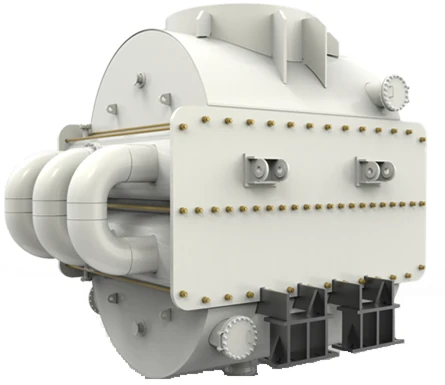
Corrosion: evaluate the full process composition and concentration range before specifying plate and weld materials.
Condensation profile: establish vapor composition, non-condensable content, operating pressure and the required outlet condition.
Polymerization control: coordinate temperature limits, residence-time considerations and required process provisions with the plant's approved design.
Cleaning: confirm the actual channel access and a compatible cleaning method before equipment layout is finalized.
Mechanical loading: include operating weight, supports, nozzle loads and thermal expansion.
The published case includes comparisons with shell-and-tube equipment for size, weight and costs. Such comparisons are useful only with the same duty, material scope, pressure boundary and installation boundary. For a new project, request a documented comparison rather than transferring a single case's ratios or cost reductions.
Likewise, removing elastomeric gaskets from the plate core addresses one sealing mechanism; it does not eliminate every leakage, corrosion or polymerization risk. Weld qualification, inspection and the complete operating envelope remain essential.
Agree the thermal guarantees, pressure loss, inspection plan and documentation together with the process and mechanical specifications. At commissioning, record the operating point and relevant product-quality indicators so later changes can be investigated against a known baseline.



 English EN