
Gasketed plate heat exchangers are used in power-plant liquid-cooling systems where compact heat transfer and removable plate access suit the service. The equipment should be selected around the controlled cooling loop, the external heat sink and the plant's required availability—not simply the generating capacity of the station.
A closed cooling-water circuit can maintain controlled chemistry around auxiliary equipment while exchanging heat with a separate cooling source. The exchanger must meet the required outlet temperature at the specified seasonal conditions without consuming excessive pumping head.
The circuit may serve different auxiliary loads, so define the heat load assigned to each exchanger tag. Minimum load, maximum cooling-water temperature and the duty/standby operating philosophy can materially change the selection.
The published application describes supply of 30 gasketed plate heat exchangers for closed circulating-water cooling at a Nigerian power project. The reported configuration uses 316L plates, EPDM gaskets and 650 m² of heat transfer area per unit.
| Reported item | Case information |
|---|---|
| Quantity | 30 gasketed plate heat exchangers |
| Plate material | S31603 / 316L |
| Gasket material | EPDM |
| Area | 650 m² per unit |
| Service | Closed circulating-water cooling for auxiliary equipment |
These are project-specific details. EPDM suitability and 316L corrosion performance must be checked against each new circuit's temperature, water treatment and possible contaminants.
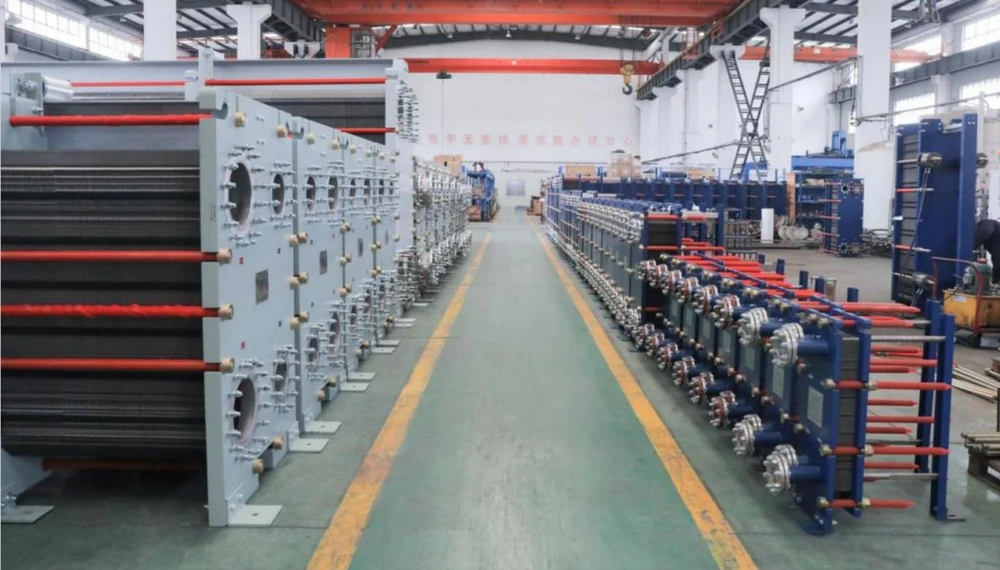
The gasketed plate heat exchangers can be configured through plate pattern, pass arrangement and number of plates. Additional plates can change thermal and hydraulic behavior; they are not a guaranteed capacity increase independent of frame size, flow distribution or the available pump.
The proposed materials and gasket compound should be identified in the datasheet. Design pressure and temperature must be established for the supplied unit instead of copied from the maximum values of the wider product family.
| Case | Check |
|---|---|
| Peak heat load and warmest heat sink | Required auxiliary-equipment cooling temperature |
| Reduced load | Control stability and permitted flow range |
| One train unavailable | Required duty/standby performance and isolation |
| Progressive fouling | Monitoring and maintenance trigger at comparable conditions |
| Restart after cleaning | Approved checks and a renewed performance baseline |
Specify duty, outlet conditions and both-side pressure losses at the agreed test or operating cases. State the applicable code, edition and project documentation requirements. Product certification does not remove the need to confirm the scope required for the particular destination and equipment.
Where instruments and integration are included, Smart Eye monitoring and optimization can support monitoring of temperature, flow and pressure-drop trends. Compare like operating points before interpreting a performance change as fouling.
Send water analyses, treatment information, load cases, allowable pressure drops, design conditions and the proposed availability philosophy. For replacement equipment, add the existing layout and the performance or maintenance constraint to be improved.



 English EN